
 E-Paper



Supreme Court dismisses pleas against ‘socialist’ and ‘secular’ in Constitution's Preamble
Chief Justice of India Sanjiv Khanna said that the petitions do not require a detailed hearing.

 Prefer HTon Google


The Supreme Court on Monday dismissed pleas challenging the 1976 amendment that added the terms “socialist,” “secular,” and “integrity” to the Preamble of the Constitution.
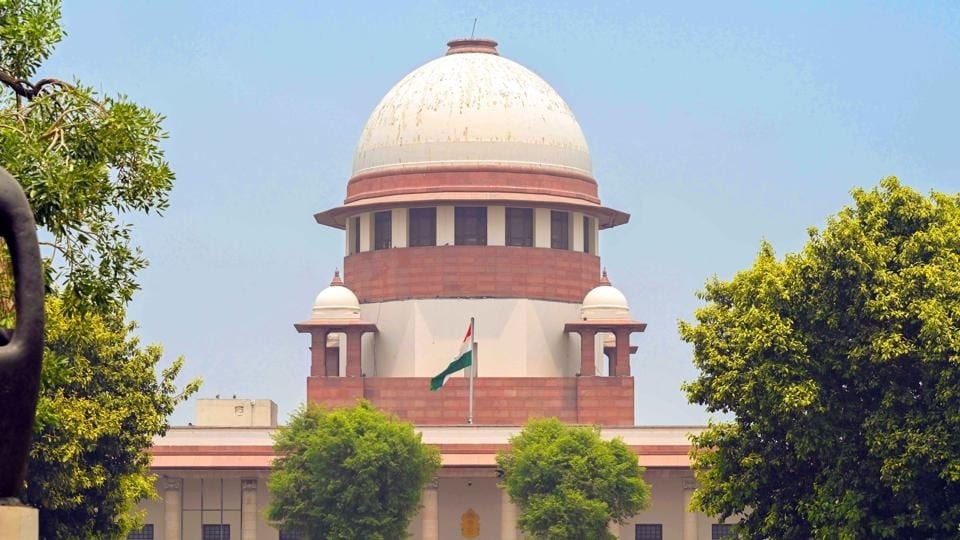
A bench comprising Chief Justice Sanjiv Khanna and Justice Sanjay Kumar had reserved its verdict on November 22 on pleas by former Rajya Sabha MP Subramanian Swamy, advocate Vishnu Shankar Jain, and others, contesting the addition of “socialist” and “secular” to the Constitution's Preamble.
The petitioners also questioned the legitimacy of the 1976 Parliament, which operated during the Emergency and under an extended tenure. Advocate Vishnu Shankar Jain, representing Singh, argued, “The tenure of the Lok Sabha was extended to address emergency requirements, not to amend the Constitution. Adding these words without public consultation distorted the original intent of the framers.”
Swamy argued that the inclusion of the terms made the Preamble inconsistent with its original adoption. He suggested that the words be recognized as later additions, rather than implying they were part of the original text.
Read: Secularism key to constitutional fabric: SC on Preamble challenge
However, dismissing the petitions, the Chief Justice of India said that they did not warrant a detailed hearing.
“The two expressions ‘socialist’ and ‘secular’ were made in 1976 through amendments and the fact that the Constitution was adopted in 1949 does not make any difference... the retrospectivity arguments if accepted will apply to all amendments,” CJI Sanjiv Khanna.
The bench emphasised that Parliament’s authority under Article 368 to amend the Constitution extends to the Preamble. The court reiterated that the amendment has undergone extensive judicial scrutiny and legislative endorsement in the decades since its enactment.
During previous hearings, the court addressed concerns over the meaning of ‘socialism,’ affirming that the term in the Indian context signifies a welfare state and does not conflict with the growth of the private sector.
"Socialism in India is about equitable distribution of resources and equality of opportunity. It does not hinder private enterprise, which thrives in our country,” the bench remarked.


