
 E-Paper



Supreme Court disposes of PIL in J&J’s faulty hip implant compensation case
A bench headed by Chief Justice of India Ranjan Gogoi took on record Centre’s affidavit, providing details of the scheme and said nothing was left to be decided on the petition in view of the government’s decision.


The Supreme Court (SC) on Friday disposed of a public interest litigation (PIL) on compensation to the patients who received Johnson and Johnson’s (J&J) faulty hip implants, after it was satisfied with the Centre’s compensation scheme announced in November last year.
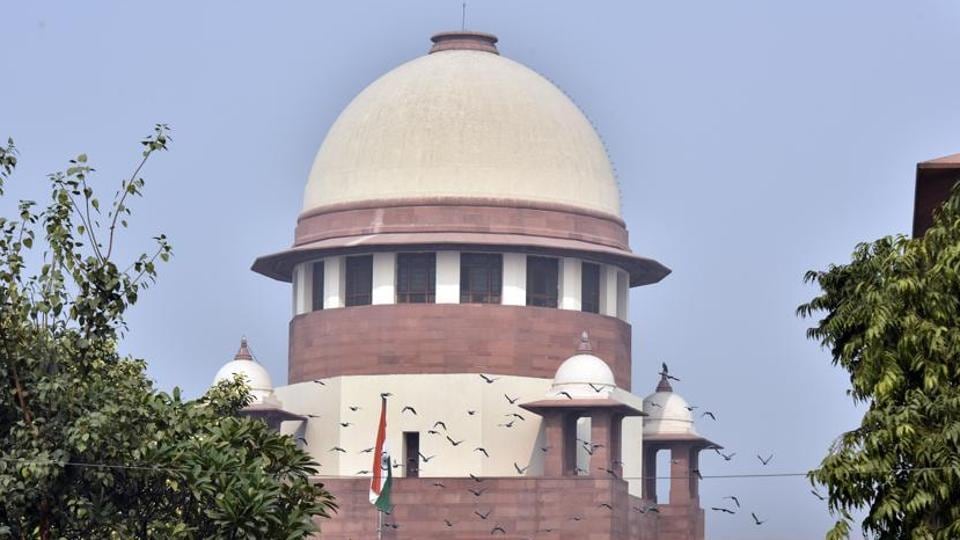
A bench headed by Chief Justice of India Ranjan Gogoi took on record Centre’s affidavit, providing details of the scheme and said nothing was left to be decided on the petition in view of the government’s decision.
The apex court, however, asked the Centre to give wide publicity to the scheme so that maximum number of victims can be compensated.
The faulty articular surface replacement (ASR) hip implants, manufactured by DePuy International Limited — a subsidiary of J&J Pvt Ltd — were recalled in 2010 globally after complaints of more-than-usual revision surgeries due to complications such as metal leaching and infections, among others.
An expert panel constituted under the Union health ministry had on November 29 last year announced the quantum of compensation for patients who received J&J’s metal-on-metal ASR hip implant devices before August 2010.
The amount would range between ₹30 lakh and ₹1.23 crore, depending on the age and the level of disability of the person, with younger people with higher disability getting the larger share of the compensation.
On February 7, 2017, the health ministry had set up an 11-member committee to investigate complaints of faulty implants. A report was submitted in February 2018 that recommended a base compensation of ₹20 lakh.
Based on the recommendations, the government constituted a central expert committee under the chairmanship of Dr R K Arya, director at the Sports Injury Centre, to determine the quantum of compensation.
The committee divided disability into four categories: 20-30%, 30-40%, 40-50% and above 50%. The patients were divided into 10 age-groups — 20, 25, 30, 35, 40, 45, 50, 55, 60 and 65 and above. At least 150 patients have registered with the central committee in the past few months.


