E-Paper



Supreme Court draws the curtains on dispute between Adani Power and GUVNL
Both Adani Power and GUVNL presented a compromise deed between the two, and pressed for disposing the curative petition

 Prefer HTon Google


NEW DELHI: In a breather for Adani Power (Mundra), the Supreme Court on Tuesday wrapped up the curative proceedings initiated to reconsider its 2019 judgment, which had affirmed the private company’s decision to terminate the power purchase agreement (PPA) signed with Gujarat Urja Vikas Nigam (GUVNL).
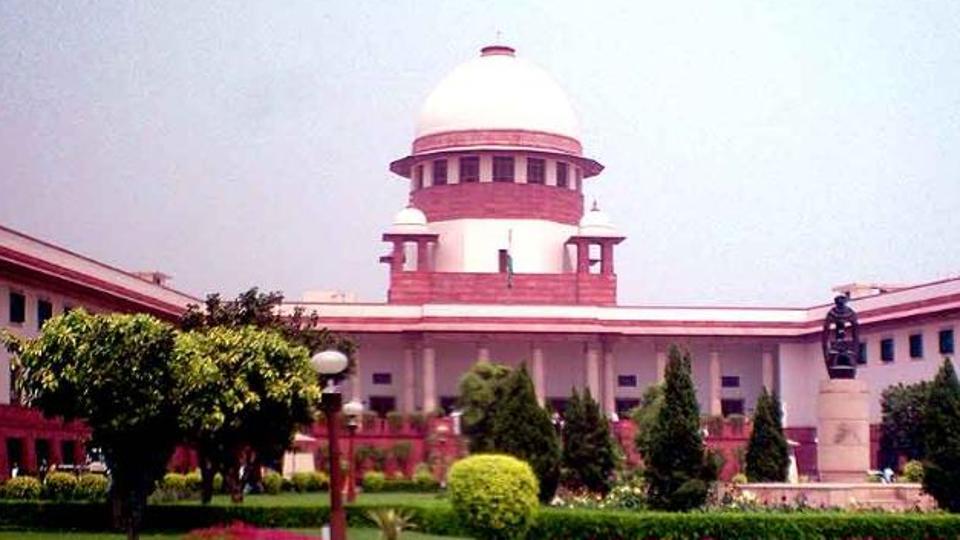
A five-judge bench, headed by Chief Justice of India NV Ramana, drew the curtains on the dispute after Adani Power and GUVNL presented a compromise deed between the two, and pressed for disposing the curative petition in terms of their agreement.
“In terms of the settlement that has taken place, we dispose of the curative petition saying that the parties shall be governed by the settlement entered into by the parties,” recorded the bench, which also included justices Uday U Lalit, Dhananjaya Y Chandrachud, Surya Kant and BR Gavai.
Attorney general KK Venugopal, representing GUVNL, informed the court that in terms of the settlement deed, the 2007 agreement between Adani Power and GUVNL shall stand revived.
“The termination [at the instance of Adani] will not be given effect to. The company shall also not press for the compensatory tariff and they will continue to supply electricity to GUVNL. So, what hurt the state discom has been withdrawn,” added the law officer.
As per the 2019 judgment of the top court, Adani Power was entitled to receive more than ₹10,000 crore as compensatory tariff for electricity supplied by it to GUVNL.
Advocate Mahesh Agrawal, appearing for Adani Power, also urged the bench to dispose of the curative petition, pointing out that the company shall supply 2,000MW of electricity in accordance with the agreement with GUVNL.
In September 2021, the five-judge bench issued notices on a curative petition filed by GUVNL after noting that the plea raises significant questions of law. Apart from Adani Power, notices had also gone to Gujarat Electricity Regulatory Commission (GERC) and Consumer Education and Research Society, an NGO.
Curative petition is the final legal remedy available to a litigant after dismissal of the main petition and the review petition.
Also Read: Private sector job quota law: Supreme Court to hear Haryana’s plea on Friday
In its July 2019 judgment, a three-judge bench comprising justices Arun Mishra, Gavai and Surya Kant underlined that Adani Power was justified in terminating the PPA since it couldn’t get coal supply on time from the Naini block of Gujarat Mineral Development Corporation (GMDC).
The apex court, in its 2019 order, also allowed Adani to seek a compensatory rate for the electricity it had alternatively supplied to Gujarat from its Korba power project in Chhattisgarh. It had asked the Central Electricity Regulatory Commission (CERC) to decide the compensatory rate for Adani Power within three months from the date the company approaches it. GUVNL will then have to make the payment to Adani within three months from the date the CERC decides.
The dispute dates back to 2010, when GERC said Adani Power illegally terminated the PPA that the latter had signed with GUVNL. This decision of GERC was later upheld by the Appellate Tribunal for Electricity, prompting Adani to approach the top court.
According to Adani’s contention in the top court, it signed the PPA in 2007 with GUVNL for supply of 1,000MW at ₹2.35/unit from its power project at Korba, Chhattisgarh, based on coal supply from Naini. GMDC agreed to supply four million tonnes of coal a year to Adani by developing the Naini coal block.
Later, in 2007, Adani told GUVNL that it would supply power from its Mundra power project in Kutch, Gujarat, instead of Chhattisgarh since GMDC was lagging in coal production.
However, despite repeated reminders to the Gujarat government, GUVNL and GMDC, the coal supply did not start. Adani claimed it was forced to terminate the PPA in December 2009, arguing that the agreement for supply of power was based on the assurance given by GMDC.