
 E-Paper



SC junks Maharashtra's plea to make 2011 caste census data public
The Supreme Court accepted the Union government’s stand that it is 'unusable’ on account of inaccuracies in its data

 Prefer HTon Google


The caste census conducted in 2011 will continue to remain under wraps. The Supreme Court on Wednesday accepted the Union government’s stand that it is “unusable” on account of inaccuracies in its data, and dismissed the Maharashtra government’s plea to make it public.
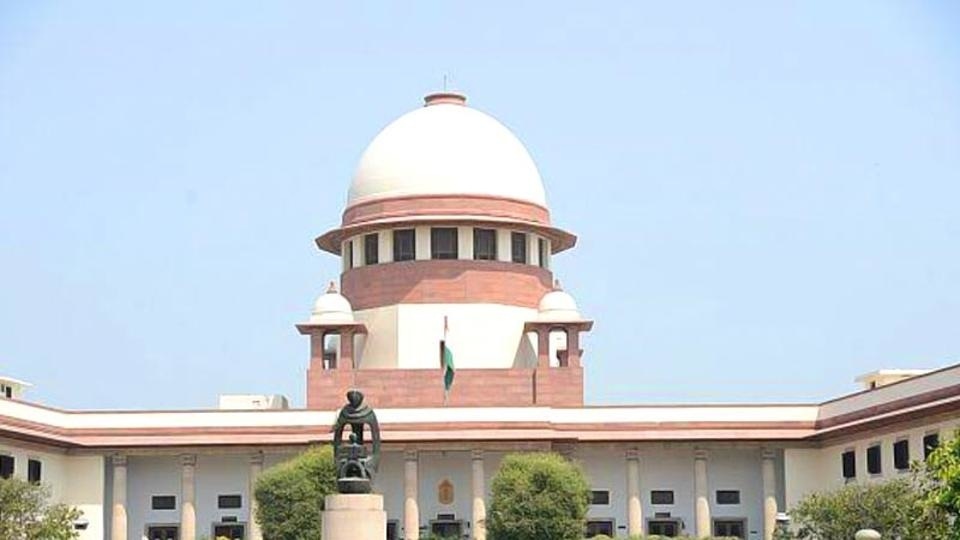
A bench of justices AM Khanwilkar and CT Ravikumar rejected the Maharashtra government’s argument that it has a right to access the information collected in the 2011 caste census even if the Centre claimed the data could not be relied upon for any constitutional or statutory exercise such as reservations in admissions, promotions or local body elections.
“The fact remains that the affidavit by the Union government says that the data collated is unusable. If that is the stand of the Union, we fail to understand how a mandamus can be issued to permit Maharashtra to use that data for any purpose. Such direction, if given, will lead to more confusion and uncertainty which cannot be countenanced,” the bench held in its order.
It also took on record a statement made by solicitor general Tushar Mehta, appearing for the Centre, that the 2011 caste census was not carried out as per the Census Act, 1948 but was a one-time measure, and therefore, the Maharashtra government could not rely upon the provisions of the law to seek data.
Senior advocate Shekhar Naphade, appearing for the state government, sought to impress upon the bench that irrespective of the quality of data, the state had a right in a democracy to access the caste census and thereafter, it could decide on whether or not to use it for the purposes of making reservation.
Naphade sought to point out that on the one hand, the state is bound by the Supreme Court judgment to first collect data before making reservations in local body elections for other backward classes (OBCs) but on the other, the Union government has been refusing to part with the information it has.
Mehta, rebutting this submission, emphasised that the Socio-Economic and Caste Census (SECC), 2011, was not made public because it was found to be flawed, and was bound to mislead. “...This data is useless and it cannot help anyone. Please, don’t order us to furnish raw data to the state,” Mehta said. He added that the state could instead have appointed a commission to gather empirical data on castes and classes for making reservation suitably.
Responding, Naphade reiterated the Maharashtra government’s demand for accessing the data under its right to know in a democracy, particularly since enumeration was done following a decision of the Union cabinet.
The bench retorted: “We will not be a party to any order that will create more confusion especially when we are dealing with public representatives being elected. It is better to conduct polls without any reservation in such a case. You have set up a commission to collect data. Take that exercise forward and take it to a logical conclusion. And in the next election, you would be able to do something for the backward classes. But we cannot pass an order that is bound to create more uncertainty.”
When Naphade said the state could vet the data for errors, the bench replied: “How can you decide? You haven’t done this enumeration. You better do your own enumeration. You are going into area which is impermissible. We don’t know which constitutional principle we can invoke to allow your request when the Union is saying this data is unusable.”
The 2011 caste census, during the United Progressive Alliance government, was the first caste-based census since the 1931 census of India. It was conducted along with the 2011 census. The first census was conducted in 1881, and since then, the exercise has been conducted every 10 years. The 2021 census was delayed due to the Covid-19 pandemic and it is now expected to take place in February 2022.
The order came on a petition by the Maharashtra government, asking for the release of the 2011 caste census data for implementing 27% reservation for OBCs under the Zilla Parishads and Panchayat Samitis Act.



