
 E-Paper



Supreme Court raps Bengal govt over ‘inaction’ in rape case
The SC on Tuesday reprimanded the WB government for its mishandling of the investigation into the brutal rape and murder of a doctor at RG Kar hospital.

 Prefer HTon Google


The Supreme Court on Tuesday reprimanded the West Bengal government for its mishandling of the investigation into the brutal rape and murder of a doctor at RG Kar Medical College and Hospital in Kolkata, stating that the conscience of the entire nation was shaken by the “horrific” and “horrendous” incident.
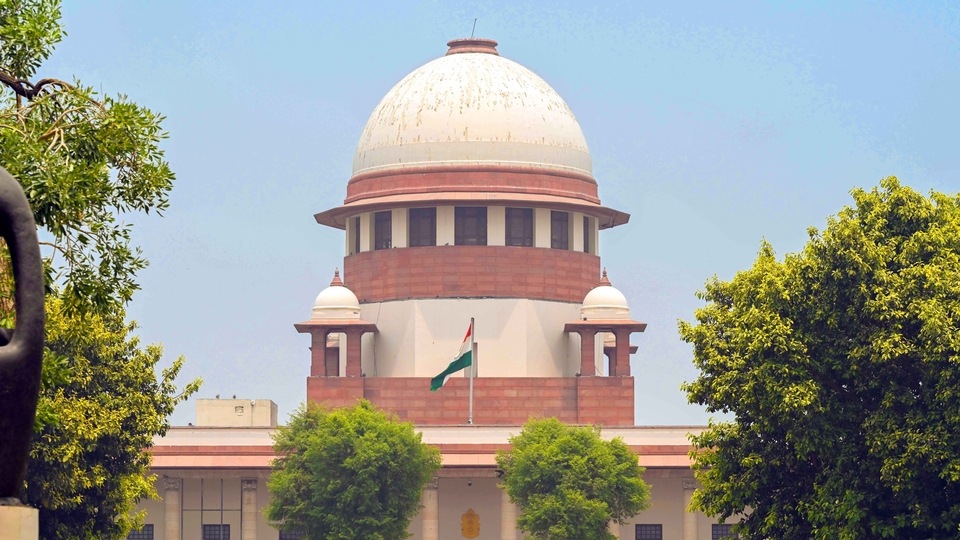
Highlighting the alarming inadequacies in the state’s response to the crime that has sparked sweeping protests across the nation and a strike by doctors, a bench led by Chief Justice of India Dhananjaya Y Chandrachud expressed its deep concern over several instances of “inaction” by the state machinery.
“Brutality of the sexual assault and the nature of the crime have shocked the conscience of the nation,” said the bench, also comprising justices JB Pardiwala and Manoj Misra, as it took up the matter registered on its own motion (suo motu).
The court’s criticism centred around the significant delay in lodging the first information report (FIR) on August 9 into the rape and murder of the 31-year-old junior doctor, the allegation by the parents that the hospital first told them it was a suicide, and the vandalism that occurred at the hospital five days later, raising questions about the competence of the West Bengal police in safeguarding medical professionals.
“After the crime was detected in the early hours of the morning of August 9, the principal of the hospital tries to pass this off as a suicide. The parents are not allowed to see the body for a few hours... Until late at night, no FIR was registered. Why this kind of inaction? What was the principal doing? Why no FIR until late in the evening? And why did the victim’s father had to lodge this FIR? What were the authorities at the hospital doing? Doesn’t autopsy reveal the victim was raped and murdered?” the bench questioned senior counsel Kapil Sibal, who appeared for the Mamata Banerjee government.
While Sibal denied any delay in registration of the FIR and sought time to place detailed facts on record, the bench remarked: “Undoubtedly, there is an unexplained delay in the registration of the FIR.”
The court also came down hard on the state for failing to deploy its machinery effectively to prevent breaches of law and order and vandalism at the hospital on August 14, particularly when the crime occurred within the hospital premises where an investigation was already underway.
“The hospital is invaded by a mob and critical facilities are damaged. What was the police doing when the hospital was vandalised? The crime scene was within the precincts of the hospital. What were the police personnel doing? They allowed the crime scene to be destroyed,” commented the bench, adding the first thing the police ought to do is to secure the crime scene.

The victim -- a second-year postgraduate student at the state-run hospital -- was found brutally assaulted and murdered in the seminar hall on August 9. A civic volunteer assigned to the hospital was arrested the next day in connection with the crime. By then, the crime had sparked widespread protests across the state, especially after the government’s delay in removing the principal and then reinstating him within four hours.
The victim’s family and protesters have alleged that the crime was a gang rape, demanding a thorough investigation to ensure all culprits are held accountable. An autopsy later confirmed that the victim was sexually assaulted before her death.
In the top court, solicitor general Tushar Mehta, representing the Centre and the Central Bureau of Investigation which took over the probe following the August 13 order of the Calcutta high court, said that a gathering of 7,000 people could not assemble without the knowledge and the connivance of the police.
In its order, the bench expressed dismay over the failure of the police in securing the crime scene. “In the aftermath of the brutal incident and the demonstrations which followed, the state government was expected to ensure the deployment of the state machinery to prevent a breach of law and order. It was all the more necessary to do so since investigation of the crime, which took place in the precincts of the hospital, was under way. We are unable to comprehend how the state was not prepared to deal with the incident of vandalisation of the premises,” the order recorded.
The court directed the West Bengal government to file a status report by August 22 - the next date of hearing -- on the progress of the investigation into the vandalism in the aftermath of the incident. “The state must ensure those involved in vandalism are acted against and prosecuted,” it told Sibal. The court also directed CBI to file a status report on the investigation by August 22.
During the hearing, senior advocate Aparajita Singh, representing the doctors’ organisation “Protect the Warriors,” informed the bench that after the August 14 vandalism incident, the mob returned to the medical college hospital and threatened women doctors, warning that they would suffer the same fate as the rape victim if they reported the incident. Singh mentioned that one doctor had emailed a complaint to the police and presented a copy of it to the bench. Singh added that of the 700 resident doctors, only around 100 doctors remain, while others have left the campus in the wake of the threats.
The bench took grave note of the complaint. “This is a very serious issue, Mr Sibal. The West Bengal government cannot be unaware of the fact that when there are protests, opposing groups will always attempt to disrupt them,” it said.
Conveying concern that the mob specifically identified women female doctors by name and threatened them with the same fate as the deceased, the bench questioned why the police fled the scene after the mob descended.
“Look at it from a different angle. We are making a fervent appeal to the doctors to resume work to help marginalised and needy people. But if they come back, can these police be trusted to protect them? Who is going to provide security to women doctors?” it asked.
Taking note of this, the bench stated that the court would order the Central Industrial Security Force (CISF) to secure the hospital and hostel premises. Sibal indicated that the state had no objections.
“It is essential to create safe conditions for the doctors to return to their duties so that they can continue their medical education and provide medical care. Accordingly, we have been assured by solicitor general Tushar Mehta that CISF will be deployed in sufficient numbers to guard the RG Medical College facilities, including the hostels where the resident doctors are staying. Mr Sibal has no objections, as the goal is to ensure the safety of the premises,” the court noted in its order. It further stated that any doctor with safety concerns could send an email to the registrar (judicial) of the Supreme Court.
During the proceedings, the bench further directed the state not to take coercive actions against individuals participating in peaceful protests or expressing their views in the media and on social media.
“Let the power of the state of West Bengal not be unleashed upon peaceful protesters. We must approach this with great sensitivity,” it told Sibal, who rued that a significant amount of misinformation was being spread in the media about the case, and that the state’s actions were aimed solely at addressing that.
In its order, the court stated: “We expect the government of West Bengal to exercise necessary restraint in response to peaceful protests conducted by any segment of society concerning the issues related to the incident in Kolkata.”
Meanwhile, addressing a separate petition that protested about the victim’s identity being revealed and her photographs and videos being shared across multiple social media platforms, the bench issued an order to remove any references to the victim’s identify from all media and social media platforms. The court noted that it was a penal offence to reveal the identity of a rape victim.



