
 E-Paper



SC rejects Bihar plea against HC’s caste survey stay order
The court’s refusal to stay the high court order deals a major blow to Bihar’s plans of successfully counting the castes of all 104 million people in the state.


The Supreme Court on Thursday turned down the Bihar government’s plea to stay the Patna high court order which put on hold the caste-based survey in the state after questioning the Nitish Kumar-led government’s legislative competence to carry out such an exercise and flagging issues over data integrity and security.
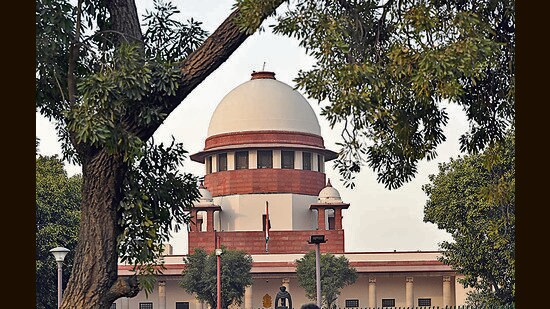
A bench of justices AS Oka and Rajesh Bindal noted that the May 4 high court order was an interim directive, based on prima facie findings against the caste-based survey and various other issues surrounding the exercise.
Also read: Bihar to see heavy rain, heat wave at the same time
“We have to see if it is a census in a garb of survey like high court order says...Today, we are not inclined to grant a stay as the matter requires hearing. The high court has recorded prima facie findings. So, we find it difficult to stay,” the bench told senior counsel Shyam Divan, who represented the state in its appeal against the Patna high court order.
The court’s refusal to stay the high court order deals a major blow to Bihar’s plans of successfully counting the castes of all 104 million people in the state for the first time since Independence, and is also a political setback to the state’s ruling coalition.
The call for a caste survey in the state erupted last year and was supported by all parties, though the ruling Janata Dal (United) and Rashtriya Janata Dal led the demand. Over the past few months, a number of Opposition parties, including the Congress, have picked up the appeal across India, hoping that an enumeration of castes will be a game-changer in reversing the BJP’s deep inroads into the backward groups, and countering religious polarisation. The high court’s order deals a jolt for those electoral plans.
Reacting to the development, Bihar finance minister and senior JD (U) leader Vijay Kumar Chaudhary said we were hopeful of a favourable order. “Now we will explore our options as to how to proceed legally.”
Meanwhile, former Bihar deputy chief minister Sushil Kumar Modi blamed the state government for not being able to put their point in high court. He also demanded from the government to immediately convene an all-party meeting and take everyone into confidence.
“The government lobbied weakly before the high court, due to which the (caste) survey was temporarily banned. The decision to conduct the caste census was taken by the NDA government in June last year. Why was there a delay of seven months in starting work on this,” he said.
During Thursday’s proceedings, while Divan pressed that the state has the legislative competence to conduct the survey which was a completely different exercise from a census, the bench remained firm that there is no case made out to stay the high court order at this juncture when there are prima facie observations against the caste-based survey and the matter is pending final adjudication by the high court.
“All that we are saying is there are prima facie findings recorded by the high court. All these aspects require to be gone into...the high court has found faults with so many things. Why we should interfere especially when the high court is hearing it,” it asked Divan while adding that the state should rather argue before the high court where the matter is listed for a hearing on July 3.
As Divan urged the bench to keep the state government’s appeal pending in the top court to await the outcome of the proceedings before the high court on July 3, the bench accepted the senior counsel’s request and fixed July 14 as the next date of hearing.
“The impugned order is an interim one and the high court has posted the main writ for a hearing on July 3. In fact, the state government, on May 9, 2023, moved applications before the high court that were disposed of. The contention of the state advocate general was specifically rejected that final opinions were expressed. In fact, the high court has observed that the court was open to other contentions when taken up for hearing,” recorded the bench.
The order added: “Learned counsel for the petitioner states that the petition may be listed one week after July 3. He submits that if the high court does not conduct the final hearing, this court may consider the matter on merits. We accordingly direct that this petition be listed on July 14 if for any reason hearing before the high court does not commence.”
During the proceedings on Thursday, the bench repeatedly told Divan that the Bihar government will have to satisfy the legal requirement that the caste-based survey was not in fact a census that can be carried out only the central government. “Looking at the nature of the exercise, we have to decide whether it’s a survey or a census,” it told the state.
The Bihar cabinet, on June 2 last year, decided to conduct the caste-based survey in the state months after the Union government ruled out such an exercise at the national level. The normal decadal census counts religious groups and Scheduled Castes and Scheduled Tribes separately.
House-listing was conducted in the first leg of the survey before data collection including the financial status of people in the second phase began for a budget tailored for the welfare of weaker sections of society and better implementation of schemes. The second phase of the survey began on April 15 and was to continue till May 15.
Youth for Equality, one of the petitioners, challenged the survey before the high court, contending that this was not meant to be a sample survey but a census which only Centre can conduct under Section 3 of the Census Act, 1948 and the accompanying Census Rules. Adding that such a survey had no legal backing and was conducted on an executive order issued by the state, the organisation also claimed that the survey violated the right to privacy under Article 21 of the Constitution.
Also read: Bihar to conserve over one crore historical paper documents at State Archives
On April 28, the Supreme Court told the Patna high court to immediately take a call on the petitions seeking a stay of the caste-based survey, deciding the matter preferably within three days, as the top court took note that the survey was expected to conclude by May 15.
Before the high court, the state government defended the survey on the grounds that the state has the authority to conduct such an exercise and that there was no law prohibiting it from knowing about its population to devise welfare schemes to rid the society of inequalities and for targeted delivery of services.
But the high court on May 4 stayed the survey, saying prima facie the state government has no power to carry it out and the manner in which it has been fashioned would amount to a census and impinge upon Parliament’s legislative power.
A division bench of chief justice K Vinod Chandran and justice Madhuresh Prasad also directed the state authorities to secure the data collected as part of a two-phased enumeration exercise, adding the data will not be shared with any authority until final orders are passed. At that time, the high court also expressed concern over the government’s intention to share data from the survey with the leaders of parties in the state assembly.


