
 E-Paper



Supreme Court’s Article 370 verdict: A guide to key questions, arguments
The five-judge constitution bench of CJI DY Chandrachud and Justices Sanjay Kishan Kaul, Sanjiv Khanna, BR Gavai, and Surya Kant, will deliver the judgment.

 Prefer HTon Google


The Constitution bench of the Supreme Court on December 11 will pronounce its verdict on a batch of petitions challenging the abrogation of Article 370 and bifurcation of the erstwhile state of Jammu and Kashmir into two Union territories.
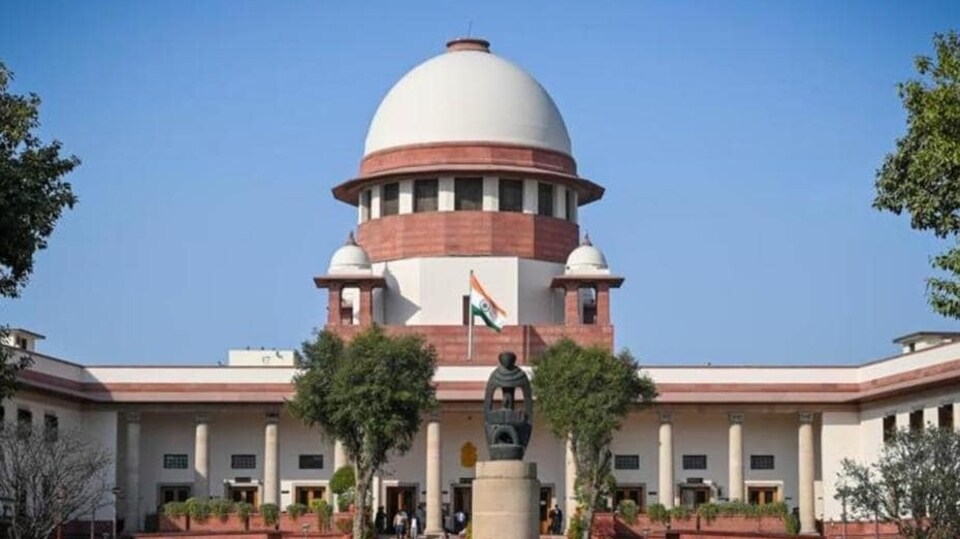
The five-judge constitution bench, including Chief Justice of India DY Chandrachud and Justices Sanjay Kishan Kaul, Sanjiv Khanna, BR Gavai, and Surya Kant, will deliver the judgment on Monday. The apex court reserved the judgment on September 5 after a 16-day argument session.
Attorney General R Venkataramani, Solicitor General Tushar Mehta, and senior advocates Harish Salve, Rakesh Dwivedi, V Giri, and others have represented the Centre and intervenors supporting the abrogation of Article 370.
Senior advocates, including Kapil Sibal, Gopal Subramanium, Rajeev Dhavan, Zaffar Shah, Dushyant Dave, and others, presented their case on behalf of the petitioners.
Also read: Ahead of Article 370 verdict, little hope more despair in J&K
Questions that Supreme Court is looking into
Lawyers contested on various issues, including the constitutional validity of the Centre's decision on August 5, 2019, to abrogate Article 370, the validity of the Jammu and Kashmir Reorganisation Act, challenges to the Governor's and President's rule, and the extension of President's rule in the former state on July 3, 2019.
Numerous petitions challenging the Article 370 abrogation and Jammu and Kashmir Reorganisation Act, 2019, which created Jammu and Kashmir and Ladakh as Union territories, were referred to the Constitution bench in 2019.
During the hearing, the apex court asked who can recommend the revocation of Article 370 in Jammu and Kashmir when no constituent Assembly, the concurrence of which is required before taking such a step, exists there.
Supreme Court also asked how can a provision (Article 370), which was specifically mentioned as temporary in the Constitution, become permanent after the tenure of the Jammu and Kashmir constituent Assembly came to an end in 1957.
Centre’s defence
The central government said that the abrogation of Article 370 was not a "constitutional fraud" and aligned with the legal framework.
It argued that the accession of Jammu and Kashmir to India was similar to the process followed by numerous princely states. It said many states joined through accession post-independence with conditionalities but after merger, their sovereignty was subsumed into India.
The central government said that Jammu and Kashmir's current status as a Union Territory is temporary and it is committed to restoring statehood.
The government said there is a positive transformation in Jammu and Kashmir, citing a decline in street violence since 2019. It claimed an "unprecedented era of peace, progress, and prosperity," with normalcy returning to the region after years of turmoil.
Also read- Article 370 was a stopgap measure: Centre to SC
Petitioners' argument
Petitioners argued that Article 370, initially considered temporary, became permanent after the dissolution of the Constituent Assembly of Jammu and Kashmir.
They contended that Parliament lacked the authority to declare itself the legislature of J-K for Article 370's abrogation, citing Article 354 as insufficient for such power.
Pointing towards Article 370's clause 3, petitioners said that the Constituent Assembly's recommendation was crucial for its removal. Due to the Constituent Assembly's dissolution, required for abrogating Article 370, petitioners claimed that the provision could not be revoked.
Also read- Ends cannot justify means: SC to Centre on Article 370
J&K HC Bar Association’s stand
The Jammu and Kashmir High Court Bar Association presented in Supreme Court that upon acceding to India, the Maharaja of Jammu and Kashmir retained territorial sovereignty over the state but not the sovereign power to rule and govern.
However, the association said, apart from defence, external affairs, and communication, all other powers were retained by the state for legislation and governance.
Inputs from wires


