E-Paper



SC seeks Gujarat’s reply on freeing Bilkis Bano gang-rape case convicts
Bano was 21 years old and five months’ pregnant when she was gang-raped while fleeing the violence during the 2002 riots, and her three-year-old daughter was one of the seven people killed.

 Prefer HTon Google


The Supreme Court on Thursday sought an explanation from the Gujarat government over freeing 11 convicts sentenced to life in 2008 for the gang-rape of Bilkis Bano and murder of seven family members of hers but released last week after the state granted them remission.
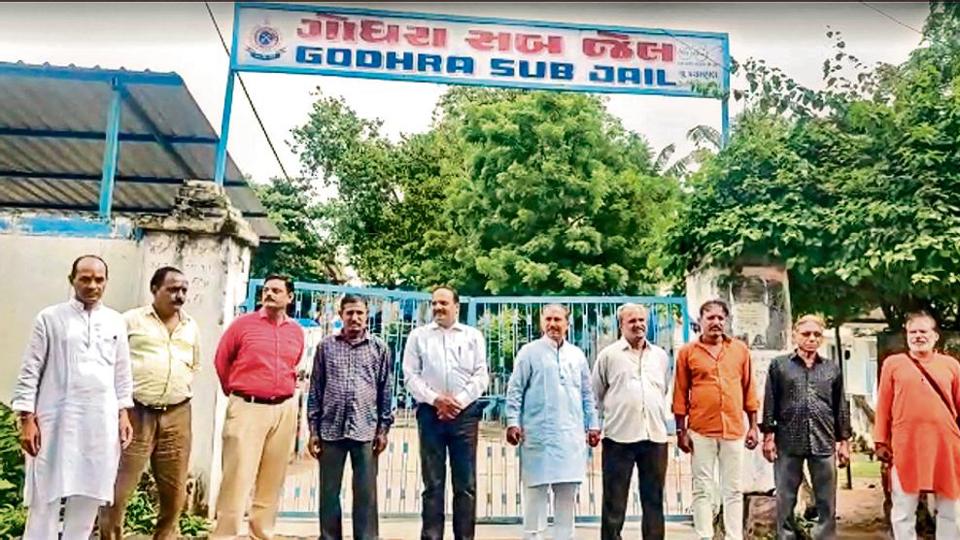
The court clarified that it did not order their release in a May order, and rejected the convicts’ preliminary objection that a public interest litigation (PIL) was not legally sustainable since remission was given in connection with a criminal case and the petitioners had nothing to do with those proceedings.
“I read it somewhere that the court has ordered for their release. That’s not correct. The court asked (the state) only to consider (the convicts’ remission plea) as per the policy,” said chief justice of India NV Ramana, leading the three-judge bench.
Hearing the PIL that questioned the early release of the convicts, the bench pointed out that the Supreme Court routinely deals with criminal writ petitions for directions to the states to consider remission for life-term convicts.
“Whatever crimes they committed, they have been convicted. Now, the question is whether the state is justified in considering remission or not under its policy. We are only concerned if there was an application of mind in granting the remission and if it was within the parameters of law,” added the bench, which also comprised justices Ajay Rastogi and Vikram Nath.
Appearing for the PIL petitioners, senior counsel Kapil Sibal responded that clearly there was no application of mind, particularly in view of the latest policy by the central government that prohibits remission for rape convicts and those serving life imprisonment. Sibal was referring to the special remission policy announced by the Union home ministry in June to decongest jails as part of the Azadi Ka Amrit Mahotsav (75 years of Independence) celebrations.
The senior counsel emphasised that the crime was horrific and the convicts should have never been entitled to premature release in the public interest.
At this point, the bench asked Sibal: “Merely because the act was horrific, is that sufficient to say remission is wrong? Day in and day out remission is granted to convicts of life sentence... what is the exception... we will have to see if it was done as per the policy and if there was application of mind.”
The court then proceeded to issue a notice to the Gujarat government, asking them to file a response to the petition, filed through advocate Aparna Bhat, within two weeks. It also issued a notice to the Union government, which has been made a party on the reasoning that it was imperative for the state government to take approval of the Centre before deciding in favour of early release of the convicts since the case was investigated by a central agency, the CBI.
At this point, advocate Rishi Malhotra, appearing for some of the convicts in the case, questioned the maintainability of the PIL, filed jointly by former CPI MP Subhashini Ali, journalist Revati Laul and professor Roop Rekha Verma. Malhotra said the petitioners are strangers to the criminal proceedings and that their plea should not be entertained at all.
The argument, however, failed to cut ice with the bench, which asked Malhotra to file replies to the PIL on behalf of the convicts he represents. The court further directed the petitioners to add all 11 convicts as parties to the plea, observing the outcome of the case will directly affect them.
The 11 men were released on August 15 after one of them, Radheshyam Shah, approached the Supreme Court in April seeking remission, arguing that they had spent over 15 years in prison in the case. In May, the top court directed the state government to consider their plea in accordance with the 1992 policy – the one prevalent on the date of their conviction. While the latest remission policy of 2014 prohibits early release of rape convicts, no such restrictions were there in the 1992 policy.
Bano was 21 years old and five months’ pregnant when she was gang-raped while fleeing the violence during the 2002 riots, and her three-year-old daughter was one of the seven people killed.
Two days after their release, Bano released a statement through her lawyer, saying the latest development has shaken her faith in justice. She urged the Gujarat government to “undo this harm” and give her back the “right to live without fear and in peace”.
On August 23, the CJI had agreed to consider urgently hearing the PIL demanding the immediate re-arrest of 11 convicts, besides annulling the remission order of the Gujarat government.
Attacking the legality of the remission order, the petition stated: “The grant of remission solely by the competent authority of State of Gujarat, without any consultation with the Central Government, is impermissible in terms of the mandate of Section 435 of the Code of Criminal Procedure, 1973.”
Section 435 of CrPC lays down that a state government can exercise its power of remission in cases investigated by the CBI only after consultation with the Centre. In Union of India vs Sriharan @ Murugan & Ors (2015), the Supreme Court ruled that “the opinion of the central government must have a decisive status” in cases investigated and prosecuted by the CBI. It is not clear whether the home ministry was approached by the Gujarat government before the release.
Citing the “gruesome” facts recorded by the trial court and the Bombay high court while sentencing the convicts, the plea said that “it would be entirely against public interest and would shock the collective public conscience, as also be entirely against the interests of the victim (whose family has publicly made statements worrying for her safety) to grant remission in such a case.”
It added that in a case of such a grave nature, no right-thinking authority, under any extant policy, could consider it fit to grant remission to the convicts.
“It is further submitted that it would appear that the constitution of members of the competent authority of the Gujarat government also bore allegiance to a political party, and also were sitting MLAs. As such, it would appear that the competent authority was not an authority that was entirely independent, and one that could independently apply its mind to the facts at hand,” stated the plea, questioning the composition of the board to consider remission.