E-Paper



BS-IV and below vehicles no more exempt from Delhi-NCR pollution curbs Grap III & IV
The change removes the exemption for light and medium goods vehicles (LGVs and MGVs) at Stage III, and for trucks and heavy goods vehicles (HGVs) at Stage IV.

 Prefer HTon Google


Older goods vehicles carrying essential commodities will no longer be exempt from curbs once the two strictest stages of Delhi-NCR’s pollution-control plan kick in. The Commission for Air Quality Management (CAQM) has removed the exemption for BS-IV and below vehicles under Stages III and IV of the Graded Response Action Plan (Grap).
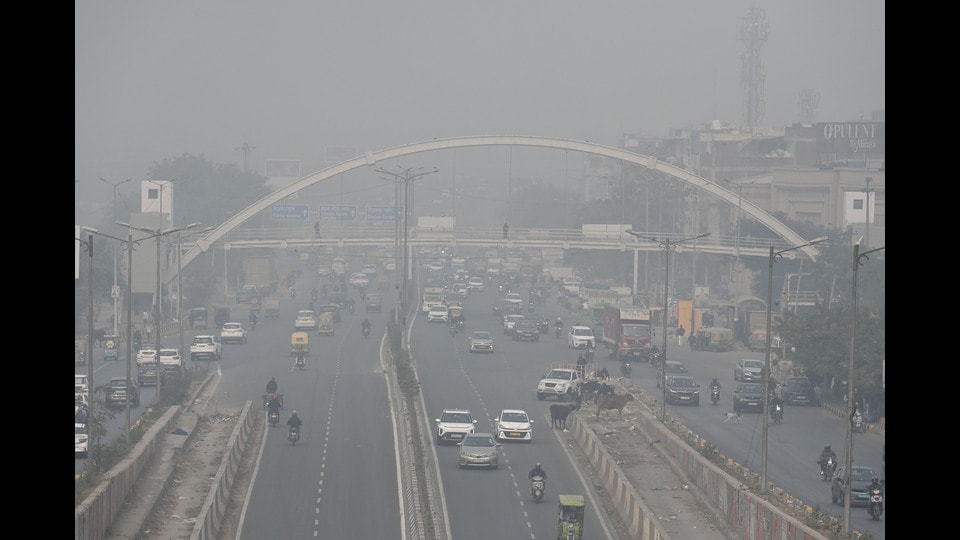
The change is part of a revised Grap schedule approved by the CAQM Full Commission at its meeting on Monday. It removes the exemption for light and medium goods vehicles (LGVs and MGVs) at Stage III, and for trucks and heavy goods vehicles (HGVs) at Stage IV.
To be sure, similar curbs have been in place before. The commission had imposed them through separate orders issued on top of Grap last year.
“We had issued orders on top of the existing Grap restrictions earlier. But now we have formalised these restrictions by including them in Grap,” an official aware of the matter said. “State governments can refer to these and are also welcome to implement directions beyond these as well.”
One such order restricts older goods vehicles entering Delhi throughout the year. In October 2025, CAQM amended one of its directions and under it, commercial goods vehicles registered outside Delhi were barred from entering the city since November 1, 2025 unless they are BS-VI, CNG, LNG or electric. BS-III and below vehicles were shut out whatever they carried. BS-IV vehicles got a one-year transitional window, which ends on October 31, 2026.
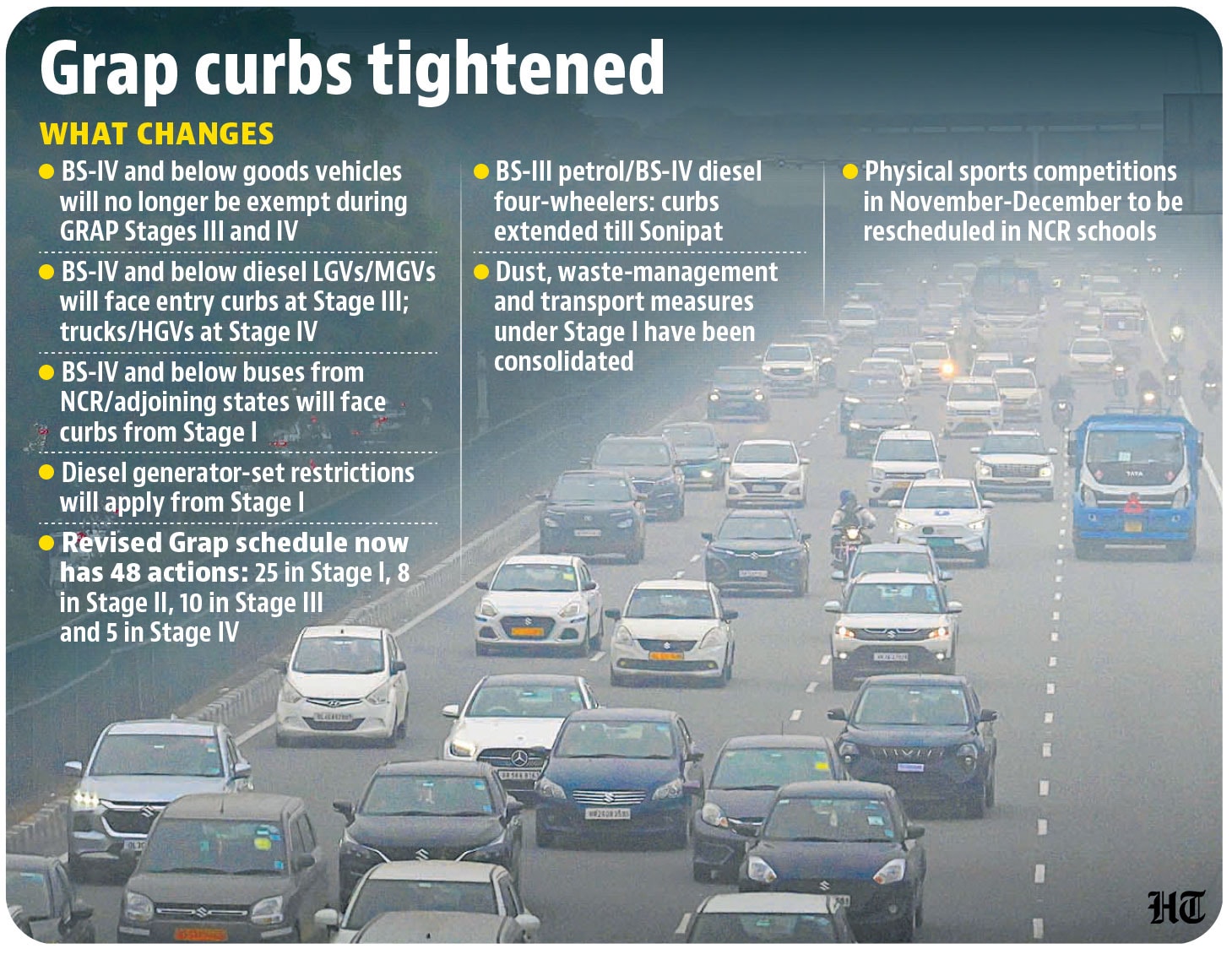
The revised Grap also spells out, under Stage III, the restriction on entry into Delhi of diesel BS-IV and below LGVs and MGVs registered outside the city.
Addressing a press conference, CAQM member-technical Dr SD Attri said the revised schedule has 48 actions across the four stages: 25 under Stage I, eight under Stage II, 10 under Stage III and five under Stage IV.
Actions related to diesel generator sets, and to the entry of BS-IV and below buses from NCR and adjoining states, have moved from Stage II to Stage I, so they apply at an earlier stage of pollution. The authorities have to ensure that diesel generator sets are not used as regular source of power supply.
Instructions for govts of Delhi-NCR
The governments of Delhi and NCR areas have to ensure that inter-city/ inter-state buses from any city or town of the states of Haryana, Uttar Pradesh, Rajasthan and also from the adjoining states of Punjab, Himachal Pradesh, Madhya Pradesh, Uttarakhand and Jammu and Kashmir do not ply in Delhi-NCR.
Only BS VI diesel, CNG and electric buses will be allowed to ply in Delhi-NCR.
Restrictions on plying BS-III petrol and BS-IV diesel four-wheelers have been extended to Sonipat. They already apply in the high vehicle density districts of Gurugram, Faridabad, Ghaziabad and Gautam Budh Nagar at Grap Stage III.
The schedule merges repeated Stage I measures on dust control, municipal solid waste management and transport.
Also Read: Delhi govt’s winter action plan targets sources at correct time, but mirrors Grap
It also allows a minor relaxation under the first Stage III action, including for repairing potholes.
The Citizens Charter under each stage has been revised with additional dos and don’ts.
Dust control measures
Separately, CAQM has extended web-portal registration and monitoring of dust-control measures to eligible construction and demolition sites beyond municipal limits. This covers urban areas, controlled areas, development and industrial development areas, industrial areas and zones, and highway corridor zones.
The existing threshold of 500 square metres of plot area remains unchanged.
The commission also noted its advisory of September 10, which asks that physical sports competitions scheduled in NCR in November and December be rescheduled to protect students’ health. It also reviewed its 2026-27 plantation targets: Delhi, Uttar Pradesh and Rajasthan have exceeded theirs, while Haryana’s NCR districts have met half, planting 6 million against a target of 12 million.
Environmentalist Vimlendu Jha, however, said that the CAQM is mandated to work towards improving air quality of Delhi and NCR throughout the year.
“In the last few days, the Delhi government and now CAQM have been posturing that they are well-prepared for the pollution season. But the question is why are steps not being taken to control pollution year round,” he said.
These measures could have been considered as concrete steps if it was the first year of functioning of CAQM but this body has been in place for many years and is empowered to take strong decisions, Jha added.
Frequently Asked Questions