E-Paper



New edu minister says teachers' quality depends on competence, empathy: 'AI shouldn't replace human values'
Joshi said teacher competence and empathy are key to education quality, while urging responsible AI use without replacing human values.

 Prefer HTon Google


Union education minister Pralhad Joshi on Monday said the quality of education depends on the competence and empathy of teachers, underlining their central role in implementing the National Education Policy (NEP) 2020 and building a “Viksit Bharat” by 2047.
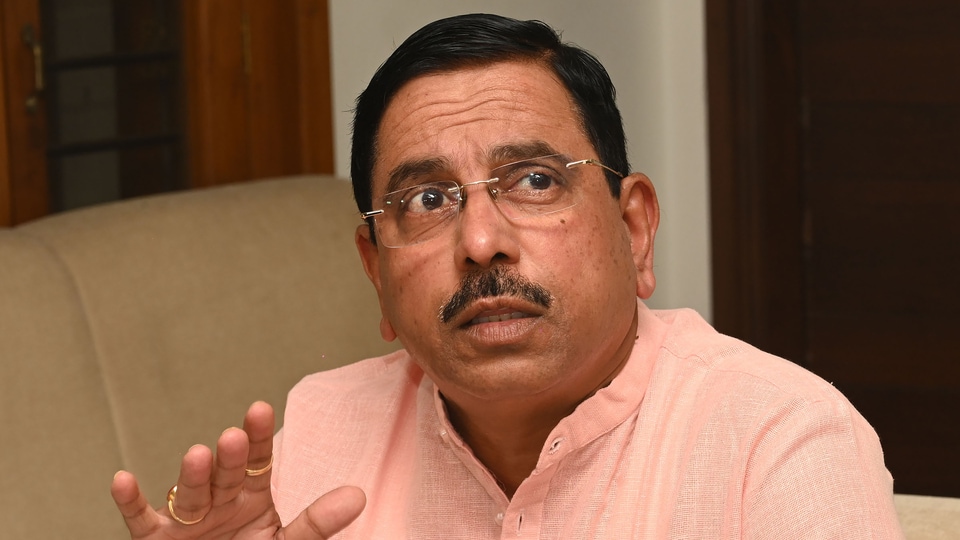
Addressing the National Council for Teacher Education’s (NCTE) 32nd Foundation Day celebrations through a video message, Joshi said, “Educational quality rests on the competence and empathy of our teachers” and highlighted the role of the four-year undergraduate Integrated Teacher Education Programme (ITEP) course in teacher preparation.
ITEP to become sole recognised teacher qualification from 2030
ITEP is set to become the only recognised qualification for school teacher recruitment from 2030. NCTE has expanded ITEP from a pilot in 42 institutions with 3,950 seats in 2023-24 to over 409 institutions offering over 38,000 seats this academic year.
On the use of artificial intelligence in teacher education, Joshi said it should be leveraged responsibly to improve teaching while retaining the human element. “AI should enrich pedagogy without replacing essential human values,” he said.
Also read: Course for only teacher degree for post-2030 jobs scaled up without framework
NCTE’s foundation day celebrations at Gautam Buddha University, Greater Noida, were held alongside a national conference on ITEP, themed “Reflection, Reform and Future Readiness”, with more than 400 ITEP institutions participating in hybrid mode.
Delivering the welcome address, Professor Pankaj Arora, Chairperson, NCTE, provided an overview of NCTE’s transformative journey and outlined the Council’s ongoing commitment to building a robust teaching ecosystem aligned with national priorities.
NCTE launches apps for teacher mentoring, professional development
Several new initiatives were launched at the event. NCTE launched the MITRA and PUSHTI mobile applications under the National Mission for Mentoring (NMM) and National Professional Standards for Teachers (NPST), respectively, to support teacher mentoring and continuous professional development.
NCTE also released implementation handbooks for the two initiatives, publications on ‘AI in Teacher Education’ and ‘Pedagogy in Higher Education,’ and new volumes of its journals ‘Anweshika’ and the ‘Indian Journal of Teacher Education.’ The Vidya Samiksha Kendra (VSK) at NCTE headquarters was also made operational.