
 E-Paper



Telangana government spent over ₹1.11 lakh-crore beyond budget last year, says CAG
The Telangana government spent ₹1,11,477 crore beyond the approved budget of ₹3,37,107 crore during the financial year 2023-24, a 33% increase


The Telangana government spent ₹1,11,477 crore beyond the approved budget of ₹3,37,107 crore during the financial year 2023-24, a 33% increase, according to a report of the Comptroller and Auditor General (CAG) tabled in the state assembly on Thursday.
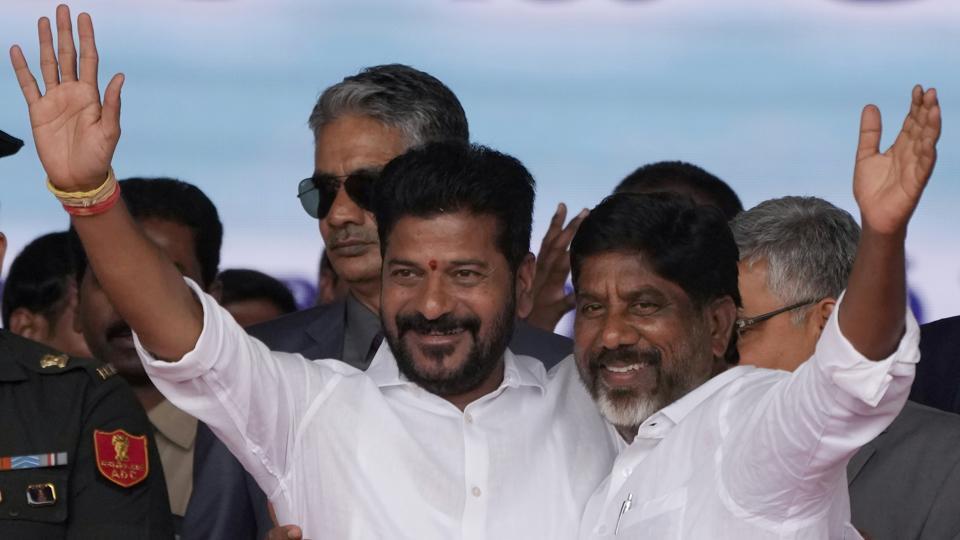
Deputy chief minister Mallu Bhatti Vikramarka, holding finance portfolio, tabled the CAG report on finance and appropriation accounts for 2023-24.
”Eexcessive expenditure was incurred in 11 departments, including an excess of ₹8,142 crore in the revenue department, ₹96,822 crore in the public debt department (towards repayment of ways and means advances) and ₹2,307 crore in the municipal administration and urban development department,” the report stated.
It also highlighted that the government borrowed ₹10,156 crore through ways and means advances and took overdrafts amounting to ₹35,425 crore over 145 days.
“During the financial year 2023-24, the state government spent ₹24,347 crore on interest payments and ₹26,981 crore on salaries. With a revenue surplus of ₹779 crore, 45% of revenues were allocated to salaries, pensions, and interest payments. The Telangana government also received ₹9,934 crore in grants from the Centre during the financial year,” it further stated.
As per the statement of medium-term fiscal policy declared in July 2024, the revised estimate of the total outstanding liabilities as percentage of GSDP is 33.10 as on March 31, 2024.
However, the ratio of the outstanding public debt and other liabilities ( ₹5,17,659 crore) including the balance of off-budget borrowings ( ₹1,20,944 crore as disclosed by the state government) and excluding back to back loans by Government of India in lieu of shortfall in GST compensation ( ₹6,949.49 crore), works out to 34.47% of GSDP, against the ceiling of 33.10%, the CAG report pointed out.
With regard to internal debt, including long-term market loans, the CAG report pointed out that during 2023-24, as many as 50 loans totalling ₹49,618 crore bearing rate of interest varying from 7.32% -7.75% redeemable between the years 2030 and 2050 were raised.
The CAG pointed out that the Telangana government had amended the Fiscal Responsibility Budget Management (FRBM) Act in 2020, raising the limit of guarantees that it can provide to various Institutions to 200% of total revenue receipts of the previous year.
During 2023-24, the state government provided guarantees to the extent of ₹31,280 crore to various institutions/departments to obtain loans from financial institutions. The total outstanding guarantees as on March 31, 2024, were ₹2,20,607 crore (including outstanding guaranteed loans to the extent of ₹1,20,944 crore raised by the special purpose vehicles (SPVs), corporations, and other institutions.
“These loans are treated as receipts of the concerned entities and do not appear in the books of the government. However, the loan repayments appear in the government account, resulting in irreconcilable adverse balances and understatement of liabilities in the government accounts,” the CAG report said, adding that the government should make adequate provision in the budget for clearing the adverse balance or reclassify the debt as expenditure.
During 2023-24, the Telangana government availed special drawing facility of ₹10,156 crore for 349 days and ways and means advances of ₹52,517 crore for 321 days, from the Reserve Bank of India. This is besides an overdraft of ₹35,425 crore was availed for 145 days by the state government.
The capital expenditure for 2023-24 was ₹43,918 crore. Additionally, ₹76,773 crore was allocated to local bodies and other institutions, reflecting an 11% increase compared to the previous year, the CAG report said.


