
 E-Paper



Telangana region gets very high rain once in three decades: Study
The study, done by the Telangana State Development and Planning Society (TSDPS) under department of planning, analysed the rainfall situation in the region during the south-west and north-east monsoon seasons since 1952.

 Prefer HTon Google


Extremely high rainfall being witnessed in July this year in Telangana, particularly in northern and central parts of the state, is an unusual phenomenon that occurs once in three decades, revealed a study commissioned by the state government.
The study, done by the Telangana State Development and Planning Society (TSDPS) under department of planning, analysed the rainfall situation in the region during the south-west and north-east monsoon seasons since 1952.
It observed that there has been a steady increase in the rainfall pattern in the region in the last three decades, but for a couple of dry spell years.
“It is a decadal change. In fact, the entire India, particularly the peninsular region, has been witnessing an increase in the rainfall over the last three decades,” weather expert and former deputy director general of India meteorological department (IMD) Dr Y V Rama Rao told HT.
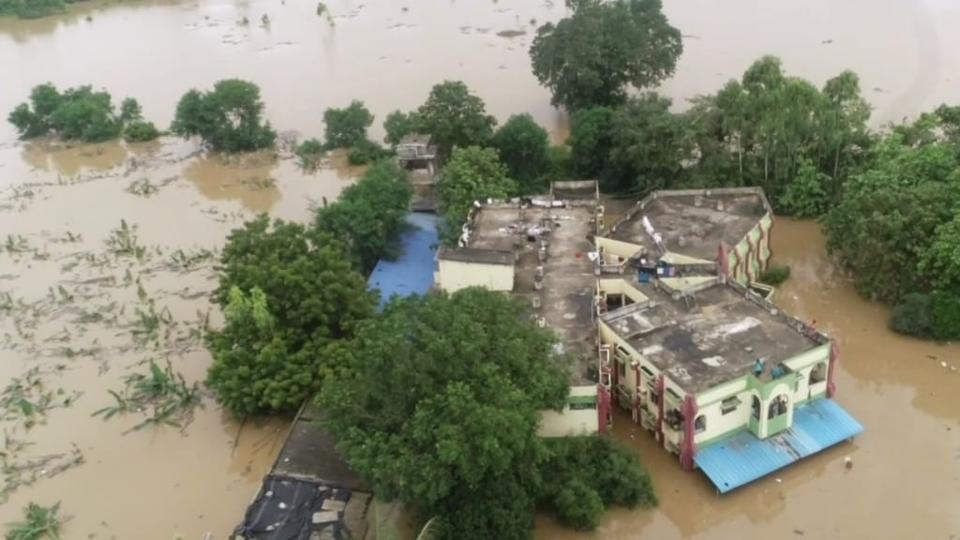
During July this year, several parts of Telangana witnessed continues wet spell between July 9 and 14, where heavy to very heavy with extreme heavy rainfall occurred over Nirmal, Nizamabad, Adilabad, Kumuram Bheem, Mancherial, Karimnagar, Jagtial, Jayashankar and Suryapet districts.
At least 25 places recorded more than 200 mm of rainfall in a single day during this five-day period, resulting in heavy flooding to Godavari river, its tributaries and several streams, wreaking havoc in these districts.
The highest rainfall of 391 mm occurred at Jainoor in Kumaram Bheem district on July 13, followed by 384 mm at Kerameri and 352.4 mm at Sirpur-II in the same district on the same day. Similar extreme heavy rainfall was witnessed on July 10, 12 and 14.
“The highest rainfall witnessed in a gap of 24 hours in the region in the last three decades, however, was 51.7 cm in Mulugu district on July 19, 2013, followed by 50.3 cm in Kumaram Bheem district on July 23 in the same year,” the report said.
Rao, who is also a consultant for the TSDPS, attributed this unusually high rainfall in the region to climate change caused largely on account of greenhouse gases-induced warming. “They absorb the heat and obstruct the clouds, resulting in high rainfall. Another reason could be La Nina effect that causes low pressure resulting in heavy rains,” he said.
The report also said regional anthropogenic forcing such as from aerosols and changes in land use patterns due to urbanisation which enhance the local convection in association with the favourable synoptic conditions also led to heavy rainfall.
The report said Telangana receives 80.4% (739.1 mm) of the annual rainfall merely from south-west monsoon season while the northeast monsoon contributes 12.2% (113.2 mm) of the annual rainfall. The highest rainfall is generally witnessed in northern and eastern parts of the state in June, July, August and September, compared to southern Telangana.
It said the annual rainy days in Telangana are 62 with south-west monsoon season accounting to 48. The highest annual rainy days are observed from extreme eastern districts with the highest over Bhadradri Kothagudem (82 days) and Mulugu (76 days) followed by Kumuram Bheem (74 days) and lowest over southern districts of Jogulamba Gadwal (48 days) followed by Wanaparthy & Hyderabad (52 days).
The TSDPS report said July (24.9%) accounts for the highest contribution from the south-west monsoon rainfall, followed by August (23.7%), September (17.7 %) and June (14.1%) respectively.
During the period from 1951 to 2022, the highest mean rainfall of 1,351.1 mm was received in 1983-84 due to excess rainfall of 53 per cent during the south-west monsoon and 117 percent excess during the northeast monsoon. The lowest rainfall in this 70-year period was 559.3 mm was received in 1972-73.
“These rainfall patterns will help the state augment water resources in the state and agricultural management,” the report said.


