
 E-Paper



Terms of Trade: What ails India’s higher education?
Why India’s debate on reservations misses a deeper crisis in higher education quality and talent development


This week’s column makes an argument which is best understood in three parts.
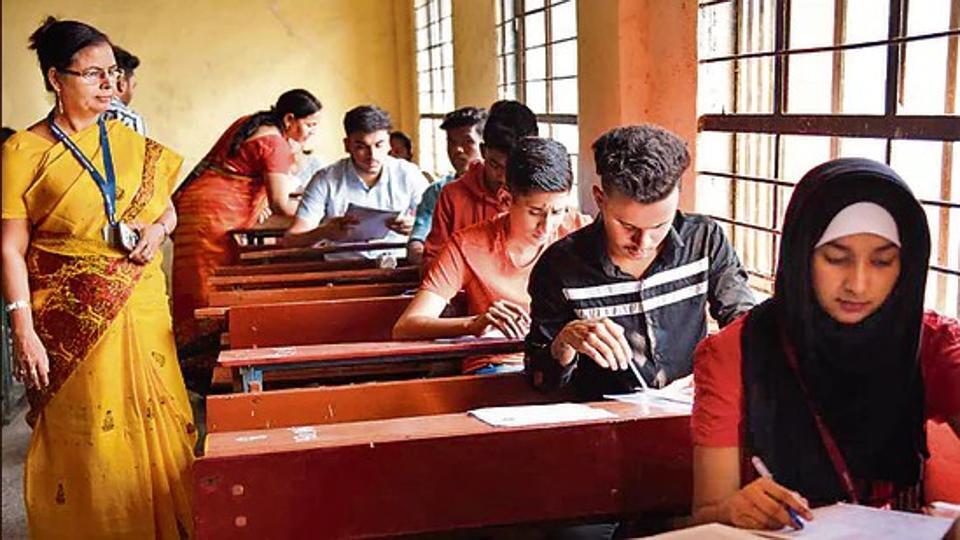
The glacial pace towards equality
This author was a student in Jawaharlal Nehru University when what is now known popularly as the Mandal 2.0 moment came in 2006. Arjun Singh, the then education (or human resource development) minister in the United Progressive Alliance (UPA) government announced the extension of reservations for Other Backward Classes (OBCs) to all centrally funded higher educational institutions. Hitherto, these benefits were only available in government jobs.
Now, there are enough legal/constitutional provisions to debate the issue of reservations for OBCs. The fact that it continues to be caveated with a “creamy layer” clause and that there is now a possibility that it will be sub-stratified to differentiate between the ‘more OBCs’ from the ‘less OBCs’ – this is what bodies such as the Justice Rohini Commission are believed to have recommended – is clear indication that it is far from a black and white question.
But none of this should let you get fooled into believing that reservations are a purely legal or academic debate in India. This is what my generation of students and those who were in higher education institutions when Mandal 1.0 happened under the V P Singh government in 1990 saw first hand in our campuses. The opposition to reservation in universities, in praxis, was downright reactionary, even bordering on violence. It was B R Ambedkar’s political popularity among the Dalits leading to the Poona Pact being signed which paved the way for reservation for Dalits and tribals before independence. It is the sheer democratic weight of the OBCs which has ensured that reservations sailed through with the executive and legislative putting its weight behind it despite judicial reservations post-independence.
Also Read: Terms of Trade: So long, employment guarantee…
Elite universities and other such educational institutions have changed in character after Mandal 2.0. They now have significantly more OBC students. A lot, if not most of them are far less privileged than the cohort of students which studied in these places before the policy came into being. One can argue unambiguously that our publicly funded higher educational institutions are now more socially representative than they were pre-2006. This is us, as a society, slowly but steadily, shedding a part of the historical burden of social inequality. It ought to be celebrated. It should not surprise anybody that with growing numbers, subaltern or Bahujan political activism or assertion has also seen a rise in Indian higher educational institutions.
Equality in representation alone, however, is not a guarantee of equality of opportunity which education is expected to create. The affirmative action wave which followed Mandal 2.0 ran into two major headwinds.
First was a lack of sensitivity (even if inadvertent) about pedagogical methods not being tweaked enough to cater to a large cohort which did not bring with it the larger “meritocratic” endowments of students who came from privilege. Someone who is sitting in a post-graduate political economy lecture in JNU and is being asked to read a Maurice Dobb text will do very differently depending on whether they studied in an elite Delhi University college or a university in a Tier III town in Bihar or Andhra Pradesh and has never even been taught in English, let alone be exposed to such demanding texts. Mandal 2.0 shifted the balance of the cohort of students towards the latter.
The second was a sheer inability to deal with the teaching workload in terms of volume. Mandal 2.0 was also accompanied by a 54% seat increase and most centrally funded universities have seen a significant worsening of the workload per teacher. This has put a severe constraint on the ability of teachers to personally engage with students. One of my teachers who taught me in my undergraduate economics course, and is pretty much responsible for my larger interest in the subject which demanded him giving me personal time, told me about it a couple of years ago. “When you were a student, the class was small enough for me to pay individual attention to interested students. Now, even if I tried to do that, I would go mad because the class size has now increased by more than three-four times”.
Also Read: Terms of Trade | We need a new national interest framework
These two factors, put together, have blinded the system at large to the needs of those who deserve it the most. Now, bring in the systemic bias and the caste-based vendetta which pervades our educational institutions; and things can be significantly worse at higher academic levels given the hierarchical powers a supervisor enjoys vis-à-vis the student. In all this you have an objective basis for universities becoming ticking time bombs of latent discrimination waiting to explode. Given the hierarchy, it often ends up consuming the student rather than the system. This is what those stories about student suicides in higher educational institutions represent in its most macabre form.
When seen in this larger context, any rational mind will find it difficult to disagree with the larger intent of the widely debated UGC recommendations which were stayed by the Supreme Court recently. Whether these recommendations see the light of the day by similar legislative/executive backing as was seen in the case of reservations or whether they are allowed to be diluted or even derailed under judicial cover remains to be seen. In a way, this will also test the prowess of larger subaltern politics in India as to whether its efficacy stops at just winning representation or also equality after representation.
The absence of a framework for quality
The debate however, does not end here. India’s ability or lack of it to exploit its demographic dividend will not be determined by the outcome of this (even if) extremely important battle for equality of representation and opportunity in education. Here is why.
Last week, Financial Times carried a long story on what it called China’s genius programme acting as a key driver of its onward march in the cutting-edge field of Artificial Intelligence. To cut a long story short, the Chinese state identifies students who are exceptionally bright at an early stage, tests them through internationally recognised competitions such as the science Olympiads, picking out the best of the best and then makes sure they get into the best institutions for higher education. Among the biggest incentives for a student to pursue this line is they get to skip the Gaokao, China’s notoriously hard university entrance examination. These geniuses are expected to finish college level courses in their high school. This programme has now formed a strong virtuous loop with China’s larger economic prowess.
““I’ve witnessed first hand how China has grown from having zero AI talent 20 years ago to mass producing them,” he (Dai Wenyuan, a Chinese tech billionaire, who was also a genius class graduate) said. “Some of our most cutting-edge work is now done by fresh graduates. The real geniuses to change the world soon could well be among them”,” the FT story quotes him as saying.
The origins of China’s rapid march in producing such talent go to the Maoist period’s urge to advance productive forces in the country. It began with a big push to school education.
India too, made the right moves in its formative years, building institutions such as the IITs and even punching way above its weight in things such as space technology. But it would not be an exaggeration to say that the Indian state never really acquired a China-like zeal to identify, shape and harvest talent for its national economic advance like its Chinese counterpart.
Among the three key factors which can be listed for this failure are, a completely lackadaisical approach to the quality of primary education even though there have been some advances on the quantity front, a lot of educational employment being seen as a political patronage distribution exercise (even if sometimes rightly driven by notions of equality) and, by and large, a complete lack of interest by domestic capital to push for building a pool of super-talented students. While there are critical voices which lament the lack of such things, it has never really led to even a sincere attempt to change things. There is nothing to suggest that things will change in the near future.
The dialectic with a missing synthesis:
It is the classical problem of asymmetry of incentives.
The socially discriminated, who have only recently been allowed adequate entry into elite educational institutions are still worried about equality. It is difficult to find fault with their concerns.
The fellow-travelers of the current regime are busy purging mostly imaginary left-liberal ghosts in higher educational institutions. The purge is often ending up in institutionalising what can only be called right-wing zeal to portray political hegemony. Remember those intermittent reports of downright ridiculous conferences and research programmes linking things such as cancer research to cow urine?
Capital, big and small, has realised that it is not worth trying to compete with something like its Chinese counterpart and is reconciled with a situation where returns do not necessarily have to be tied with excellence and instead to be found in captive markets, arbitrage or even better, political patronage, doing the job. Indian capital is happy to be at the base camp of the summit rather than try and scale it.
Also Read: Terms of Trade: A five-point political economy problem for India
As is obvious, the first two strands described above are pretty much the central contradiction in India’s educational debates: caste and communalism. The third is the central contradiction facing India’s larger economic fortunes.
Political correctness has so far prevented the first and second strands from really interacting with the third. Unless this Chinese Wall is broken, India will continue to lag behind China despite a million mutinies and counter-mutinies.
Maybe, the predicament is rooted in our historical evolution. Unlike China, we did not do away with feudal privilege. The post-colonial Indian state perhaps won the peace by avoiding a violent revolution, but the incentives it generated in the society as a result of dialectics between capital and democracy risks us losing the international war for dominance. For all of the good things democracy has done to us, its biggest indictment is that nobody with a strong stake in democratic competition is even interested in winning this war.
(Roshan Kishore, HT’s Data and Political Economy Editor, writes a weekly column on the state of the country’s economy and its political fall out, and vice-versa)
 ABOUT THE AUTHORRoshan Kishore
Roshan Kishore is the Data and Political Economy Editor at Hindustan Times. He heads the newsroom's data journalism team, which produces Number Theory, a daily data-driven feature for the print edition and the HT app. Number Theory uses data analysis and story-telling based on it to add value to the newsroom’s daily coverage by putting stories in a larger context on a range of issues, including politics, macroeconomy, markets, global affairs and climate. Under his leadership HT’s data journalism work has established itself as a niche product in Indian journalism and pushed the boundaries of marrying academic rigour with news sense and speed. Along with writing and editing data stories, he has also been writing a weekly political economy column called Terms of Trade for HT Premium. A trained economist with an MPhil degree from Jawaharlal Nehru University, Kishore has also been a visiting fellow at the Centre for Advanced Studies of India (CASI) at the University of Pennsylvania. Along with his journalistic work, his writings have also appeared in journals such as the Economic and Political Weekly and working papers for CASI and UNESCAP.Read More


