E-Paper



From HT archives: The flag-bearer of Indian socialism who left a mark
Ram Manohar Lohia, the forebearer of backward caste and agrarian assertion that changed politics in the heartland forever, died in the early hours of October 12, 1967 in Delhi’s Willingdon Nursing Home. He was 57.

 Prefer HTon Google


Ram Manohar Lohia, the forebearer of backward caste and agrarian assertion that changed politics in the heartland forever, died in the early hours of October 12, 1967 in Delhi’s Willingdon Nursing Home. He was 57.
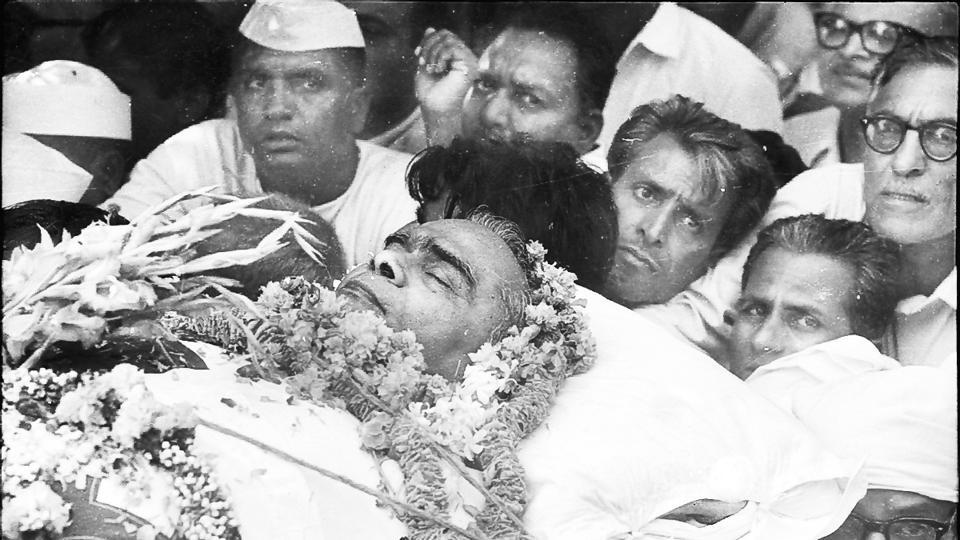
As reported by Hindustan Times at the time, Lohia was struggling with poor health and had been operated upon for an enlarged prostate gland two days before. As news of his death spread, the President, Prime Minister and other top leaders rushed to his home as the country sank into grief, a testament to his wide-ranging political legacy.
Lohia was, at once, many things — a follower of Mahatma Gandhi, a socialist, a multilingual leader strongly attached to only Hindi, a hardline nationalist and Sino sceptic and the tallest critic of Nehruvian India. This extraordinary political life began, as most things in Indian politics did in the 20th century, in Uttar Pradesh. Born in a bania family in the dusty hamlet of Akbarpur in 1910, Lohia studied first in Varanasi and then in Calcutta before going abroad and earning a doctoral degree from Berlin with his PhD thesis on salt taxation in India in 1933 (an early evidence of the impact of Gandhi’s Salt Satyagraha on young men across the country). These four years he spent in Berlin were a tumultuous time for the country with economic problems, strikes and political uncertainty. By the time he set sail, Nazis were on the ascendance.
Within a year of his return to India, he, along with other firebrands, founded the Congress Socialist Party — the socialist wing of the broad-tent Indian National Congress. He was quickly noticed by Jawaharlal Nehru who picked him up to be on one of the party’s top panels. By the time the 1940s rolled around, Lohia had started formulating his own vision of samajwad, or socialism — ideas he would give cogent shape in a Panchmarhi meeting in 1952 as “sapt kranti” (seven revolutions) that spoke of equality of gender, political and economic opportunities, eradication of caste, skin colour bias, and foreign domination, and interestingly, the inequality perpetrated by private capital and the interference in private life.
Though a staunch Gandhian, his disillusionment with the Congress party after Independence was quick, reaching its zenith in his failed 1962 campaign against Nehru from the latter’s pocket borough of Phulpur. The next year, he entered the Lok Sabha after winning a bypoll, and in 1967, played a key role in bringing together disparate parties — including the Bharatiya Jana Sangh — on a common platform to form the first non-Congress government in Uttar Pradesh, unthinkable at the time.
But his political legacy far overshadows his electoral triumphs.
Lohia was among the first leaders who gave an exposition of Indian socialism, rooted in the realities of the subcontinent and gave a space to the aspirations of the middle and lower castes in a newly independent country. In his creation of a doctrine of national and foreign policy that centred the grassroots, Lohia was moving away from the traditional leftist politics in India that scarcely acknowledged caste. In contrast, Lohia wanted to bring Dalits, backward groups, minorities and women under a common umbrella and stitch together a political coalition that would take on the agda (forward groups).
Though he was unable to resolve the problem of personality clashes and fragile egos — the confusing maze of socialist parties frequently merging and breaking away from each other contributed to the eventual demise of socialist-style politics — he inspired a young brigade of politicians such as Mulayam Singh Yadav, Ram Vilas Paswan and Lalu Prasad who not only fused the agrarian political legacy of Chaudhary Charan Singh with backward caste churn in the 1980s and 1990s, but also tasted mainstream electoral success in an unprecedented manner.
Of course, in this success was also hidden the seeds of the eventual downfall of socialist politics, and in some ways, the Lohiaite dream. But his rootedness, efforts to create a new class of political constituents, remain pragmatic in his choice of friends and allies, and breathe new life into India’s political philosophy created a new electoral grammar for the Gangetic Plains, one that continues to animate politics today.