
 E-Paper



From HT Archives: A big leap towards an equal society
India's first law against untouchability came into effect on June 1, 1955, with the aim of eradicating the practice.

 Prefer HTon Google


If there was one act enshrined in India’s founding document that was as radical as universalising adult franchise, it was a promise to the citizens of a yet-to-be-born nation that the most heinous of caste practices, untouchability, had no place in an independent India. Even as the Constitution championed individual liberty, it recognised that such freedoms would have little meaning for millions of people whose mere shadows were deemed polluted.
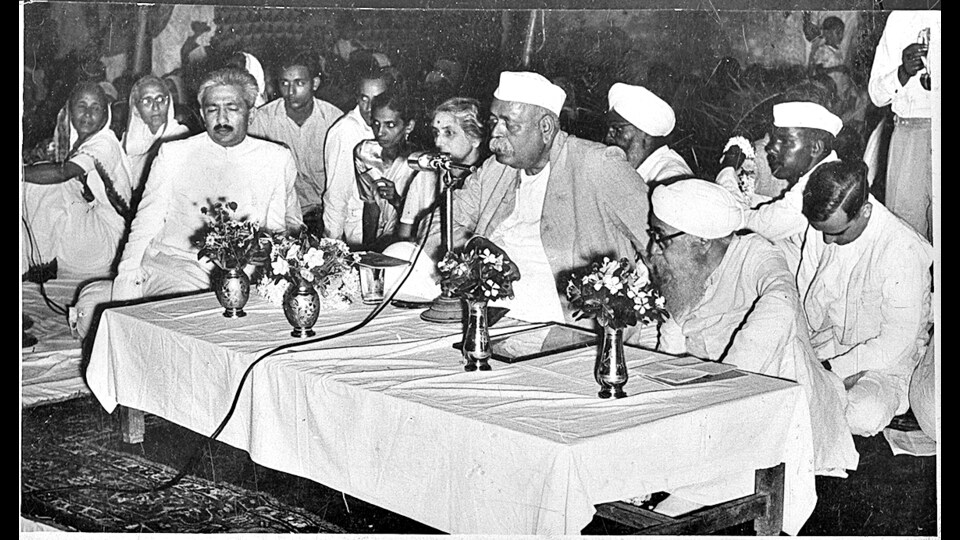
However, caste practices proved stickier than what many members of the Constituent Assembly had envisioned. In some ways, India’s first law minister BR Ambedkar had predicted such a scenario in his last speech before the Constituent Assembly in November 1949.
“On the 26th of January 1950, we are going to enter into a life of contradictions. In politics we will have equality and in social and economic life we will have inequality. In politics we will be recognising the principle of one man one vote and one vote one value. In our social and economic life, we shall, by reason of our social and economic structure, continue to deny the principle of one man one value. How long shall we continue to live this life of contradictions? If we continue to deny it for long, we will do so only by putting our political democracy in peril,” he told the 300-odd members, underlining the urgent imperative to ensure social equality.
This impulse was the driving force behind the government’s push in the first decade of Independence to outlaw untouchability and enforce penalties on the then widespread practice
As reported by Hindustan Times on June 2, 1955, the law prescribed punishment for people enforcing religious and social disabilities on the ground of untouchability. This included refusal of access to any person to a shop, hotel, place of public entertainment, hospital or educational institution, or refusal to sell goods or render service on the ground of untouchability have all been made punishable. The punishment prescribed was imprisonment that may extend to six months or a fine of ₹500, or both.
Hindustan Times noted on its front page that day that then home minister Govind Ballabh Pant, said that the bill would hasten the eradication of untouchability in every part of the country, and help the process of social reform.
The bill finally came into effect on June 1, 1955 after a largely smooth passage in Parliament, where Pant was able to fight off attempts by some conservative members within his party and opposition to introduce amendments and soften some of the provisions that were seen as too harsh.
How did it fare? Ironically, soon after it came into effect, it became clear that if anything, its provisions needed to be stronger and the offences more clearly defined. In the face of an entrenched caste system and a law-enforcement system packed with members of dominant communities, especially in the hinterland, the law performed an important symbolic role but was unable to stem the tide of caste-based crime – especially because its ambit was seen as extending only till untouchability, and not other caste-based crimes. In 1976, the provisions were bolstered and the act renamed as the Protection of Civil Rights Act. And finally in 1989, the government passed the Scheduled Caste and Scheduled Tribe (Prevention of Atrocities) Act, which had very stringent provisions, elaborate definitions of caste-based crimes, and automatic processes that sought to empower caste-marginalised communities.
Seven decades after the first law against untouchability was passed, caste-based discrimination remains a reality. Untouchability has morphed into social boycotts, segregated housing or hate crimes on intercaste couples. Still, the 1955 law was pivotal because it marked the first step of a young nation striving to fulfil a promise made by the Constitution to its constituents.


