
 E-Paper



The tragic tale of the trial of Jayalalithaa
From 2014 to 2016, Jayalalithaa faced intense legal battles and a historic election win, becoming Tamil Nadu's first chief minister to serve consecutive terms.

 Prefer HTon Google


September 27, 2014 to December 5, 2016 (a total of 802 days) could be termed as the most tormenting period of Jayalalithaa’s personal and public life, save the brief bright spot when her party— the All India Anna Dravida Munnetra Kazhagam (AIADMK)— won the second consecutive term in the Tamil Nadu assembly elections in May 2016. This was against all odds and even beyond her own expectations, despite the routine electoral campaigns and strategising that the poll battle involved. It was a sort of record, because no party had been re-elected consecutively in Tamil Nadu since 1984. Thus, Jayalalithaa became the first chief minister to win consecutive terms after MG Ramachandran (MGR). She was overwhelmed, but became a shadow of her past after the dramatic verdict on September 27, 2014. The 18-year-long trial in the disproportionate assets (DA) case ended in shock and dismay for her and AIADMK loyalists.
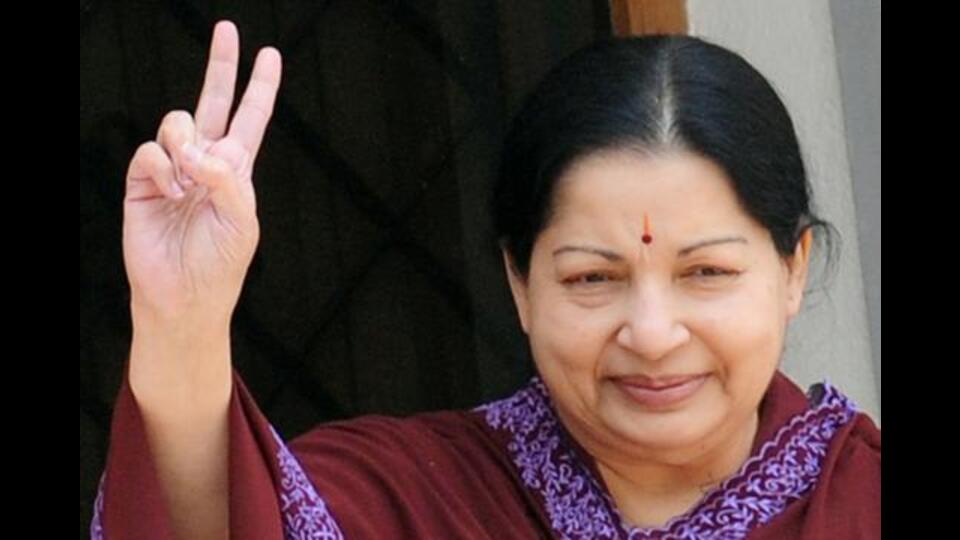
The timeline of the case can be traced to a complaint filed by Subramania Swamy in June 1996, citing Jayalalithaa’s amassed wealth, followed by a First Information Report (FIR) registered by the ruling Dravida Munnetra Kazhagam (DMK). In June 1997, Jayalalithaa, along with Sasikala, Ilavarasi and Sudhakaran were formally charged and confirmed by a special court in October the same year. A critical turning point to the case came in February 2003 when K Anbazhagan, the secretary of the DMK, filed an appeal in the Supreme Court of India to transfer the proceedings outside Tamil Nadu to ensure a fair trial, citing the fact that Jayalalithaa had already returned to power in Tamil Nadu after AIADMK won the May 2001 assembly elections. The Supreme Court, in response to the appeal, ordered the trial to be moved to Bengaluru, Karnataka. The trial subsequently recommenced in a special court in Bengaluru.
The trial progressed slowly due to several changes in prosecution, witnesses, political climate and repeated petitions. It ought to be recorded as an exemplar of the judicial process wherein, on the one hand, influential people can delay the judicial process inordinately in India, and on the other, how they can also be brought to justice. There were rumours that this could not have happened, but for the powerful political interests narrowing down upon the power shift in Tamil Nadu politics. But the truth was that legal perseverance prevailed and Jayalalithaa became the first chief minister to be convicted and lose her seat while in office.
Jayalalithaa’s life is a key lesson about how to choose and where to keep company in power and politics. She was no martyr, but deserved empathy, mainly because of the unusual trappings of a life subjected to the authoritative repression of patriarchy both in cinema and politics, as part of a socially constructed system of power. The perception of a woman, in a traditional society, irrespective of her power and status, is at large governed by the cultural norms and social ideology.
Jayalalitha’s long stay (75 days) in Apollo Hospital was shrouded in mystery, not because of the status of her health, but because of her position as a fallen leader and the power plays surrounding her— the tug-of-war for control between Sasikala, trying to chart the course of transition of power within the AIADMK, and the Bharatiya Janata Party’s (BJP) attempt to checkmate Sasikala and build its own space in Tamil Nadu politics. A real twist of fate in this long trial was that it effectively ended Sasikala’s aspirations for power on February 14, 2017, even as she readied herself to take charge of the government. She was found guilty along with other co-accused, while proceedings against Jayalalithaa were abated and dismissed on account of her death. The timing of the judgement could be mistaken for a sheer coincidence, but for the stroke of the delivery and its impact on the course of politics in Tamil Nadu henceforth.
(Prof.Ramu Manivannan is a political scientist – scholar-activist in areas of education, human rights and sustainable development. He is currently the director, Multiversity – Centre for Indigenous Knowledge Systems, Kurumbapalayam Village, Vellore District, Tamil Nadu.)


