
 E-Paper



Trinamool, Samajwadi Party won’t join JPC on Bill to unseat jailed ministers: Derek O’Brien
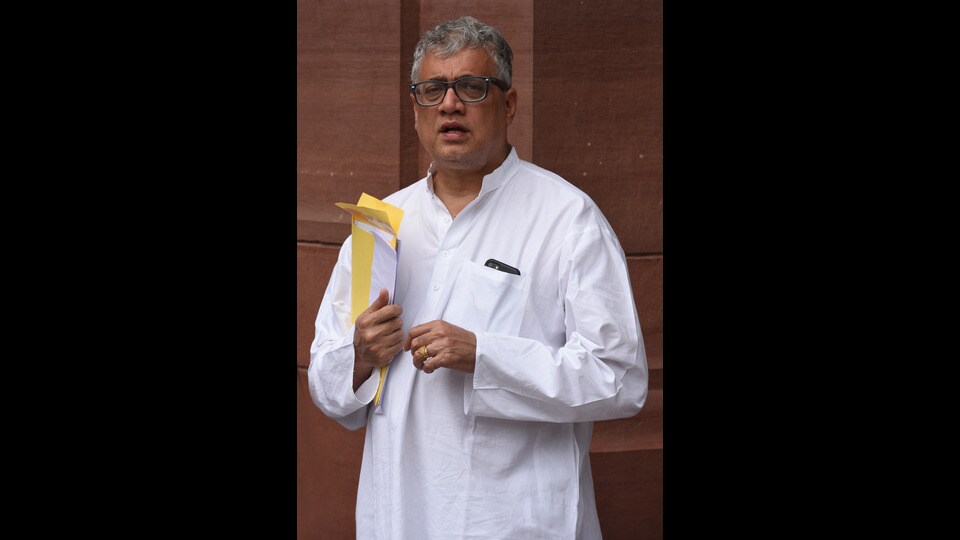
In a blogpost published on Saturday, TMC’s Rajya Sabha MP O’Brien said his party as well as the SP have decided not to nominate any members to the JPC.

 Prefer HTon Google


Two key Opposition parties –– the Trinamool Congress (TMC) and the Samajwadi Party –– will not send any member to the proposed Joint Committee of Parliament (JPC) to examine the three bills that bar any minister, chief minister or prime minister from holding the position after getting arrested, Rajya Sabha MP Derek O’Brien claimed on Saturday.
The three bills – the Constitution (130th Amendment) Bill, The Jammu & Kashmir Reorganisation (Amendment) Bill and The Government of Union Territories (Amendment) Bill— propose that a sitting minister, chief minister or even the Prime Minister can lose their position within a month if they are arrested or detained for 30 consecutive days over an offence that carries a jail term of five years or more.
Tabled in the Lok Sabha on August 20 amid a storm of Opposition protests and sloganeering that even saw the draft legislation torn up and pieces of paper flung at Union home minister Amit Shah, the bills are set to be sent to a 31-member JPC comprising 21 members of the Lok Sabha and 10 from the Rajya Sabha.
In a blogpost published on Saturday, TMC’s Rajya Sabha MP O’Brien said his party as well as the SP have decided not to nominate any members to the JPC. “The All India Trinamool Congress (AITC) and the Samajwadi Party (SP), the second largest Opposition parties in Parliament, decided not to nominate any of its members to the Joint Parliamentary Committee (JPC) being proposed to examine the Constitution (One Hundred and Thirtieth Amendment) Bill,” he said, adding that “we oppose the 130th constitution amendment Bill at the stage of introduction, and in our view, the JPC is a farce”.
“Joint Parliamentary Committees (JPCs) were originally conceived as democratic and well-intentioned mechanisms, established through motions passed by both Houses of Parliament and endowed with exceptional powers, such as summoning witnesses, demanding documents, and examining experts. These are far beyond what ordinary committees can do, to ensure transparency and public accountability. However, this purpose has eroded significantly post-2014, with JPCs increasingly being manipulated by the government in power. Now, in the same committee which represents public accountability, procedures are bypassed, opposition amendments rejected, and meaningful debate replaced by partisan fluff,” he said.
Though the SP has not officially said anything, party leaders have indicated that they won’t be in the JPC.
Officials aware of the matter said the move is a rare instance as parties hardly opt out of JPCs that have members from different parties.
Another senior Opposition leader criticised the government for suo motu sending the bill to the JPC.
A section of the Opposition, however, said we are trying to persuade SP and TMC. “If they leave, more BJP and NDA MPs will be a part of the JPC. It will not serve any purpose,” a leader said.
When the bill was introduced in the Lok Sabha on August 20, West Bengal chief minister Mamata Banerjee called it a draconian step. “I condemn the 130th Constitutional Amendment Bill, proposed to be tabled, by the Government of India today. I condemn it as a step towards something that is more than a super- Emergency, a step to end the democratic era of India forever. This draconian step comes as a death knell for democracy and federalism in India. To suppress the voting rights of the Indian citizens in the name of Special Intensive Revision (SIR), this is another super- draconian step by the Centre now.”
During the short discussion on the introduction of the bill, SP’s Dharmendra Yadav called it “anti-constitution, against the fundamental rights and a case of pure injustice.”
In the recent past, the Opposition had alleged that in the JPC on waqf bill, the NDA lawmakers had a clear upper hand that the dissent notes of the Opposition was not included in full. Later, Union home minister Amit Shah and Lok Sabha Speaker Om Birla intervened to ensure the full text of dissent notes were included in the report.


