
 E-Paper



Top court extends stay on survey of Mathura’s Shahi Eidgah till Apr
A bench of justices Sanjiv Khanna and Dipankar Datta asked the parties to file their submission in the matter by the first fortnight of April, when the case will be heard next

 Prefer HTon Google


New Delhi The Supreme Court on Monday extended till April its earlier order that put in abeyance a survey of the Shahi Eidgah mosque abutting the Krishna Janmabhoomi temple in Mathura by an advocate-commissioner.
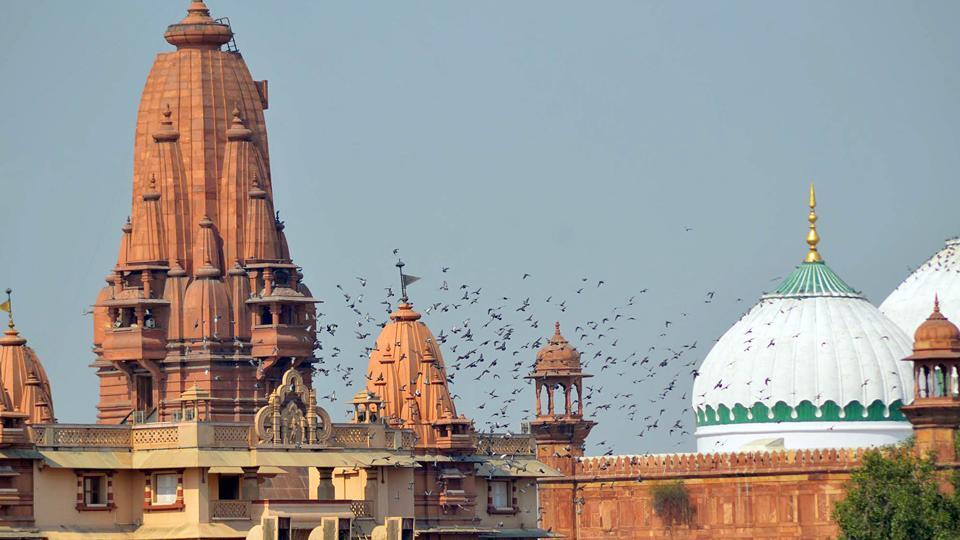
A bench of justices Sanjiv Khanna and Dipankar Datta asked the parties to file their submission in the matter by the first fortnight of April, when the case will be heard next.
“List the matter in the first half of April 2024. In the meantime, pleadings will be completed by the parties. Interim order to continue,” the bench stated in its brief order, extending the operation of its January 16 order.
On the next date of hearing, the top court will also take up a batch of petitions challenging the high court order deciding to hear nearly 18 suits relating to Krishna Janmasthan-Shahi Eidgah land dispute by transferring them to itself from various civil courts in Mathura.
Observing that the plea made by the Hindu side for the survey was “very vague”, and that some important legal issues also arise in the matter, the bench on January 16 stayed the Allahabad high court order of December 14 for the appointment of an advocate-commissioner to oversee the survey of the mosque.
READ | Supreme Court stays Allahabad HC order for survey of Shahi Eidgah mosque
On the day, the bench was emphatic that the plea of the Hindu plaintiffs did not specify the rationale behind the plea. “You cannot say that appoint a commissioner in terms of the prayers in the plaint. You must be specific about what exactly you are asking for. Can an application be made like this? We have reservations about the application. It’s so vague...You cannot make an omnibus application like this,” the court told the counsel appearing for the Hindu plaintiffs in the case at the time.
The court further said that apart from the questions over the application for the appointment of an advocate-commissioner, legal issues over passing an interim order without rendering a prima facie satisfaction regarding the maintainability of the suit also arose in the case.
On December 14, the Allahabad high court ordered a survey of the mosque that Hindu plaintiffs say holds signs proving that it was a once a Hindu temple, opening a new chapter in the decades-old dispute that is part of a raft of cases where Hindu petitioners are pushing for legal change to gain rights over Islamic holy sites. The matter acquires huge political significance at a time when the Ram Mandir in Ayodhya is scheduled to be consecrated on January 22, and a survey has already been carried at the disputed Gyanvapi mosque in Varanasi. The Idgah committee challenged this order in the Supreme Court.
READ | Shahi Eidgah: Muslim side welcomes HC move to put off hearing
Since July 2023, the Supreme Court is seized of the challenge to a May 26 order of the Allahabad high court that transferred to itself all suits filed by Hindu parties claiming right over the mosque land. The mosque committee has argued that it did not have the financial wherewithal to defend the suits in the Allahabad high court which is 600km away and would prefer having it in Delhi which only 150km away.
The May 26 order by the high court came on a plea by Bhagwan Shrikrishna Virajman at Katra Keshav Dev Khewat Mathura (deity) through the next friend, Ranjana Agnihotri, who is also an advocate, and seven others. Next friend is a legal representative of someone incapable of maintaining a suit directly. The Hindu plaintiffs requested that the original trial be conducted by the high court as the matter involved is of national importance.
Multiple suits regarding the Krishna Janmabhoomi-Shahi Eidgah Mosque land dispute pending before various courts in Mathura have a common demand to reclaim the 13.37-acre land on which the mosque stands to be returned to the Shri Krishna Janmabhoomi Trust. The mosque abuts the temple and the suits have sought to annual a compromise entered between the mosque committee and Shri Krishna Janmasthan Seva Sangh in 1968 allowing the continue at the place where it currently stands.
The mosque, in its petition before the top court, questioned the maintainability of the suits after prolonged delay. It further argued that the suit is barred by the Places of Worship (Special Provisions) Act, 1991 which protects the “character” of all places of worship existing as on August 15, 1947 (barring the Ram Janmabhoomi land at Ayodhya) and prohibits filing of any lawsuits to alter the character of any place of worship.
A batch of petitions — some seeking to scrap the 1991 Act and some others asking for tight enforcement of the same law — are pending before the top court since March 2021. Last September, Chief Justice of India (CJI) Dhananjaya Y Chandrachud, while hearing the Gyanvapi case, observed that the religious “character” of a site also had to be led by evidence.



