
 E-Paper



Tourists begin returning to Pahalgam days after attack: 'Nothing to fear'
Foreign and domestic tourists strolled through Pahalgam, bringing a sense of normalcy and hope back to the region.

 Prefer HTon Google


Just days after the horrific Pahalgam terror attack shattered the calm of the scenic region of Jammu and Kashmir, a wave of optimism and resilience is once again sweeping through the union territory. Tourists — both Indian and international — are returning to Pahalgam.
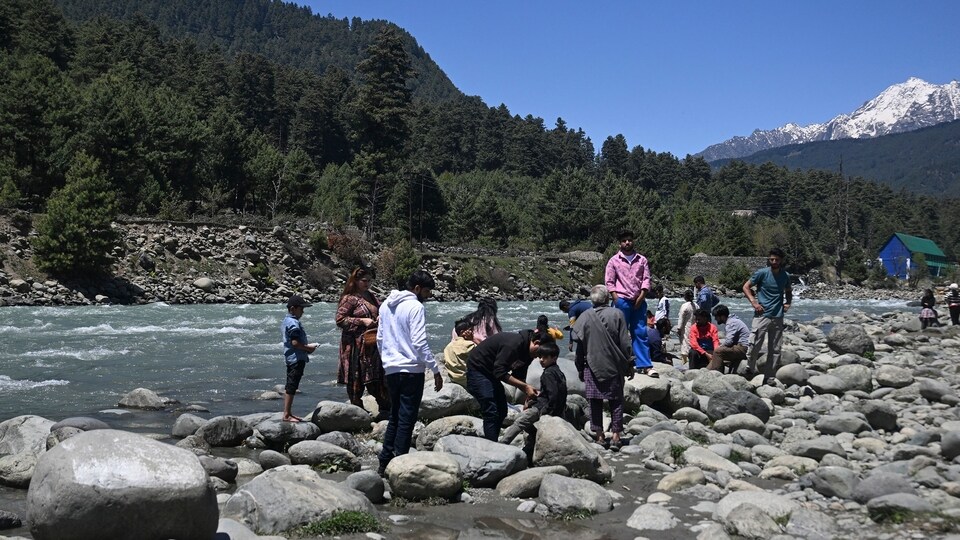
A tourist from Kolkata, West Bengal, who is visiting Pahalgam, spoke to ANI about her trip and said, "Before I came here, I was scared, but now it feels great."
Another tourist echoed the reassurance, saying, “It feels safe here, there is security too. We faced no problems so far. Some of the tourist spots are closed.”
Pahalgam attack news live updates: Indian students at Harvard protest against Pak delegates' visit
“There is nothing to fear; the hospitality is great. Everyone should come here. People are very nice here,” another tourist told ANI.
Another tourist from Bangalore, who came to Kashmir for a 10-day trip, said his family made the plan 3 months ago and didn't cancel despite the recent events. “We have no problem, it's absolutely safe,” he added.
Just a week ago, Pahalgam was reeling from a devastating terrorist attack that claimed 26 lives, causing a sharp drop in tourism -- from 5,000 to 7,000 daily visitors to barely 50-100.
Also Read | UN chief dials S Jaishankar, Shehbaz Sharif as jittery Pakistan sounds ‘24-36 hours' strike alert
Earlier this week, foreign and domestic tourists strolled through the town, bringing a sense of normalcy and hope back to the region. Croatian and Serbian tourists were seen exploring the streets of Pahalgam.
Some tourist spots shut in Kashmir
Nearly 50 public parks and tourist destinations across Jammu and Kashmir have reportedly been shut as a precautionary measure in the wake of the Pahalgam terror attack.
The closed spots include both well-known and emerging tourist spots such as Dooshpathri, Kokernag, Duksum, Sinthan Top, Acchabal, Bangus Valley, Margan Top, and Tosamaidan.
Though not announced through a formal government order, the closures of these tourist spots have been enforced on the ground, with gates locked and access blocked to several popular destinations.
India set to respond
Meanwhile, the government made it clear that the response to the attackers would be swift and decisive. On Tuesday, Prime Minister Narendra Modi chaired a high-level security meeting with Defence Minister Rajnath Singh, the three service chiefs, and National Security Advisor Ajit Doval.
Prime Minister Narendra Modi on Tuesday told the top defence brass that the armed forces have "complete operational freedom" to decide on the mode, targets and timing of India's response to the Pahalgam terror attack, government sources told PTI.
Earlier, reacting to the attack, PM Modi vowed to track down the terrorists responsible. He promised to bring them to justice, stating that the punishment would be "beyond their imagination."
On April 22, terrorists killed 26 people, including one Nepali national, in Kashmir's Pahalgam. The assault has drawn widespread condemnation and prompted swift diplomatic and strategic countermeasures from the government.


