
 E-Paper



Traffic disruptions on Delhi borders continue amid farmers' protest
Both Singhu and Tikri borders with Haryana were completely sealed off to traffic, while controlled vehicular passage remained permitted at the Ghazipur border.


Traffic disruptions occurred in the border regions of Delhi on Wednesday due to the implementation of multiple barricades by the police, halting vehicle movement at the Singhu and Tikri borders in anticipation of the farmers' planned march towards Delhi.
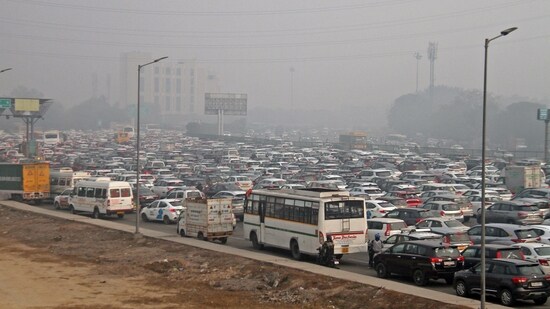
Both the Singhu and Tikri borders with Haryana were completely sealed off to traffic, while controlled vehicular passage remained permitted at the Ghazipur border.
Follow Farmers Protest LIVE Updates Here.
In a bid to impede the farmers' procession towards Delhi, a portion of a road in a village adjacent to the Singhu border was excavated.
The Apsara and Ghazipur borders with Uttar Pradesh remain accessible for traffic, albeit under heavy security deployment at both locations.
To deter the protesting farmers from entering Delhi, law enforcement authorities have installed barricades and positioned concrete slabs on the roadway.
On Tuesday, individuals were compelled to traverse the Singhu border between Delhi and Haryana by foot, as the police enforced a blockade on vehicular movement, anticipating a farmers' march towards the national capital.
Read Here: Farmers say govt using ‘brute force’, 'We don't want to clash' | 10 points
Following an inconclusive meeting with a team of Union ministers regarding their demands for a law on minimum support price, farmers are now marching towards Delhi.
The Samyukta Kisan Morcha (Non-Political) and the Kisan Mazdoor Morcha have announced that the farmers will proceed to Delhi to exert pressure on the Centre to accede to their demands.
Security arrangements in Delhi
Security arrangements to prevent a march of farmers to the Capital remained in place on Wednesday.
Late on Tuesday night, the demonstrators pledged to resume their march on Wednesday morning, despite at least 110 of them sustaining injuries in clashes with security forces. Tear gas shells and water cannons were employed by the security forces during the altercations.
In New Delhi, traffic disruptions ensued due to heightened security measures, with 2,000 police personnel sealing the borders for a significant portion of the day. Police authorities stated their aim was to avert a recurrence of the violence witnessed in January 2021, when protesting farmers breached the Red Fort.


