
 E-Paper



Transgender people hope for SC intervention
The 2011 census puts the number of transgender persons in Assam at 11,374 but activists say the actual number is many folds higher.


Transgender rights groups in Assam are planning to ask the Supreme Court to modify the appeals process of the National Register of Citizens (NRC), arguing that the current mechanism of document verification excluded large sections of the community.
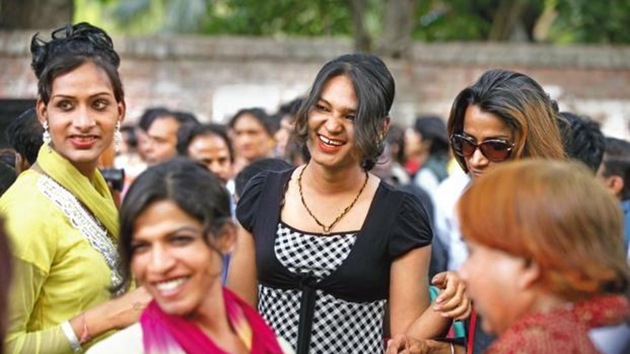
The final list of the NRC published on Saturday excluded 1.9 million people from its rolls. No separate figure for the transgender community is available. But community leaders and activists say thousands may have missed the cut because the NRC process was designed keeping in mind men and women and not transpersons.
“Many transpersons are driven out of households at a young age and do not have access to parental and family documents to prove their ancestry. Why should they be denied citizenship because of social stigma?” asked Swati Bidhan Baruah, founder of the All Assam Transgender Association.
The 2011 census puts the number of transgender persons in Assam at 11,374 but activists say the actual number is many folds higher.
Transpersons faced three main hurdles in the NRC process, where one had to prove that they, or their ancestors, were present in Assam before the cut-off date of March 25, 1971, the day war for Bangladesh’s liberation began.
The first was in procuring documents from their families who they had been long estranged from. Nitumoni Dutta, for example, fled from her paternal home at the age of 15 but was forced to go back to her father, who disapproved of her transgender identity, to obtain papers.
“The problem is that NRC needs you to draw connections with your families but our families have never accepted us,” said Dutta, who lives in a cramped settlement outside the Kamakhya railway station on the outer fringes of Guwahati.
The second was in convincing officials and family members of their identity – despite variance in appearances, names, and gender. After the 2014 Supreme Court judgment that recognised the third gender and upheld their rights, many transpersons got their identity documents changed in their preferred names and gender status. But this meant that proving a link to their natal families became tough.
This was the most stark during the family tree verification stage of the NRC. At this stage, families were called for physical hearings before NRC officials and asked to prove their linkages and lineage. This was a particularly difficult process for many transpersons, who are stigmatised by families that usually refuse to accept their existence, explained Baruah.
Zeena, a Guwahati-based transperson who begs on trains for a living and has only her first name in her identity documents, had to change her clothes, tuck in her billowing hair and pretend to be a man to get her name in the NRC. “At least it was only for one day,” she said.
The process favoured those people, who had some ties to their natal families. Others, such as a young transperson from Gandhi basti in Guwahati, found herself excluded from the NRC because her family, which was routinely violent to her, refused to accept her or share documents. Another transgender man, who asked for anonymity, did not make the cut because his preferred name and gender did not match with birth and natal family records.
Baruah’s petition in the Supreme Court, which HT has reviewed, argues that the documents required for NRC were virtually impossible for many transpersons to get and therefore stripped them of their citizenship “by default”. The process was especially difficult for those, who had left homes and now lived in traditional community housing or groups.
The NRC authorities are barred from speaking to media. But an official connected to the exercise pointed out, on condition of anonymity, that all processes were fairly designed, and the application forms had an “other” option in the gender category.
The petition demanded that the court ask state agencies to collect family data on behalf of transpersons, and if it was not possible, accept an affidavit of self-identification from the individual, with due verification from community representatives. “We hope the top court will uphold our rights,” Baruah said.


