
 E-Paper



Tribals protest in Bijapur jungles to seek action on Edesmetta encounter report
The protesters demanded an FIR be registered against security personnel involved in the Edesmetta encounter and ₹1 crore compensation to each tribal who died


Around 200 tribals are protesting in the jungles of Bijapur district in Chhattisgarh’s Bastar region since October 9 to demand action on the judicial inquiry report about the Edesmetta encounter and seek compensation, police said.
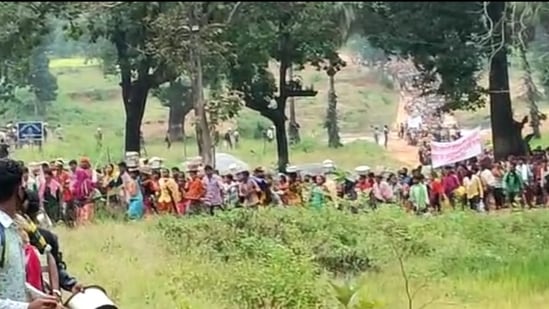
The protest is being held near Pusnar village under Gangaloor police station of the district.
In September 2021, a judicial inquiry report on the Edesmetta encounter was submitted to the state cabinet, eight years after security personnel allegedly gunned down eight people, including four minors in Edesmetta village. The inquiry report said that the people killed in the encounter were not Maoists and the security forces ‘might have opened fire due to panic’.
On Tuesday, hundreds of tribals of Edesmetta and nearby villages gathered in Pusnaar and started a protest.
On Wednesday, the villagers also handed over a memorandum to a tehsildar and demanded an FIR against the accused and ₹1 crore compensation to each tribal who died in the encounter.
Tribal activist of Bastar, Soni Sori also reached the spot, on Wednesday, and expressed her support. “We are demanding FIR against security personnel accused of killing innocent tribals,” said Sori.
Human rights activists working in the region said the government should punish the policemen as soon as possible.
“A judicial inquiry has little meaning if there is no follow up. The report has not yet been tabled in the assembly, as is the official procedure. The government is duty-bound to act on the findings of the report: punish the guilty policemen including the officials in command and compensate victim families. The government cannot go in hiding like any ordinary murderer,” said Bela Bhatia, a human rights activist who works in the Bastar region.
Police officials said the government may issue necessary instructions based on the recommendations of the judicial commission.
“The local administration and police are in communication with the villagers and explained to them that the Edesmetta judicial inquiry report is yet to be tabled in the Vidhan Sabha. After following the due procedure, the government might issue necessary instructions based on the recommendations of the judicial commission,” said Inspector General of Police, Bastar range, Sunderaj P.
The IG further said that as far as the opposition for opening new base camps is concerned, villagers are aware of the benefits of security camps in their locality.
“Each and every security camp opened in Bastar has acted as an integrated development centre and brought positive changes to the region. Because of compulsion from naxal cadres, villagers are forced to stage such protest,” he added.
-kW0H-U20214218012MgB-250x250%40HT-Web.jpg)


