
 E-Paper



Trump, funding by rich nations pose hurdles at Marrakesh climate talks
Developing countries seek clear roadmap on funding by rich nations, as EU warns of action if US withdraws.


As the Marrakesh climate change summit enters its final phase, uncertainty looms over funding by rich nations to meet commitments under the just-effected Paris Agreement and a critical political statement that appears to favour the developed world.
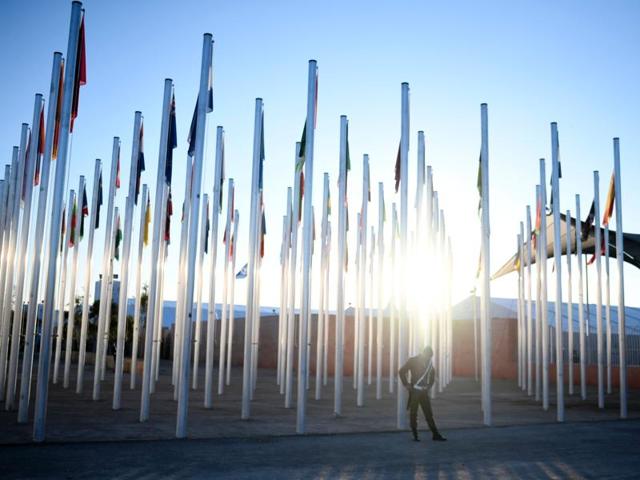
The 10 days of United Nations-organised negotiations in the Moroccan capital have seen a re-emergence of an age-old divide between rich and poor nations. This has led to the fear that the first such global mechanism may not be robust enough to meet the needs of vulnerable nations when it comes to reimbursing the damage caused by disasters induced by climate change called Loss and Damage.
“We know that the pact cannot be implemented without finance for developing countries,” said civil society group Action Aid’s Harjeet Singh who is in Marrakech and is following the negotiations. “Now that the Paris deal is done, poor countries feel that they are being left with the bill both for dealing with impacts and cutting emissions, amid a problem they did not cause.”
ActionAid is among international organisations fighting for the cause of the developing countries in the rule making process to implement Paris Agreement agreed last year.
Negotiators say the rich nations have not provided a clear roadmap either for providing $100 billion by 2020 when the Paris accord comes into force or for enhancing it subsequently. This has left the developing countries ambiguous about decision on crucial mechanisms such as adaptation fund, green climate fund and technology transfer fund.
Thailand, on behalf of G77 and China, said in Marrakesh that it would be tough without adequate funds to implement individual countries’ commitment on to reducing emissions called Nationally Determined Contributions.
Read more| All actions must be rooted in climate justice: India to Conference of Parties
Solar alliance
On Tuesday, India formally launched the Global Solar Alliance announced by Prime Minister Narendra Modi at the Paris summit in 2015. The alliance aims to create a facility for research and development in the solar sector and collaboration among the developing countries in the fastest-growing renewable sector.
The general response of countries has been lukewarm with only 20 of about 196 nations participating in the conference, coming forward to sign the alliance document. India’s environment minister Anil Madhav Dave was optimistic, saying more countries want would be joining the alliance soon.
Marrakesh Call for Action
A critical document doing the rounds at the November 7-18 event, which has 196 nations working out ways to implement the 2015 Paris deal to limit greenhouse gas emissions, is the four-page ‘Marrakech Call For Climate Action And Sustainable Development’.
The four-page draft of this political statement to be adopted at end of the conference last Friday had left the developing world fuming over “inadequate representation” of their concerns.
“We have our reservations, as the commitment to post-2020 climate action by rich nations is missing,” said an Indian negotiator, adding that G-77 group of developing countries and China were opposed to the draft in the present form. “The presidency has assured us of incorporating our concerns and having a more balanced statement.”
India’s worry is that the draft indicates that the developing world was willing to take more commitments than specified in the Paris deal to mitigate the climate accord without taking on the rich nations who have caused global warming.
Trump impact
The Marrakesh talks have been hobbled with the concern that the US, which is the world’s second-biggest carbon emitter, may withdraw from the Paris deal after Donald Trump takes over as the president of that country early next year. Trump, 70, had said during his campaign that he will not abide by the Paris deal leading to US secretary for state John Kerry trying to assure global leaders in Marrakech that the US was committed to the agreement.
World leaders, such as French president Francois Hollande and UN secretary-general Ban Ki-moon, had said that withdrawing from the deal was not “irreversible”. Europe has warned of a backlash if the US pulls out with European Union’s climate commissioner Miguel Arias Canete, saying “we are positive” without ruling out the possibility of imposing carbon tax on US goods.


