
 E-Paper



UCC implementation should not be delayed, says V-P
Speaking at the 25th convocation ceremony of the Indian institute of Technology, Guwahati, the V-P also said that he is shocked to see some people opposing the implementation of UCC.


The implementation of a Uniform Civil Code (UCC) should not be delayed any further as it will strengthen India and bind the country together, vice-president Jagdeep Dhankar said on Tuesday, at a time the Bharaitya Janata Party (BJP) is pushing the controversial issue across the country.
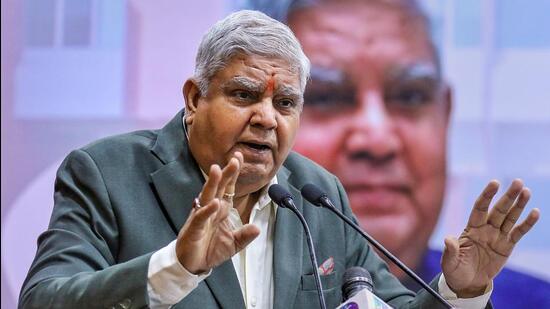
Speaking at the 25th convocation ceremony of the Indian institute of Technology, Guwahati, the V-P also said that he is shocked to see some people opposing the implementation of UCC.
“I am stunned to see the reaction of some people when there is a thought that something should be done on Article 44, that is uniform civil code, in the country,” Dhankar said. “The situation has come to implement this and I have no doubt about it.”
While drafting the Constitution, BR Ambedkar framed the directive principles of state policy, which later resulted in many laws such as those related to the right to education and panchayati raj, he argued.
“The underlying sublimity of implementation of UCC should be understood. It’ll bind Bharat and its nationalism more effectively,” the vice-president said. “It’ll be corrosive if it is delayed further.”
Commenting on Dhankhar’s remarks, P Sreedharana, a former secretary general of the Lok Sabha, said: “There is already a debate in the country over UCC. This is not the first time the vice-president is commenting on a raging issue. One way of looking at it is that he has also given his opinion on an ongoing issue. But in any case, it has to come to Parliament and finally Parliament will decide the fate of the UCC.”
India’s stature is growing in the world, Dhankar said. “We all have seen how Prime Minister Narendra Modi is getting reception in the US,” he said. “Wherever you go after completing the studies, you’ll be valued more now.”
India is home to a sixth of the global population and it makes the country a leader in human resources, he said. India is also ahead of developed nations such as the US, UK and France in digital transactions, he added.
“In 2022, the quantum of digital transections was 1.5 trillion globally and, of that, 46% was done by Indians. Technology will make India the most powerful country by 2047 and these students will contribute most in this,” he said.
Foreign companies are coming to India because it has a big market, but they should not be allowed to interfere with the country’s reputation, the vice-president said. “We must nurture economic nationalism. Our human resource are impacting the global markets and big agencies are coming here. They should be allowed to come, but not at the cost our country’s reputation,” Dhankar added.
The vice-president was accompanied by Assam governor Gulab Chand Kataria and chief minister Himanta Biswa Sarma. Dhankar praised Sarma for transforming Assam into one of the fastest-developing states in the country. “This man is unique,” he said. “He has Assam in his mind 24 hours and his visions are reflecting through his work.”
The first three decades of last century created momentum for India’s Independence and the first three decades of this century will see India moving towards becoming a global power, Sarma said at the convocation.


