
 E-Paper



Grand Tamasha: Understanding the results of 2024 general elections
Noted political scientist and psephologist Sanjay Kumar outlined his version of the story on last week’s episode of “Grand Tamasha”, a weekly podcast


It has been more than three months since the conclusion of India’s massive 2024 general elections. And it is no exaggeration to say that the results of the election caught many, if not most, election observers by surprise. To many, the ruling Bharatiya Janata Party (BJP) appeared invincible in national elections especially given the widespread popularity of Prime Minister Narendra Modi. And yet, the party suffered a significant setback, emerging as the single largest party but fell well short of a parliamentary majority.
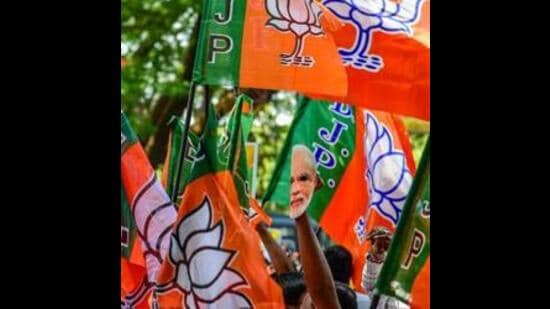
So, what actually happened in the elections? Noted political scientist and psephologist Sanjay Kumar outlined his version of the story on last week’s episode of “Grand Tamasha”, a weekly podcast on Indian politics and policy co-produced by HT and the Carnegie Endowment for International Peace.
Kumar is a professor at the Centre for the Study of Developing Societies in New Delhi and co-director of Lokniti, India’s premier public opinion research organization. Since 1996, Lokniti has carried out a National Election Study (NES) after every general election, creating a unique repository of knowledge on the political and social attitudes of the Indian citizen.
Kumar drew on the findings of the 2024 NES to shed light on the surprising results. At a macro-level, Kumar said the BJP failed to nationalize the election, which ended up devolving into a series of state-by-state contests instead. “I think the BJP tried to pitch this election on national issues, so it tried to foreground the issue of Hindutva, and it tried to foreground the issue of Ram Mandir and Article 370. The BJP went to the people saying: these are big achievements of the BJP government, [things] we’ve been promising in our manifesto,” said Kumar.
“But what happened is that the fever of nationalism had come down substantially. The BJP failed to realize in the first few phases of the election that people were more concerned about their day-to-day worries, things like price rise, unemployment, and getting jobs.” Kumar explained that the INDIA alliance, on the other hand, successfully pushed these bread-and-butter issues, and they resonated with voters in a much bigger manner in 2024 compared to the 2019 election and the various state assembly elections held over the past five years.
A large part of the BJP’s problem, Kumar explained, had to do with the overconfidence of the BJP and of Prime Minister Narendra Modi. “Prime Minister Modi gave a call in which he said, ‘is baar, chaar sau paar,’ (this time, 400 seats) [for the National Democratic Alliance]. He also mentioned that once I assume the Prime Ministership for the third time, I’m going to take very tough decisions right at the beginning — in the first 6 months of my tenure,” noted Kumar. This, in turn, played right into the opposition’s hands.
“As the INDIA alliance started campaigning on the ground, they started connecting these few disconnected things and they did it successfully,” said Kumar. “They went to the voters are said, “look, to form the government a party needs only 272 seats, so why is the Prime Minister aiming to get 400? He is aiming to get 400 in Parliament because then you can change the very basic principles of the Constitution.’”
This fuelled the belief that a BJP government armed with 400 seats would eliminate or tamper the provisions of reservations and it will be the Other Backward Classes (OBCs), Dalits, and tribals that will be at the receiving end. Kumar argued that this was an election narrative the BJP never recovered from.
Indeed, Lokniti’s NES data suggest that the campaign had a big impact on voter decision-making with the INDIA alliance winning many voters who made up their minds during the campaign itself.


