
 E-Paper



Budget 2026: Tourism sector key for employment generation, local economy
The Union Budget emphasises tourism for job creation, eco-tourism, and heritage conservation, proposing to upskill guides and develop adventure trails.

 Prefer HTon Google


New Delhi: The Union Budget on Sunday placed tourism among the key sectors for employment generation and regional development, with proposals covering eco-tourism, heritage conservation, transport connectivity, guide skilling and medical tourism.
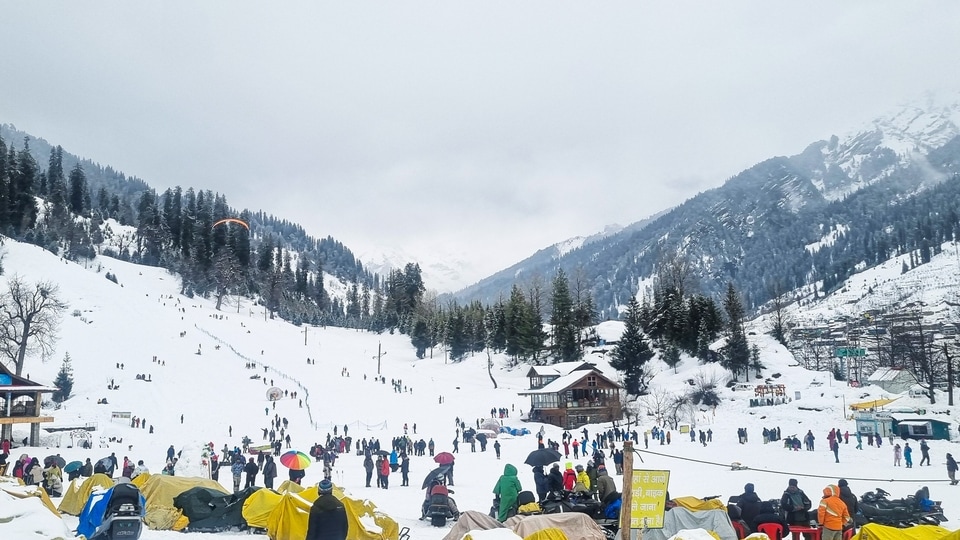
“The tourism sector has the potential to play a large role in employment generation, forex earnings and expanding the local economy,” Sitharaman said.
A major announcement focused on trekking and nature-based tourism. Sitharaman said, “India has the potential and opportunity to offer world-class trekking and hiking experience.” She added that the government will develop ecologically sustainable mountain trails in Himachal Pradesh, Uttarakhand and Jammu and Kashmir, as well as in Araku Valley in the Eastern Ghats and Podhigai Malai in the Western Ghats.
The budget also outlined plans for wildlife-linked tourism infrastructure. Sitharaman said turtle trails will be developed along nesting sites in coastal areas of Odisha, Karnataka and Kerala, and bird-watching trails around Pulicat Lake on the Andhra Pradesh and Tamil Nadu border.
To support human resources in tourism, the finance minister announced a pilot scheme to upskill 10,000 tourist guides across 20 iconic destinations. The programme will follow a 12-week hybrid training model and will be implemented in collaboration with an Indian Institute of Management. According to the finance minister, the course will focus on local culture, history, safety and eco-tourism practices.
The budget proposed upgrading the National Council for Hotel Management and Catering Technology into a National Institute of Hospitality. Sitharaman said the institute will function as a bridge between academia, industry and government.
Another initiative announced was the creation of a National Destination Digital Knowledge Grid. Sitharaman said this platform will digitally document places of cultural, spiritual and heritage significance and create employment opportunities for researchers, historians, content creators and technology partners.
On heritage tourism, the finance minister proposed the development of 15 archaeological sites into public destinations. These include Lothal, Dholavira, Rakhigarhi, Adichanallur, Sarnath, Hastinapur and Leh Palace. Sitharaman said excavated landscapes will be opened to the public through curated walkways and supported by interpretation centres and conservation laboratories.
Medical tourism was another focus area. Sitharaman announced a scheme to support states in establishing five regional medical hubs in partnership with the private sector. She said, “To promote India as a hub for medical tourism services, I propose to launch a scheme to support states in establishing five regional medical hubs, in partnership with the private sector.”
According to the finance minister, these hubs will integrate health care delivery, education and research, and will include AYUSH centres, medical value tourism facilitation centres, diagnostics, post-care and rehabilitation infrastructure.
The budget also proposed incentives and viability gap funding for indigenous manufacturing of seaplanes to strengthen regional air connectivity and tourism. Sitharaman said, “In order to promote tourism we will also push for indigenous manufacturing of sea planes…I propose to give incentives to indigenised manufacturing of sea planes. A VGF scheme will also be introduced to provide support for operations.”
Industry stakeholders welcomed several announcements while highlighting gaps. Ravi Gosain, president of the Indian Association of Tour Operators, said, “The Union Budget’s focus on tourism is timely and welcome, recognising its role in jobs, foreign exchange and inclusive growth.”
Rajiv Mehra, general secretary of the Federation of Associations in Indian Tourism and Hospitality, said, “We welcome the government’s initiatives to develop new adventure trail sites across states, the focus on upskilling tourist guides, the use of AI for enhancing tourist destinations, and the reduction of TCS on overseas travel.”


