
 E-Paper



UP forms panel on OBC quota after court order
Uttar Pradesh on Wednesday announced a five-member commission to look into the issue of other backward classes (OBC) reservation in local-body polls, barely a day after the Allahabad high court scrapped backward quotas and asked the government to go ahead with the polls.


Uttar Pradesh on Wednesday announced a five-member commission to look into the issue of other backward classes (OBC) reservation in local-body polls, barely a day after the Allahabad high court scrapped backward quotas and asked the government to go ahead with the polls.
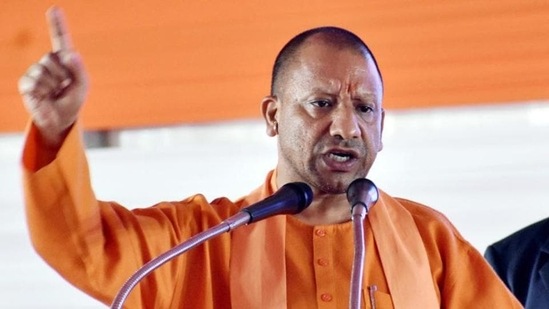
The court’s decision had stoked a row, with Opposition parties accusing the government of not safeguarding the rights of backward communities and chief minister Yogi Adityanath making it clear that the government will not hold elections without OBC quotas.
“We will do whatever it takes to preserve the rights of the backwards and if required will also move Supreme Court on the issue,” said urban development minister AK Sharma on Wednesday.
The panel will be headed by a retired high court judge, justice Ram Avtar Singh, and comprise former bureaucrats Chob Singh Verma and Mahendra Kumar, former additional legal adviser to the state government, Santosh Kumar Vishwakarma, and former additional district judge Brajesh Kumar Soni as members.
The notification, issued by the urban development department, said the commission’s term will be six months. It’s on the basis of the report of this commission that OBC reservation will be finalised for urban body polls, saidBJP leader Jugal Kishore.
Also read: U.P. places order for fresh stock of Covid vaccine
This indicated that the much-delayed polls will be further pushed back, though the high court had asked the authorities to “immediately” notify the elections as the term of several municipalities expires on January 31.
On Tuesday, chief minister Yogi Adityanath said that elections without the OBC quota won’t be held and, if required, the government will consider moving the Supreme Court.
On Wednesday, deputy CM Keshav Prasad Maurya said, “To ensure OBC quota, the government will move Supreme Court in light of the HC ruling.” “The Opposition lies exposed now. The government has shown that there is no question of compromising on the issue of OBC reservation,” the deputy chief minister added.
The Lucknow bench of the Allahabad high court on Tuesday quashed a state government notification that instituted OBC reservations in urban body elections, saying the authorities had not fulfilled the guidelines laid down by the Supreme Court.
In 2010, a Constitution bench of the top court laid down a “triple test” for reserving seats in local body polls: A dedicated commission to conduct contemporaneous rigorous empirical inquiry into the nature and implications of the backwardness with respect to local bodies, specifying the proportion of reservation in light of the commission’s proposals, and not exceeding the 50% quota cap as laid down by the top court in a landmark 1992 judgment. A three-judge bench relied on this five-judge bench verdict in March 2021 while holding that the triple test is a precondition for reservation to OBCs in local bodies.
The high court’s order mirrored similar developments in Maharashtra, Madhya Pradesh, and Odisha — all three states tried to institute OBC quotas earlier this year but the judiciary struck down the government notifications for not adhering to the triple test. Madhya Pradesh later set up a commission and its report was accepted by the court. Uttar Pradesh will be hoping for a similar outcome.
“After the HC ruling on Tuesday, the Opposition parties targeted the government as ‘anti-backward’ but the fact remains that during their time in power, these parties themselves allowed polls on the basis of a rapid survey. Since 1991, elections in all local bodies elections (1995, 2000, 2006, 2012 and 2017), were held on the basis of rapid survey,” two government officials said, requesting anonymity.
Even survey of backward classes carried out by the panchayati raj department in 2015 was done in this fashion,” the officials added. At the time, the Samajwadi Party was in power.
Despite the announcement, the political slugfest continued unabated with the Samajwadi Party considering to carry out a march to “expose” the BJP government.
“The BJP has always been opposed to reservation. The HC order is yet another proof of that. Why didn’t the government do earlier what it is doing now?” said former minister and Samajwadi Party leader Ambika Chaudhary.
SP chief Akhilesh Yadav had alleged that the BJP had conspired to deprive OBCs of reservation benefit and claimed that it could do the same to dalits too.
“The government is making it appear that they done something great by setting up a commission. Point is shouldn’t they have thought of it earlier? Now, as they are fully exposed, this government, under pressure from opposition have announced a commission as the opposition. Now, it is given that elections would be delayed,” said RLD spokesman Rohit Agarwal.
Also read: Identify madrasas withholding source of funds: U.P. minister
In their order on Tuesday, justices DK Upadhya and Saurav Lavania had annulled the government’s December 5 notification that provided OBC reservation, and asked the authorities to go ahead with the polls with quotas for Scheduled Castes, Scheduled Tribes and women.
The issue assumed significance due to the political heft of backward groups in the state’s electoral politics. In Uttar Pradesh, backward groups were crucial to the BJP’s phenomenal electoral performance earlier this year, when it became the first party in three decades to return to power in the state. This is why almost every party is united in backing OBC quotas. Even some allies of the BJP — such as Apna Dal (Sonelal) and Nishad Party — had expressed their discomfort after the court order.
Urban local body polls were last held in 2017 and were expected to be conducted by December this year. The elections are the final test of the state’s urban pulse before the 2024 Lok Sabha polls. The BJP has traditionally done well in these polls. UP now has 762 urban local bodies, including 17 mayoral contests, 200 nagar palika parishads and 545 nagar panchayats.


