
 E-Paper



UP launches population policy: Here's what it aims to achieve
The state is aiming for stability by 2050 and the government is trying to reduce the population growth rate to 2.1 per cent.


On World Population Day, Uttar Pradesh chief minister Yogi Adityanath launched a population policy which aims to incentivise couples who do not have more than two babies.
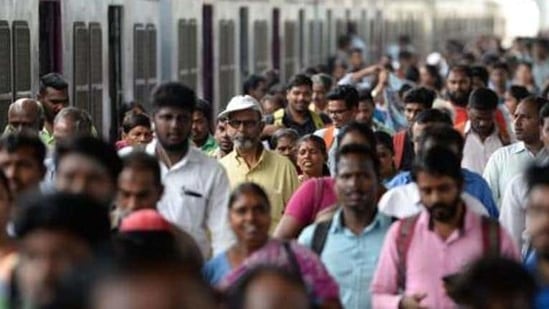
Stating that population control is related to awareness among masses and poverty, Adityanath said every community has been taken care of in Population Policy 2021-2030. The health minister Jai Pratap Singh said Uttar Pradesh is aiming for stability by 2050 and the government is trying to reduce population growth rate to 2.1 per cent.
Also read | 'Every community taken care of': Yogi Adityanath launches UP population policy
Besides, Uttar Pradesh, Assam is pushing for a similar move with its chief minister Himanta Biswa Sarma stating last week that population norms will be slowly implemented for government schemes. Here’s more on the population control measures being introduced by governments.
Two-child policy
The UP law commission that has formulated a population control bill said the policy would be voluntary and nobody would be forced to follow any rule. However, if any person decides to on his or her own to not have more than two babies, they will be eligible for government schemes., while those who do not follow the policy, will face restrictions in government jobs, availing ration, and other benefits.
Meanwhile, the BJP-led government in Assam may soon give effect to a 2017 resolution titled ‘Population and Women Empowerment Policy of Assam’ that proposed a bar on people with more than two children from getting government jobs and other benefits.
There is already a rule in place in the north-eastern state wherein those an individual with more than two children is not allowed to contest local body elections.
Over the years, several other states like Rajasthan, Madhya Pradesh and Maharashtra have introduced such measures to bring down the population, but the success has not been equally spread. While states like Bihar and UP continue to register high population growth, others have been able to control the fertility rate.
Fertility rate
Fertility rate may be defined as the number of children that would be born of a woman during her reproductive years. For a country’s population to remain stable, it is the total fertility rate should be 2.1.
Studies suggest that India’s national fertility rate is 2.2 at the moment, but due to the uneven spread of the population, some states are now introducing new measures to incentivise couples and create more awareness on the issue.


