
 E-Paper



US calls for India, Canada to cooperate; NIA cracks down
US Secretary of State Antony Blinken has stated that the US is consulting with Canada on its allegation linking the Indian government to a killing on Canadian soil. Blinken called for India to cooperate with the investigation and for accountability to be established. He also expressed the US's concern about "alleged transnational repression" and took a broader swipe at China for its pattern of such behavior. These comments come as India intensifies its crackdown on the secessionist Khalistani network, which is at the center of the row.

 Prefer HTon Google


Antony J Blinken, the Secretary of State, said on Friday that the US has been consulting, even coordinating, with Canada on its allegation linking the government of India with a killing on its soil, and wants the Canadian investigation to proceed, India to cooperate with the investigation, and the investigation to lead to accountability.
The US, he added, was “extremely vigilant” about any instances of “alleged transnational repression”, and took it “very, very seriously” as a broader issue. While he said it in the context of Canada’s allegation, the broader issue in the international system he alluded to appears to be a reference to US criticism of China for its pattern of transnational repression in the West.
Blinken made his first set of comments on the issue at a press conference in New York on Friday on Canada’s allegation linking “agents” of the government of India to the killing of Hardeep Singh Nijjar, a designated terrorist and a Canadian citizen, on Canadian soil.
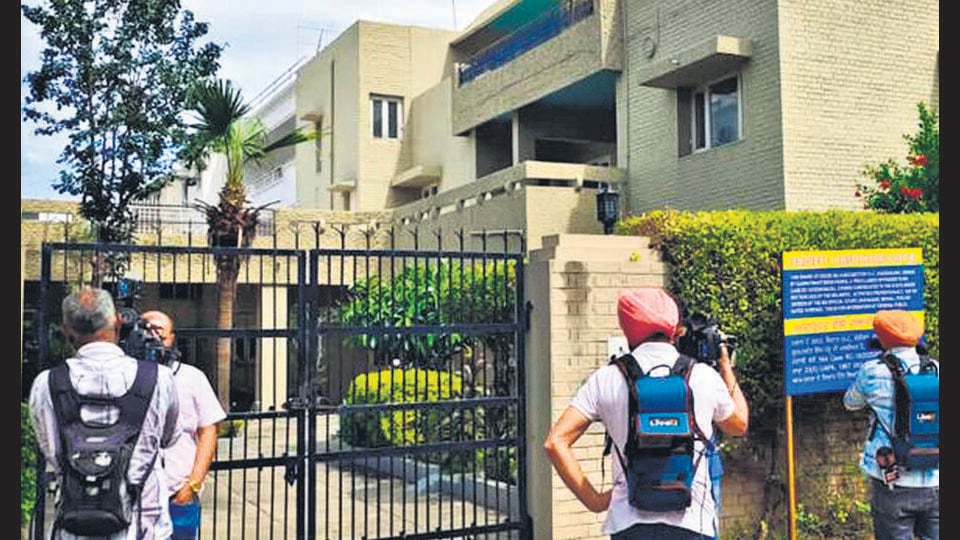
Blinken’s comments came hours before India intensified its crackdown against the secessionist Khalistani network which is at the heart of the row. The National Investigation Agency (NIA) used legal provisions for the first time to confiscate the properties of Canada-based “designated individual terrorist” Gurpatwant Singh Pannu. Pannu is the self-styled general counsel of Sikhs for Justice (SFJ), a pro-Khalistan organisation banned by India in 2019.
The US State Department, in response to a set of questions from HT just hours before Blinken’s remarks, said that the US views its relationship with India as “vitally important” but takes this issue “very seriously” and will defend its principles and consult with its ally as it pursues law enforcement and diplomatic processes.
Asked about American engagement with Canada and India on the issue, and how it squared with India’s desire to play a more prominent role and the US’s expectation of India being a democratic counterweight to China, Blinken said that they were deeply concerned about the allegations.
“We have been consulting throughout very closely with our Canadian colleagues – and not just consulting, coordinating with them – on this issue. And from our perspective, it is critical that the Canadian investigation proceed, and it would be important that India work with the Canadians on this investigation. We want to see accountability, and it’s important that the investigation run its course and lead to that result,” he said.
Blinken, like US National Security Advisor (NSA) Jake Sullivan earlier in the week, said he would not characterise or speak of diplomatic conversations but that US had been “engaged directly” with the Indian government. “And again, I think the most productive thing that can happen now is to see this investigation move forward, be completed. And we would hope that our Indian friends would cooperate with that investigation as well.”
India has denied the Canadian allegations and has said it has been provided no specific information regarding it.
Blinken then said there was a broader issue involved. “You have heard me speak to this. We are extremely vigilant about any instances of alleged transnational repression, something we take very, very seriously.”
He said it was important for the international system that any country considering in engaging in such acts not do so.
The US administration and Congress has been extremely critical of what it sees as China’s transnational repression, with the State Department terming it “especially pervasive, pronounced, and persistent”, particularly against “Uyghurs, Tibetans, members of other ethnic and religious minority groups, Hong Kongers, and PRC citizens and non-PRC citizens living abroad, who seek only to exercise their human rights and fundamental freedoms”.
On Thursday, HT asked the State Department a set of questions about the nature of US-Canada consultations, American assessment of the evidence behind the allegation, India’s concerns about Canada serving as a base for terrorism and extremism, and whether the allegation is leading to a rethink in the administration’s approach to India.
On Friday, a State Department spokesperson said the US will not comment on the substance of private diplomatic conversations nor on intelligence or law enforcement matters. “We are coordinating and consulting with Canada closely on the issue”.
The spokesperson added, “Our relationship with India remains vitally important, but we take this issue very seriously. Regardless of the country, we will defend our basic principles and consult closely with allies like Canada as they pursue their law enforcement and diplomatic processes.”


