E-Paper



Uttarakhand tables bill to make anti-conversion law more stringent
The winter session of Uttarakhand assembly began on Tuesday with the government tabling a bill to make forced conversion a cognisable and non-bailable offence with a provision for jail up to 10 years

 Prefer HTon Google


The winter session of Uttarakhand assembly began on Tuesday with the government tabling a bill to strengthen the Uttarakhand Freedom of Religion Act 2018, to make forced conversion a cognisable and non-bailable offence with a provision for imprisonment up to 10 years.
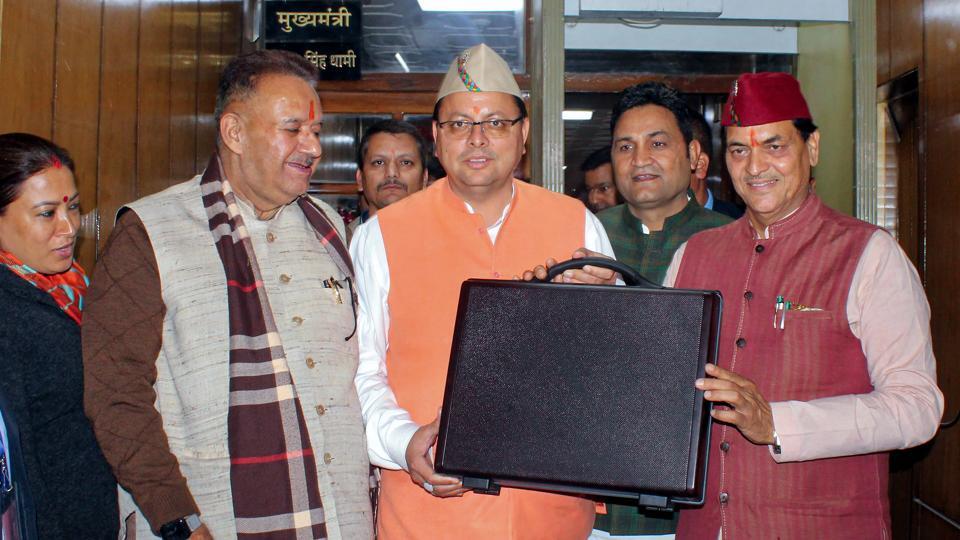
Besides this, the government tabled nine other legislations, including one to provide 30% per cent horizontal reservation to women permanently domiciled in the state in direct recruitment to public services and posts.
The state government tabled the Uttarakhand Freedom of Religion (Amendment) Bill, 2022 to enhance the punishment for forced conversions and also act against those involved in “mass conversions”.
Also read: Uttarakhand: Leopard kills 12-year-old boy in Tehri
The state cabinet, led by chief minister Pushkar Singh Dhami, on November 16 gave its approval to the amendments in the Act. The proposal to give more teeth to the anti-conversion law, on the lines of neighbouring Uttar Pradesh — also ruled by the Bharatiya Janata Party (BJP) — came on the suggestion of the Uttarakhand police after the state government sought an opinion on the matter from the director general of police (DGP), a senior government official said. The law also did not provide any provisions on punishment for those involved in mass conversions.
“...the amendment in Uttarakhand Freedom of Religion Act, 2018, is necessary to remove certain difficulties in the Act,” state minister for religious affairs Satpal Maharaj said.
According to a new clause inserted in section 2 of the Act, a “mass conversion” would refer to a case where the “religion of two or more persons is converted” and “unlawful conversion” would mean “any conversion not in accordance with the law of the land”. The clause provides for imprisonment of up to 10 years and a fine of up to ₹50,000 on the accused.
The amendments also provide a provision of jail term of up to 10 years for those convicted of converting a woman, minor or members of the Scheduled Caste and Scheduled Tribe communities. It also proposes to impose a fine of up to ₹25,000 on the accused.
Also read: India, US armies hold joint exercise near border with China. Watch
As per the amendment in section 14 of the Act, “all offences shall be cognisable and non-bailable and triable by the court of session”.
According to the amendment, the words in the Act “Uttarakhand Freedom of Religion Act 2018,” would be substituted with “Uttarakhand Freedom of Religion and Prohibition of Unlawful Conversion of Religion Act 2018”.
Congress state spokesperson Garima Dasauni said the party is against forced conversion but alleged the BJP is trying to play politics under the guise of strengthening such laws.
“The BJP government should first say how many people have been booked under this Act after it was brought in 2018,” Dasauni said.