E-Paper



Valmik Thapar (1952-2025) : Man who moved mountains for tigers
Thapar was born into a well-connected family of intellectuals in Mumbai in 1952.

 Prefer HTon Google


New Delhi : The mainstream discovered Valmik Thapar courtesy a BBC documentary on tigers t hat provided many people with their first sight of a giant, bearded man, at home in the wild, and a passionate spokesperson for tigers.
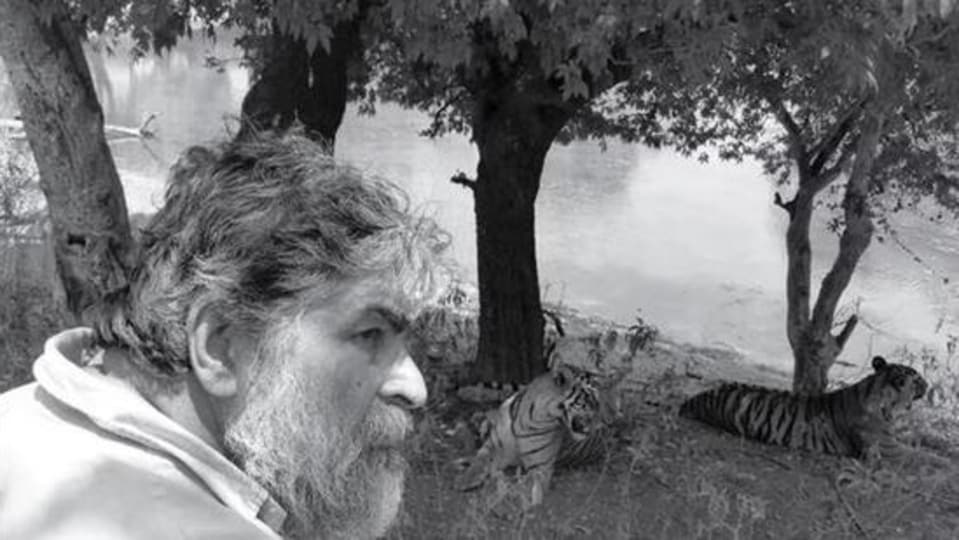
That was in 1997, and by then, Thapar had been working on tiger conservation for over two decades.
He continued to do so till Saturday morning, when he died at his residence in Delhi at the age of 73. Thapar was diagnosed with cancer last year. Thapar is best known for his long and deep association with the legendary Fateh Singh Rathore, his work in Ranthambore, his books (he wrote over 30), and his philosophy of tiger conservation, which was different from that of several others. “My fight was always for inviolate spaces,” he wrote in one of his books, summing up an approach to conservation that many are now realising is probably the only way of protecting not just tigers, but all wild flora and fauna.
Thapar was born into a well-connected family of intellectuals in Mumbai in 1952. His father, Romesh Thapar, was the founder of Seminar magazine, and associated with the CPI(M), although he (Romesh Thapar) and his wife Raj were close to Indira Gandhi in the period before the Emergency. His sister, Malavika Singh, ran Seminar until the magazine paused publication in 2023.
His brother-in-law (Malavika Singh’s husband), Tejbir Singh, is the nephew of writer and journalist Kushwant Singh. Historian Romila Thapar is his aunt. And he is married to Sanjana Kapoor, the daughter of actors Shashi Kapoor and Jennifer Kendal.
It was a meeting with Rathore in 1976 that changed Thapar’s life. The former, then director of the Ranthambore tiger reserve, took Thapar under his wing. In those early years, Thapar immersed himself in hands-on fieldwork, spending countless hours in the wilderness studying tiger behaviour and habitat. Whether in searing heat or icy winter mornings, rain or shine, he would be found with community elders and officers managing India’s tiger reserves, working on the challenges in conserving the big cats.
In 1988, Thapar founded the Ranthambore Foundation.
The foundation works with almost one hundred villages around the Ranthambhore Tiger Reserve. From providing primary healthcare for the community, to encouraging dairy farming with the aim of having stall-fed cattle, something that would discourage illegal grazing in the reserve, to successfully rewilding barren and degraded tracts of land, his approach was ahead of his time. He was also the proponent of the Ranthambhore School of Art and of bringing Dastkar, a nonprofit that helped villagers displaced by conservation efforts, to set up a women’s co-operative to keep alive traditional craft.
As his family noted after his death, “Thapar was no arm-chair conservationist.” His work took him across the length and breadth of the country, serving on countless government boards and committees - from the National Board for Wildlife to the central empowered committee for forests of the Supreme Court. “Valmik did not mince his words, nor shy away from giving his suggestions and opinions without fear or favour,” the family statement read. “He spoke with the same amount of passion about wildlife and conservation to a Prime Minister or chief minister as he did to a forest guard in a far flung chowki, treating them with equal respect.”
His work, combined with his writing and documentaries such as BBC’s Land of the Tiger, made him an influential voice in conservation — one he used with good effect. Beyond Ranthambore, Thapar was instrumental in establishing Tiger Watch, an organisation dedicated to monitoring tiger populations and educating local communities about conservation. Through Tiger Watch, he pioneered citizen science approaches, training local people to become the eyes and ears of conservation efforts.
As Sanctuary Nature Foundation noted in its citation when it gave him a Lifetime Award in 2017: “His influence has been expansive, and though today he works almost exclusively in Rajasthan, with the state government, he has been instrumental in the revitalisation of other parks such as Maharashtra’s beloved Tadoba-Andhari Tiger Reserve.”
His influence can be gauged from the fact that he served on over 150 committees of both central and state governments. “Thapar has also been vocal in eschewing the dogmatic view that all tourism is bad tourism, and is a leading proponent of innovative tourism that can benefit both parks and people. All this, he firmly believes, is only possible by knitting together a cross-sectoral group of like-minded people including scientists, activists, village leaders, forest officials, bureaucrats, politicians and the free press,” the citation added.
Thapar’s association with Machli, Ranthambore’s most famous tigress, became legendary in conservation circles. He documented her life extensively, watching her grow from a young tigress to become one of the most photographed and celebrated in the world. Machli, known for her distinctive facial markings and bold personality, became a symbol of successful tiger conservation under Thapar’s watch. His detailed observations of her hunting techniques, maternal behaviour, and territorial patterns contributed significantly to understanding tiger ecology. The bond between the conservationist and the tigress represented the deep connection possible between humans and wildlife.
“Valmik Thapar, a legendary figure in the world of conservation over the past four decades — especially tigers — has just passed away. It is a great loss,” Jairam Ramesh, Congress leader and former environment minister wrote on X.
“Today’s Ranthambore, particularly, is a testimony to his deep commitment and indefatigable zeal. He was uncommonly knowledgeable on a variety of issues relating to biodiversity and not a day passed during my ministerial tenure without our talking to each other — with me almost always at the receiving end. During my tenure as chairman of the Standing Committee also he was a constant source of many valuable suggestions and advice. We had arguments but it was always an education to listen to him, full of passion and concern,” he added.
Thapar’s strong views on inviolate spaces didn’t sit well with forest rights groups. He was a member of the Tiger Task Force set up in 2005 after it was found that tigers had disappeared from Sariska in Rajasthan. The objective was also to develop a plan so that the survival of the tiger could be guaranteed. The task force made several recommendations including reinvigorating the institutions of governance; strengthening efforts geared towards protection of the tiger: checking poaching, convicting wildlife criminals and breaking the international trade network; expanding the inviolate spaces for the tiger by minimising human pressure in these areas; and repairing the relationships with the people who share the tiger’s habitat by building strategies for coexistence.
Thapar, true to his view, submitted a note of dissent where he highlighted why inviolate spaces are critical for tigers. “The long term survival of tigers will depend on the single most important factor namely inviolate protected areas A certain minimum area has to be managed exclusively in its natural form for the tiger. The area may be XX%, 1% or 2% or more of the geographical area of this country depending on the political mandate to do so. Let the principle of this be applied in the interest of the tiger. After all it is these areas which provide the water, food and ecological security of the country. On the other hand the entire report is based on a totally different strategy,” he wrote.
“He was amazing and committed to conservation of tigers. I learnt a lot from him when we worked together on the Tiger Task Force Report. His going is a huge loss for the conservation movement,” said Sunita Narain of CSE, who served on the same task force.
Thapar spent time in the field, studying tigers and their habitat, of course, but also interacting with the local community. His work, and his personality, inspired an entire generation of conservationists and students.
“Valmik, it’s hard to believe you’re gone. I still vividly remember seeing you for the first time in 1993 as a high school kid captivated by your powerful presentation on the plight of the tiger. That day, I raised my hand and asked, ‘What can we do for tigers?’ And your response was—’What are you doing right now? Get your friends together and write to the Chief Minister so he can do all he can to protect the majestic tiger. Do what it takes to be heard’. That ignited something which never faded,” remembered Koustubh Sharma, Conservation Science Director, Snow Leopard Trust.
Thapar’s approach to conservation was both scholarly and deeply personal, but it was his ability to translate this scientific knowledge into compelling narratives for the public that set him apart. “Valmik was a fearless advocate for the tiger, taking the conservation concerns for the Indian tiger worldwide. He was also a keen student of tiger behaviour, and his various books on tigers shed enormous light on their behaviour and ways. He eloquently combined scholastic enquiry with passionate defence for wildlife at a time when the conservation movement was still young in India. He will be remembered for being the voice of an animal that cannot speak for itself,” said Neha Sinha, conservation biologist.
“Valmik made us all effective on the ground: regardless of who ran the political show in Delhi, Valmik could get things done. A dozen of us, officials and non-officials, sometimes provided ideas and supported him in whatever way we could. The public at large does not know that many amendments to wildlife laws, setting up of the wildlife crime bureau, formation of the Central Empowered Committee of the Supreme Court, establishment of the Global Tiger Forum and appointment of the Tiger Task Force and other such initiatives owe much to Valmik,” wrote Ullas Karanth, emeritus director, Centre for Wildlife Studies, Bengaluru.
“We have lost a truly passionate voice for tiger conservation. Valmik Thapar’s name was inseparable from tigers and their iconic home, Ranthambhore. His contributions as a member of numerous government committees were instrumental in safeguarding many vital wildlife habitats. He was known for his directness and unwavering commitment. India has lost one of its most devoted champions for tigers. My future visits to Ranthambhore will undoubtedly be marked by a profound sense of loss, knowing that he is no longer with us,” said Anish Andheria, President- Wildlife Conservation Trust.
“His inimitable booming voice may have gone silent today but the fight to save India’s natural treasury that he held so dear will go on,” his family noted in their statement, signed by his wife Sanjana Kapoor and son Hamir Thapar, along with other family members including his aunt, historian Romila Thapar.
Somehow, it’s not hard to imagine Thapar and Machli walking together in some inviolate space up in the sky.