
 E-Paper



Vande Bharat returnees still face a harrowing time
Passengers arriving in Delhi continue to face a harrowing time with most of them spending six to seven hours to go through the complete process of security checks, screening, selecting a hotel for quarantine, and finally arriving at the facility.


Madhubala Rai, who travelled alone from San Francisco to Delhi last week, said it took her at least seven hours to reach her hotel. Her flight landed at 3.30 pm on June 26, but it took her several hours to clear the APHO screening, immigration and customs.
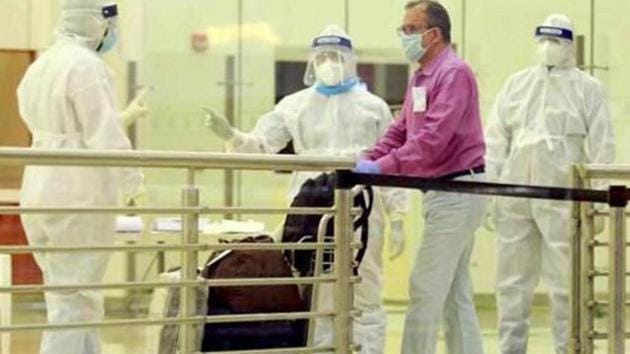
“I guess there were multiple flights at the same time because of which there were too many passengers. After reaching the triage area, it took us another one-and-half hours. We could only board the bus by close to 10 pm and were sent to our designated quarantine hotel,” Rai said.
Nearly two months after the Central government launched the Vande Bharat mission to bring back Indians stranded in other countries, passengers arriving in Delhi continue to face a harrowing time with most of them spending six to seven hours to go through the complete process of security checks, screening, selecting a hotel for quarantine, and finally arriving at the facility.
Another passenger, who arrived at the Delhi airport on June 25 from Washington D.C. said he spent six-seven hours at the airport. The passenger, who asked not to be named, said the process felt like a major hassle because the triage area, where the Delhi government officials attend the passengers, is relatively small.
“Inside the airport, we do not have all our luggage and it is all air-conditioned but the triage area is not air-conditioned and because it’s a small area, if there are multiple flights at the same time, social distancing also goes for a toss,” he said.
The crowding is intensified by the fact that passengers are also carrying all their luggage by the time they come to this area.
At the designated triage area, all passengers are screened for Covid-19 symptoms at screening counters manned by medical officers and paramedics deputed by the Delhi Government. The passengers in the triage area are also guided about the protocol to be followed in quarantine centres.
“The director-general of health services (DGHS) has deputed as many as 20 health teams, comprising doctors and paramedics for this purpose. We have been trying our best to complete the screening quickly, but most of the passengers who arrive seem to be very anxious and confused about the system. So, it takes time to explain the system and procedures to each one,” said a senior government official deployed at the airport who asked not to be named.
Many commuters also complained of not being allowed to take cabs or private vehicles to reach their chosen paid hotel quarantine facilities. “They put us all in buses . The administration should also keep an option of hotel taxis so that those who want to go in a car can reach their quarantine facility quickly,” said another passenger who arrived from Australia and is currently in quarantine in a five-star hotel.
A second government official who is part of the team engaged in the transportation of the passengers from the airport to the designated hotel quarantine centres said air-conditioned Delhi Transport Buses (DTC) buses have been requisitioned for the purpose. “We cannot engage taxis and increase the number of vehicles as surveillance would then become a big problem”, this person added on condition of anonymity.
Even the Maharashtra government and the BMC follow the same approach in Mumbai.
P Velarasu, Additional Municipal Commissioner in Brihanmumbai Municipal Corporation (BMC), in charge of Vande Bharat in Mumbai, said, “We have to account for every person who lands in Mumbai. So we have to take them in government organised transport, either to a hospital, or quarantine facility, as is required. If and when the passengers are discharged from the quarantine, organising transport is their own responsibility.”
“Despite being so strict, last week we had a case where an octogenarian escaped from the triage area. The police later found him at his daughter’s home in Uttar Pradesh’s Ghaziabad. Now, if we allow cabs as well, keeping a tab on passengers will be all the more difficult,” said the second Delhi government official.
the rules in Delhi and Mumbai are similar. A passenger arriving on a Vande Bharat flight has to be in institutional quarantine in a hotel for seven days followed by another seven days in home isolation.
Explaining the process, an airport official said that passengers take almost 45 minutes to exit the plane and enter the terminal.
“Here, they undergo thermal screening by the officials of Airport Health Organization (APHO) which takes about half an hour. These passengers are then divided into groups of 20-25 depending upon their final destinations and are briefed about the procedure they will undergo. The CISF personnel then escort these groups to the immigration area where there are 35 officers working at a time and one passenger takes roughly about 4-5 minutes in immigration clearance. Once cleared, the passengers are then taken to the baggage area where after collecting their bags many of them enter the duty-free shops,” the official said, asking not to be named..
“One problem which often leads to delays is that some people in the groups spend time in the duty-free area to shop, while others from their groups have to wait. CISF personnel cannot interfere as they have been asked to only escort them,” the officer added.
A senior CISF officer in Delhi airport said on condition of anonymity that the process of escorting passengers through the terminal is smooth unless there are multiple flights coming at the same time. “Earlier there were issues as most of the flights landed around the same time causing a backlog at different counters. But the agencies concerned have now ensured that there’s ample time gap between two incoming flights. “
“Once done shopping, the passengers together pass through the customs area where unless they are stopped by the law enforcement agency over suspicion of smuggling they take not more than 20-30 minutes,” the officer said.
A senior officer from Delhi customs said on condition of anonymity that as is its practice the department profiles passengers and stops only a few whose luggage needs scanning. “Otherwise, a passenger takes barely 10-15 minutes to pass through customs area.”
Passengers then exit the terminal and reach the triage area, where they’re attended to by officials of Delhi government’s health department.
A Mumbai International Airport Ltd (MIAL) spokesperson said there are three kinds of services to ferry passengers to their quarantine facility in the city. “Those who need to quarantine within Mumbai are taken in BEST buses. Outstation passengers (those travelling out of Mumbai but within the state) have the option of selecting either ordinary or luxury MSRTC (Maharashtra State Road Transport Corporation) buses and for those who can afford there are cabs, which are organised and routed through BMC,” the spokesperson said.


