
 E-Paper



Assembly polls: Veteran vs newcomer in battle for Haryana’s largest constituency
Badshahpur, with 5.2 lakh voters, is likely to see a close contest between two high-profile candidates in the assembly election on October 5

 Prefer HTon Google


Haryana’s biggest assembly constituency, Badshahpur, with 5.2 lakh voters is likely to see a close contest between two high-profile candidates in the assembly election on October 5. BJP veteran and former minister Rao Narbir Singh, 63 is against Congress youth leader Vardhan Yadav, 33.
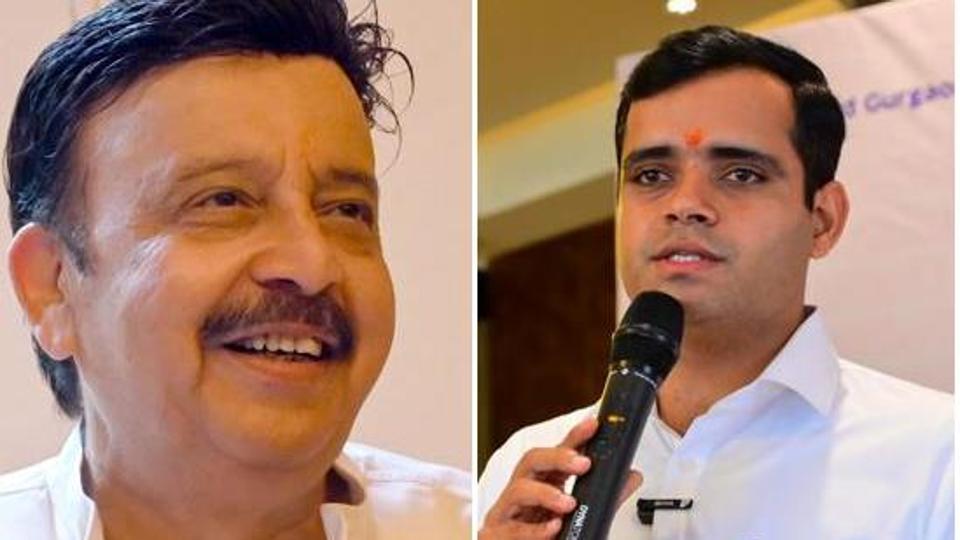
Rao Narbir Singh, who served as a minister in the state cabinet from 2014 to 2019 and held portfolios such as home, transport, and public works, is emphasising his long-standing experience in Haryana politics. Known for calling out Gurugram’s civic crises in his previous tenure, his campaign focuses on presenting himself as the “khalis neta (pure leader)” who accepts the reality of the city’s challenges and promises to bring about practical solutions.
Badshahpur is one of Gurugram’s four sub-divisions (Gurugram, Pataudi and Sohna are the others).
Singh’s campaign song, styled after a popular Haryanavi folk song by dancer Sapna Chowdhary, reflects his attempt to connect with voters across the urban and rural spectrum, emphasising his past achievements and vision for the constituency.
Vardhan Yadav, the Congress’ new face, is taking a modern, media-savvy approach. He has two campaign songs — one for rural voters, where he positions himself as Badshahpur ka beta (Badshahpur’s son), and another aimed at urban youngsters,a melange of pop beats and rap in Hindi and English. Yadav is capitalising on social media to amplify his message, promoting himself as the bridge between Badshahpur’s rapidly urbanising landscape and its rural roots.
“We have high-rises and posh areas alongside villages still struggling to catch up with the Millennium City. The voter base is different, and it needs a leader who can fit both bills,” said Yadav during a campaign event.
The contrast between the two candidates could not be starker. Singh is banking on his track record and reputation as a seasoned politician with deep knowledge of the constituency. His rallies focus on his past tenure as a minister, during which he claims significant progress was made in Gurugram’s infrastructure. “I don’t promise to turn Gurugram into Singapore, but I will ensure a well-managed, clean city that people can be proud of,” he said in one of his speeches.
Singh represented the constituency but was denied a ticket in 2019. The BJP candidate in 2019, Manish Yadav, was defeated by an independent candidate, Rakesh Daulatabad, who became a first-time MLA, but died suddenly this May.
The Congress’ Yadav sees his newcomer status as an advantage. “The youth of this constituency are tired of old promises. I represent a new vision and future, someone who understands their needs,” he said, underscoring his campaign’s focus on jobs, education, and modern infrastructure. His ability to connect with young professionals and first-time voters, particularly through social media, is seen as a significant threat to the BJP’s traditional voter base. And the tailwinds of anti-incumbency are also likely to help his cause.
Badshahpur’s voters have much at stake in this election. The constituency has long been grappling with civic challenges, from waterlogging and traffic congestion to garbage disposal and power outages. Parts of the constituency have seen a surge in urbanisation, yet basic services have failed to keep pace. The Bandhwari dumpsite, which receives over 2,000 tonnes of waste daily, has become a major issue. Yadav has been vocal about addressing this environmental crisis, calling it “a ticking time bomb”.
“The waste has contaminated the water in the area, and every time there’s an election, politicians come and promise its removal. But they’re just mountains of promises,” said Yadav during a campaign rally. His strong stance on environmental issues is expected to resonate with both rural and urban voters, especially those directly affected by the dumpsite’s pollution.
Meanwhile, Singh is doubling down on infrastructural solutions, proposing an effective drainage system to combat waterlogging and an overhaul of the garbage collection system. “We need zone-wise pickup and treatment of waste to avoid creating dump sites. Once elected, I’ll place these proposals before the government and hope to address these problems in the next two years,” he assured voters at a public meeting.
Traffic remains another hot-button issue, with the constituency plagued by bottlenecks and poor road conditions. Singh has outlined plans for creating 20 signal-free underpasses within the city and has even hinted at discussions with Union minister Nitin Gadkari about constructing an elevated road from Dhaula Kuan to Manesar to ease the Delhi-Gurugram traffic.
But the election is not a straight two-way fight. Kumudni Daulatabad, the wife of Rakesh Daulatabad, is also in the race.
Political expert Anil Arya said: “Kumidni Daulatabad is denting the Jat vote, which has largely been leaning towards Congress. She has garnered sympathy, particularly in her home village of Daulatabad. However, she has not succeeded in turning the race into a triangular contest entirely. The constituency is a mix of urban and rural areas, where voters tend to focus more on party symbols than individual candidates.Despite Vardhan Yadav being a young and promising candidate, his reach remains limited. Meanwhile, internal conflicts within the BJP, including tensions between Rao Inderjeet Singh, Manish Yadav, and Rao Narbir Singh, could impact their vote share, but the BJP still holds strong in this region.”


