
 E-Paper



View: Unsettled LAC is Xi's pressure point on India to stay away from West
The Chinese want to settle the border on their own terms. It means imposing the 1959 line and giving up Arunachal Pradesh

 Prefer HTon Google


It seems that China is in no mood to resolve its dispute with India. On February 19, the India-China Corps Commanders met at Chushul-Moldo border point to discuss disengagement, relocation and de-escalation in eastern Ladakh.
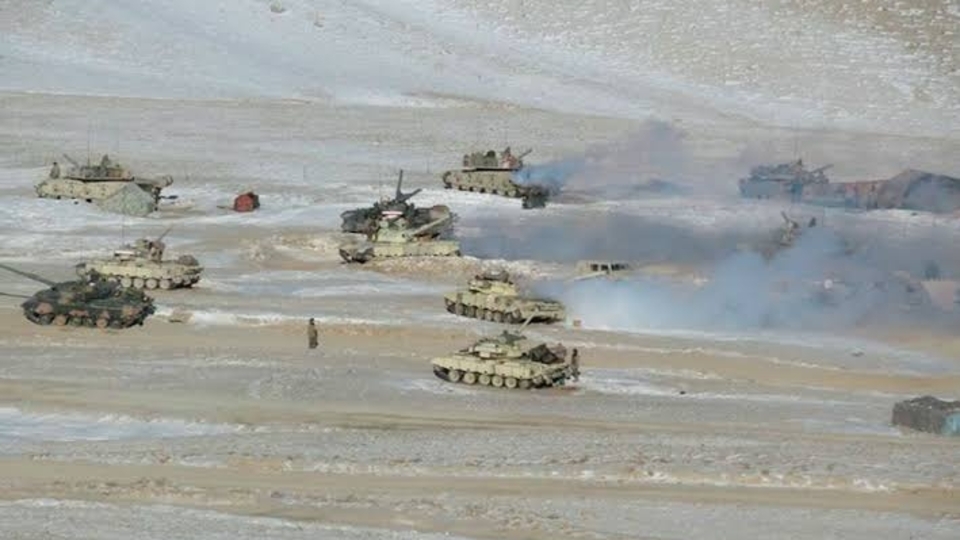
It has been four years since the Chinese People's Liberation Army (PLA) transgressed over Galwan, Gogra Hot Springs, Pangong Tso Lake and had accretion of forces at Depsang Plain as well as Charding Nala Junction in Demchok. Even after four years, the disengagement has not been complete, what to talk of relocation or de-escalation.
Even now, the Chinese have packed up nearly 50,000 troops along with rocket systems, missiles and fighters on a standby in the hinterland in Tibet. Even on February 19, both the Indian and Chinese sides couldn't get past each other. The Chinese used the transgressions in East Ladakh to pressurise the Narendra Modi government.
ALSO READ: ‘India-China ties must be based on realism’: FM Jaishankar
China wary of India's ties with West?
It is a million dollar question of which one can only speculate the answers. It is quite evident that the Chinese will use the non-resolution of Line of Actual Control (LAC) to pressurise India not to go to the West. It is a clear cut pressure point that the Chinese are using the QUAD to translate into an alliance much bigger than a talk shop.
The Chinese also want to use this to ensure that the Indian borders never remain stable and India is always on the tenterhooks due to its huge army, latest advanced weapon systems and numerically high presence in eastern Ladakh.
This is happening despite the government making it very clear that the normalisation of bilateral ties with China only go through the settlement and de-escalation on the LAC, which is 3,488 kilometres long. Currently, the Chinese PLA is packed up in Ladakh, the eastern sector along Arunachal Pradesh and across Sikkim.
Even before Xi Jinping became the Chinese president for the third time in October 2022, the Chinese sent six combined armed brigade, virtually a division strength each, along the Arunachal and Sikkim borders. Those combined armed brigades are still there. As of now, the LAC is packed up with Chinese forces, who are doing all kinds of military upgradation all along the LAC.
How India is responding to China?
The Indian side has also responded in a similar fashion. It has ensured that the Chinese challenge does not go without riposte. The problem is, over the past four years, things are not at all moving. The India-China trade is still heavily in favour of China, the trade deficit being more th an $100 billion.
The Chinese want to settle the border on their own terms. It means you impose the 1959 line, proposed by then Chinese premier Chou en Lai on East Ladakh and you give up on Arunachal Pradesh or what they call as South Tibet.
Prime Minister Narendra Modi tried to reach out to China in 2018 at Wuhan and in 2019 at Chennai, trying to sort out the border. He tried to sort out with Xi Jinping the resolution of the boundary issue. But the Chinese responded by a transgression in May 2020.
As PM Modi told one of his senior officers,"I wanted to give support of 140 crore Indians to President Xi Jinping but he was more interested in 140 square kilometres of land".


