E-Paper



Wadia institute scientists visit Chamoli disaster site, explain what caused it
A temporary lake created by the blocking of a Himalayan stream by the debris from a broken glacier and rock slide eventually burst out causing the Chamoli tragedy, say scientists from the Wadia institute.

 Prefer HTon Google


A breach in a temporary water body formed due to a hanging glacier crashing down after a huge rockslide, a few kilometres upstream of Rishi Ganga river, resulted in the flash-flood in Chamoli district, the Wadia Institute of Himalayan Geology has said.
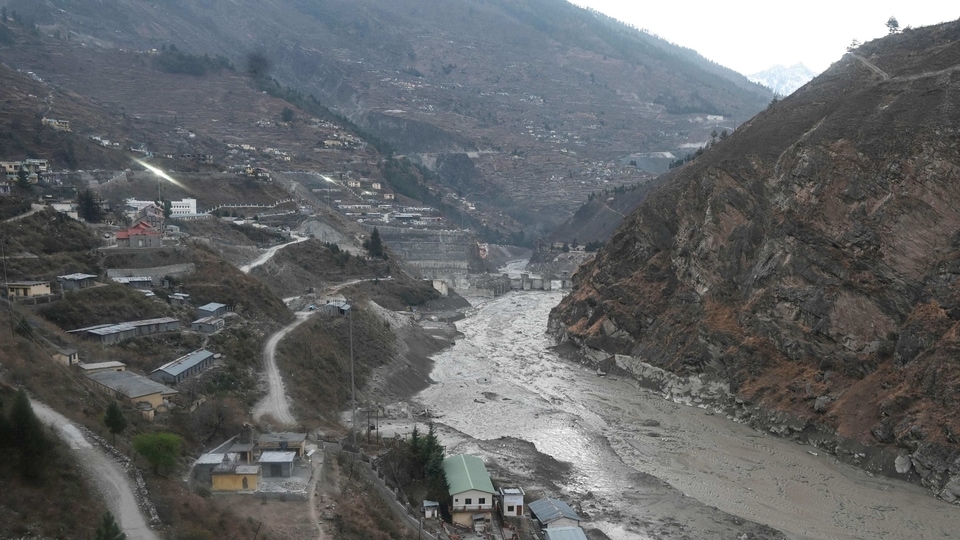
A team of scientists from the institute visited the flash-flood site in Chamoli before submitting its interim report to the institute’s director, Kalachand Sain, on Tuesday. This is the first team of scientists to visit the disaster site.
A team of five scientists led by Manish Mehta and Amit Kumar inspected the area on Tuesday and submitted their findings in the evening, tallying their ground observation with satellite imagery, Sain said.
The team found that it all started at a peak, called Mrighu Dhani by locals, a few kilometres uphill of Raini village, the last human habitat in the upper reaches of Chamoli district, said Sain.
“There was a hanging glacier on the peak and at the top head of this hanging glacier, there was a huge rock mass,” he said.
Due to freezing, thawing and temperature variation, the rock mass loosened and came down, creating pressure on the hanging part of the glacier, he added.
“The fresh snowfall had also added to the weight over the hanging glacier. And this hanging glacier broke off due to the gravitational pull, slid down with the entire rock mass, snow and took along more snow, debris, and boulders and soil,” Sain explained.
The huge mass came down with force and slowed down near the base of the valley, where Raunthi Gadhera stream flows. This stream receives waters from the glaciers, he said.
“As the huge mass slowed a bit, then stopped, it blocked the water of the stream and the water quantum kept increasing. This damming up of the stream increased to such an extent that it breached the whole accumulated mass. The whole mass of water, boulders, and rock mass came crashing down with force towards the Rishi Ganga dam site,” he said.
Also Read: ISRO experts revealed mix of rockfall, snow avalanche caused Chamoli tragedy: CM
The slush from Raunthi Gadhera stream coming down with huge force washed away a hydel project on Rishi Ganga river and caused massive damage to the under-construction Tapovan hydel project. Till Tuesday evening, officials in Uttarakhand said 32 bodies have been recovered and another 174, who are missing, are feared dead.
Geologist Dan Shugar of the University of Calgary had hinted at a similar possibility on Monday, saying, a large rock-slope (about 200 meters) detached from a mountain and hit a glacier and brought debris to the base of the valley already having huge debris from the 2016 avalanche. He, however, did not speak about the possibility of a temporary lake forming at the bottom of the valley.
It is not yet clear to the team of scientists for how long the water had accumulated. “Prima facie it seems it was for a few days and then the breach happened. Our team is studying the area further to get more details,” Sain said.