E-Paper



What does SAS tell us about India’s animal farms?
HT has analysed unit-level data from the latest Situation Assessment of Agricultural Households and Land and Livestock Holdings of Households in Rural India (SAS) to answer some of these questions.

 Prefer HTon Google


Have tractors finally replaced bullock carts and private dairies the milk-animal in the Indian farmer’s house? Vigilante groups (“gau rakshaks”) claiming to be protecting cows have been making news (for the wrong reasons) in the past few years in India. But how many “gau palaks” — those who keep cows at home — are there in India? How big are animal farms and animal farming in the business of farming in India?
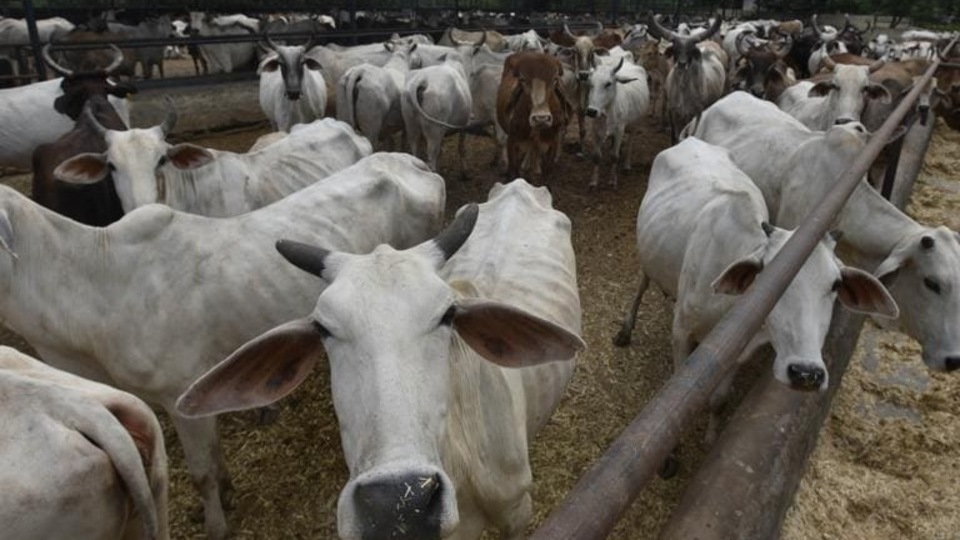
HT has analysed unit-level data from the latest Situation Assessment of Agricultural Households and Land and Livestock Holdings of Households in Rural India (SAS) to answer some of these questions. The SAS was conducted in the calendar year 2019 and gives data for the July 2018-June 2019 period on animal farming.
A Rajasthan farmer is about thrice as likely to have an animal as his Telangana counterpart
The SAS only looks at households which meet the criterion set for agricultural households. This requires at least one member to be self-employed in agriculture and an output in specified agricultural activities of ₹4,000 (in 2018-19) in the past 365 days.
Just as not all farmers are counted as agricultural households, not all agricultural households which have an animal at home – this excludes pets – qualify for the animal farming household (AFH) category in the SAS. Only those agricultural households are considered in AFH category that received some value of output – such as milk, wool, live animals, or even manure -- from animal farming.
An estimated 60.2 million out of the total 92.5 million agricultural households or 65% qualify for the AFH category in the entire July 2018-June 2019 period. Data on ownership of animals was, however, only collected when data on agricultural households was being collected with reference to July-December 2018. During this period, 58% households were engaged in animal farming, but 71% owned some kind of livestock (excluding pets).
However, there are significant state-wise differences in whether or not an agricultural household qualifies for the AFH category. Among major states, the share of AFHs among agricultural households was 90% in Rajasthan. This number was just 34% in Telangana.
Cows and hens, not buffaloes and goats
What are the most common animals in India’s animal farms? 45% of India’s agricultural households own cattle, 27% own buffaloes and 14% have poultry birds. Ovine and other mammals (sheep, goat, pig, rabbits, etc) are owned by only 19% of agricultural households. In terms of estimated numbers, cattle and poultry birds outnumber other animals. An average agricultural household owned 1.35 cattle and 1.34 poultry birds compared to 0.90 ovine and other mammals and 0.71 buffaloes.
Nearly a third of Other Backward Classes (OBC) agricultural households (32%) own buffaloes, much higher than the 15%, 23% and 32% share for Scheduled Tribe (ST), Scheduled Caste (SC) and agricultural households not belonging to SC, ST or OBC groups. The share of agricultural households owning buffaloes is 2.3 times the share owning cattle in Haryana. Poultry ownership is nil in Haryana compared to 60% in Assam. Size of land-ownership is an important factor in deciding cattle and buffalo ownership though not in case of poultry.
Is there a problem of stray cattle in Indian villages?
Anecdotal accounts suggest that it is a huge problem. Does the SAS offer any clues on this question? Deductive reasoning suggests that it does. 73% of cattle and 85% of buffaloes owned by agricultural households are female. This means that cattle and buffaloes are largely kept as milk animals and not for working on farms.
Such a skewed gender ratio is unlikely to be the result of natural causes. This leaves disposal – either by selling or abandoning -- of male cattle and buffaloes by agricultural households.
The SAS shows there is a compelling economic case for doing so. Animal ownership, especially cattle and buffalo ownership, is strongly correlated with land ownership. Intuitively, this makes sense. Animals, like humans, need space to live. Also, cattle feed entails a financial burden. It was 84.4% of a typical AFH’s total expenditure on animal farming in 2018-19. To be sure, not all female cattle and buffalo generates income for the AFH. The SAS found that only 27% of cattle and 37% of buffaloes were giving milk at the time of the survey. Even among female cattle and buffaloes, this figure was 37% and 43%, respectively. This is bound to hurt the net income of such a household. The ownership of in-milk female cattle among OBC and non-SC-ST-OBC households was more than twice that of SC households.
Animal farmers are more likely to use poultry than milk for self-consumption
Commercial farming is not the driving force behind India’s animal farmers or AFHs. 49% of the value of total value of output is consumed by the household itself. To be sure, the SAS definition of own consumption includes retention for future sale or for use as animal ‘seed’. Also, share of animal output used for self-consumption varies significantly across products. It is around 45% in the case of cattle and buffalo milk, 60% case of poultry, but just 9.9% for fish and nil for live sheep or goat.
The regional divide in India’s dairy economy
In Gujarat, the home of Amul, which pioneered the cooperative revolution in India’s dairy economy, 64% of the milk produced by AFHs is sold to cooperatives. Gujarat is not the only state where cooperatives have a strong presence in the dairy sector. In Kerala and Karnataka too, around 50% milk is sold to cooperatives. Then there are states such as Tamil Nadu and Maharashtra, where private processors buy more than 40% of the total milk produced. At the other extreme are states like Himachal Pradesh, Chhattisgarh, and Jharkhand, where neither cooperatives nor private businesses have a strong footprint in the milk economy and 3/4th or more of milk production is consumed within the household.