E-Paper



What happens in Antarctica can impact our climate, sea levels, food security: NCPOR director
India hosted the 46th Antarctic Treaty Consultative Meeting (ACTM) from May 20 to 30 in Kochi, Kerala in which over 400 delegates from 56 countries including diplomats, scientists and experts came together to discuss the affairs of Antarctica such as science, policy, governance etc.


India hosted the 46th Antarctic Treaty Consultative Meeting (ACTM) from May 20 to 30 in Kochi, Kerala in which over 400 delegates from 56 countries including diplomats, scientists and experts came together to discuss the affairs of Antarctica such as science, policy, governance etc. On the sidelines of the conference, Vishnu Varma caught up with Thamban Meloth, the director of National Centre for Polar and Ocean Research (NCPOR), to discuss India’s research activities in the cold continent and the impact of climate change. Edited excerpts:
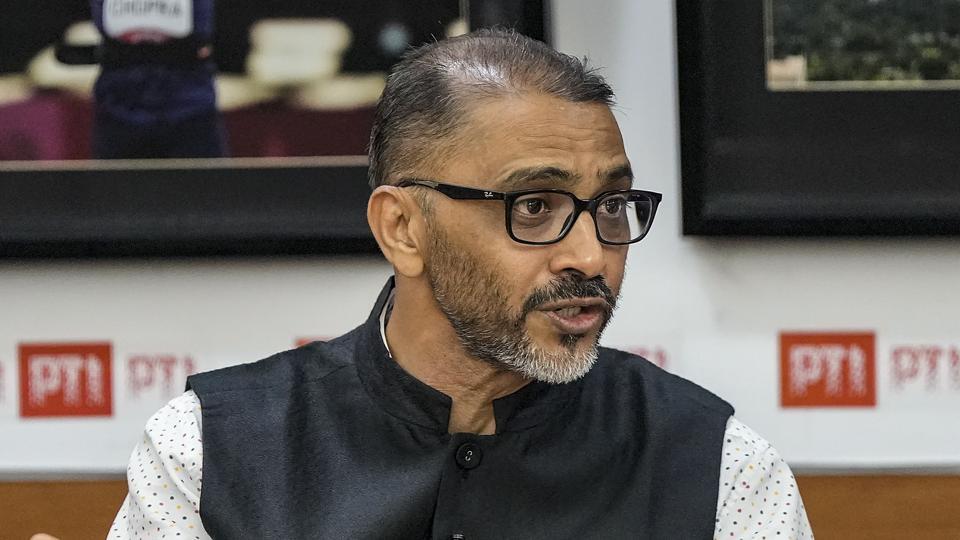
How important is holding the annual Antarctic Treaty Consultative Meeting (ATCM) which is now in its 46th edition?
For the continent of Antarctica, this is the only body that can define its governance procedures, create the rules for it and consider the activities to be carried out there. Everything requires the approval of the ATCM parties and this meeting is the only place where everything is decided. So this annual affair is extremely important because it’s all about governance, policies, law, procedures and operations etc. It’s always only hosted by each of the 29 consultative parties which in turn have the powers of governance. India is one of them. The host is chosen in alphabetical order and the next host country will be Italy.
With India hosting the conference this year, what was on the agenda?
This year, we are continuing (discussions) with a strong focus on the tourism in Antarctica and how it has been increasing a lot of late, especially adventure tourism, which has safety implications. So therefore, it’s important. This ATCM is a milestone because we have a new working group dedicated to development of a framework for tourism activities. That means, we will come up with regulatory mechanisms on how to control and manage tourism activities in Antarctica. The working group will continue for a couple of years to come up with the framework. It will have its own decisions, resolutions and an Annex like fixing liabililty as to who will be responsible for what. The idea is that in the next 3-4 years, we should have the complete framework ready.
What is the nature of India’s current research activities in Antarctica?
India began its activities in Antarctica way back in 1981. We have come a long way from having a small station called Dakshin Gangotri in 1983. Then we had another station Maitri in 1988. Dakshin Gangotri doesn’t exist anymore. We built another station Bharati, around 3000 kms away. The stations are platforms for scientists to stay and conduct experiments and create observatories. India is carrying out research related to climate change and its impact on the continent and how it will affect tropical countries like India where monsoons are the dominant climate systems. So that’s an important theme. Secondly, we also study how life evolved in extreme conditions and how they adapt and survive. We try to study the large amount of ice deposited in Antarctica as it provides a way to study climate and what’s going to happen to the ice in future. Extreme weather is also being reported in Antarctica which was unheard in the past. For example, in March 2022, when it’s winter there, there was a situation where one particular station, where the temperature should have been minus 60 degrees celsius, actually recorded around minus 11 degrees celsius. That was because of a weather system called Atmospheric River. It’s a long system carrying warm moisture from Indian Ocean and Atlantic region and travelling thousands of kilometres. When such a system reaches a dry place like Antarctica, within one day, it can cause changes in temperature as well as precipitation like rain or snow depending on the temperature. This has been increasing of late and an important area of study to understand how extreme weather from rest of world is affecting Antarctica. Some of the NCPOR studies clearly show that some of the extreme weather in central India and north India had a strong connection to Arctic and the Arctic sea ice. Some studies also show that what’s happening in Antarctica could be having an impact on a place like India. It’s important to understand what happens in Antarctica doesn’t stay there and it reaches all over the world affecting climate, sea levels and our lives. Climate change has a defining impact on food security as well.
With extreme weather events like cloudbursts now becoming more common and inflicting massive damage within a localised area, do you think there should be more policy-making on climate change at the grassroot panchayat level in India?
The Ministry of Earth Sciences has agreed that we need panchayat level stations to study (extreme weather events). The situation has changed so fast. We have these convective clouds which can suddenly trigger cloudburst. We need to have investment in a large scale to establish observation systems at localised levels. A state like Kerala is still much more educated about understanding the impact. People at ward level and panchayat level are serious about it. The rest of the country still are yet to understand properly because when you experience, you learn about it. The government is very clear about policy making. We have an Indian Arctic policy in 2022 and India Antarctic Act in 2023. It is up to us to study further and how the monsoon forecast can be improved. We would require a dense network of observatory systems and modelling which can go to a high resolution at the local level. Unlike any weather system, monsoon climate system is the most difficult to predict anywhere in the world. The tropical region is highly dynamic.