
 E-Paper



Arun Jaitley’s demise, an irreplaceable loss to the nation
In the Bharatiya Janata Party (BJP), a party he faithfully served to the last; in the government – of which he was no longer minister but still a guidance counsellor – and in Indian public life more generally, Jaitley has and will be succeeded by many.

 Prefer HTon Google


When Thomas Jefferson took over from Benjamin Franklin as the American diplomatic representative (ambassador, in today’s terms) to France, an acquaintance in Paris is supposed to have asked him: “Have you replaced Ben Franklin?” Jefferson, it is said, shook his head: “No one can replace him. I have only succeeded him.”
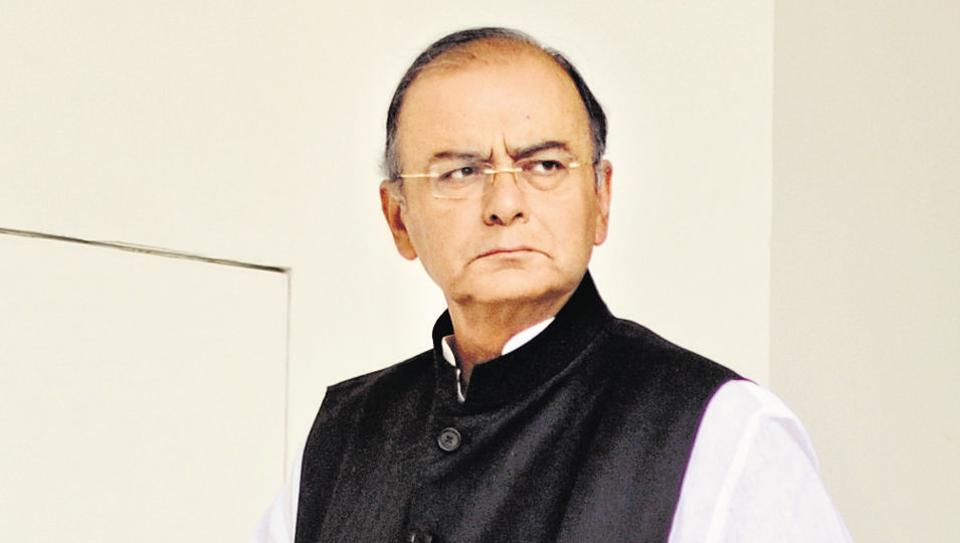
Arun Jaitley’s passing at the relatively young age of 66 will evoke a similar sentiment. In the Bharatiya Janata Party (BJP), a party he faithfully served to the last; in the government – of which he was no longer minister but still a guidance counsellor – and in Indian public life more generally, Jaitley has and will be succeeded by many. He will never be replaced.
Also watch| Arun Jaitley dies at 66, leaders pour in to pay last respects at Delhi residence
There are many reasons for this. He was a rare professional politician who brought the professional’s discipline and ethic to politics. He understood law and the modern world of business and technology. Equally, he grasped the civilisational and philosophical imperatives and motivations of the BJP and wider Sangh Parivar. He was comfortable in English-speaking living rooms. He was as much at home in spending late nights with regional and constituency politicians – whether from the BJP or allied parties – stitching together caste coalitions that were formidable and often unbeatable. Gujarat, Bihar, Punjab, Karnataka, Uttar Pradesh, Bengal - diverse political geographies -- are testimony to Jaitley’s astuteness. Even when he failed – Bengal 2006 is an example – he read the long-term trend right. He predicted, for instance, how a wider social coalition fronted by Mamata Banerjee could unseat the Left, as indeed happened in 2011.
These multiple skills and talents make for a rare combination. To find them in one individual is special – and Arun Jaitley was special. Yet, beyond this – much, much beyond this – he had one attribute that made him an absolutely compelling friend, colleague, interlocutor and mentor: trust. He radiated trust. He was a good, decent man beyond just clichés. He was a person who both a tycoon and an ordinary party worker in the BJP party office could go to with a problem and be assured of a fair hearing. He was the extraordinary man who will be mourned as much within his party as outside – even by his adversaries.
The Arun Jaitley story is a poignant saga of scholarship and sacrifice, hard work and diligence, and of the dignity and quiet pride of a self-made individual. Nothing came easy to him; every penny he earned, he often said, was accounted for and reported to the tax authorities. For many years, he was not just one of India’s best lawyers but also one of India’s highest tax payers. That point is important not to emphasise his professional success – but to establish the correctness and rectitude that he made his calling card.
The Jaitley family came to Delhi as struggling Partition refugees. Like many others who were similarly situated, the family’s political affiliations tended towards the Jana Sangh. In the early 1970s, having finished school at St Xavier’s and entered Shri Ram College of Commerce, Jaitley was drawn to student politics and to the Akhil Bharatiya Vidyarthi Parishad. In that turbulent era, with India in a welter of storms, opposition to Indira Gandhi, the prime minister and establishment figure, came naturally. It made Jaitley a magnetic figure at Delhi University.
It was during his days in student politics that life-long friendships were formed. An incident is worth recounting here. One day, as freshers were enrolling at Shri Ram College, Jaitley was hanging around as senior students often do. Among the freshers was Rajat Sharma, from a poor family, just out of a municipal school. While paying his admission fees. Sharma was down to counting one rupee notes and coins, Jaitley – who didn’t know Sharma at all – noticed this, walked up and helped out. A small gesture led to a lifelong bond – and to a debt that was very minor but could never be repaid.
To his last day, Jaitley counted Sharma – now a media star – as one of his closest friends. Frankly, just so many who were touched by Arun Jaitley’s innate goodness and warmth and magical empathy have similar stories to tell. His friends would have marched to hell to defend him; they always will.
Emergency was proclaimed in June 1975 and civil liberties were suspended. As president of the Delhi University Students’ Union – he had enrolled for a law degree after graduating from Shri Ram College – Jaitley was among the earliest to be arrested. It was a dramatic episode. Having organised a small protest on the university campus, he was due to join a fellow activist and escape on his (the fellow activist’s) scooter. When he reached the appointed location – apparently after scaling a wall – he found the scooter and its driver had vanished. Jaitley walked back to have a toast and some tea, realising arrest was inevitable. Soon enough, a burly police officer grabbed him by the collar.
Nineteen months as a political prisoner were a defining experience. It also cost him academically. Other students too suffered, but Jaitley’s treatment was particularly vindictive. “It was seen that in one case the Delhi University agreed to open a special centre … just a mile from Tihar Jail,” the Justice J.C. Shah commission report was to later say, but it was to no avail. The “one case” was that of Arun Jaitley, the law student who lost a year.
Imprisonment during the Emergency burnished Jaitley’s credentials. He could have apologised and compromised, like so many others did, but he stayed true to his principles and his political colleagues. It explains why, despite erroneous and uninformed media reports in later years, there was never any question of a rupture between the wider Sangh Parivar and him. He had passed the ultimate test in the 1975-77 period and emerged as a hero of the Emergency. No one of any consequence in the BJP has ever forgotten that.
It was initially proposed that Jaitley contest the Lok Sabha election in 1977. Given the Janata Party wave that year, he would have won easily. However, political seniors took the decision for him. They urged that he build a legal career, recognising his acumen. That decision changed the course of his life. It also gave him the wisdom to understand – and to share with others – that it was important to complement politics with an independent professional reputation and source of income. It was advise he freely and meaningfully shared with the many, many people – not all of them in politics – that he unstintingly mentored.
Arun Jaitley’s circle (or circles) of friends was enormous. The BJP and the political world gave him cherished comrades and colleagues, revered seniors and admiring juniors. Some friends went back to student politics and other to the legal fraternity. Others were befriended in the post-Emergency civil liberties watchdog institutions. Some co-activists of that era moved to the left and became hostile to the BJP, but Jaitley always maintained an equation and a polite working relationship with them; at times this was politically useful for his party, but that’s another story. His various interests – from cricket to cinema, Hindi film songs to travel, and of course food – expanded his circle still further. As a media spokesperson, interlocutor and manager, Indian politics has seen few like him.
All of these people, all of these diverse groups and different communities will mourn his passing. For his wife Dolly and their children the loss will be greatest. For one other individual, too, the departure of Arun Jaitley will leave a gap impossible to fill: Prime Minister Narendra Modi.
This is not just because the two had been friends and party colleagues for over 40 years. Neither is it because Jaitley worked for Modi’s electoral victories in Gujarat and was his strongest backer as he moved from Gandhinagar to the centre-stage of the BJP and of national politics between the summers of 2013 and 2014.
Far removed in tastes and habits, they intuitively shared the same sense of righteousness, and were guided by the same moral compass. It showed during the government of 2014-19 – in the Modi-Jaitley team’s unwillingness to evergreen bank loans, to finance giveaways and loan write-offs, or to compromise on fiscal deficit targets just to win short-term political popularity. When he believed in something, Arun Jaitley could be very obstinate – as obstinate and as steadfast as Narendra Modi. No wonder Jaitley was an obvious, able and steady first mate as Modi took command of the government in 2014.
The mutual affection is difficult to grasp, especially in the otherwise brutal universe of politics. Jaitley was the man Modi could ask for advice, or from he could receive blunt counsel, even occasional disagreement, knowing the other man had no angle, no conspiratorial motive, no hidden agenda.
With Arun Jaitley, what you saw was what you got; and if warmth, laughter and goodwill are a man’s measure, Arun Jaitley possessed and gave a lot.
Goodbye my friend. The angels are lucky to have you.
(Ashok Malik is a distinguished fellow at the Observer Research Foundation, and a former press secretary to the President of India, Ram Nath Kovind.)


