E-Paper



Why India-bound Iran oil shipment rerouted mid-voyage to China? Centre explains
The petroleum ministry explained that such mid-voyage changes are not unusual in the oil trade. Cargo destinations, it said, are often indicative.

 Prefer HTon Google


An Iran-bound crude shipment that was initially headed for India changed course mid-voyage and began moving towards China, sparking speculation that payment issues or sanctions-related hurdles may have forced the diversion. Now, the ministry of petroleum and natural gas has stepped in to clarify that there are no payment problems and any such claims are “factually incorrect.”
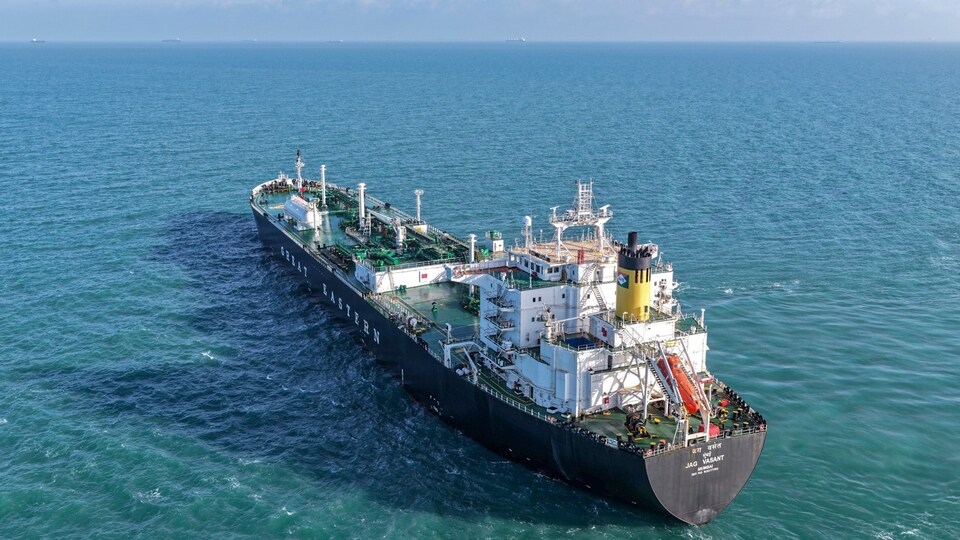
The reports of a possible fallout came after ship-tracking firm Kpler said that the Aframax tanker Ping Shun—which had initially signalled Vadinar in Gujarat as its destination—had altered course and was now heading towards Dongying in China. Track US-Iran war live updates.
Pushing back on the claims, the ministry of petroleum and natural gas said, “There are no payment hurdles for Iranian crude imports”. It also emphasised that Indian refiners continue to procure oil not just from Iran but from a diversified pool of suppliers worldwide.
"India imports crude oil from 40 countries, with companies having full flexibility to source oil from different sources and geographies based on commercial considerations," the statement read.
Why did the vessel change course
The ministry explained that such mid-voyage changes are not unusual in the oil trade. Cargo destinations, it said, are often indicative and can shift depending on commercial and operational factors.
"Claims on vessel diversion ignore how the oil trade works. Bills of Lading often carry indicative discharge ports, destinations and on-sea cargoes can change destinations mid-voyage based on trade optimisation and operational flexibility," the ministry said.
In essence, officials highlighted that rerouting can depend on multiple factors and is not just a sign of supply disruption or diplomatic friction.
The ministry also pointed to ongoing energy trade with Iran, noting that an LPG vessel named Sea Bird, carrying about 44,000 tonnes, docked at Mangalore on April 2 and is currently unloading its cargo.
Supply remains secure, says ministry
Amid ongoing supply concerns linked to tensions in West Asia, the government sought to reassure markets that India’s energy needs remain fully covered.
"It is reiterated that India's crude oil requirements remain fully secured for the coming months."
"Amid Middle East supply disruptions, Indian refiners have secured their crude oil requirements, including from Iran, and there is no payment hurdle for Iranian crude imports, contrary to the rumours being circulated," the ministry said.
First Iranian crude cargo since 2019?
The Ping Shun shipment had drawn attention because it was expected to be India’s first Iranian crude cargo since 2019, when imports were halted following tighter US sanctions.
According to a news agency PTI report, the tanker, built in 2002 and sanctioned by the US in 2025, is estimated to be carrying about 6,00,000 barrels of oil, loaded from Iran’s Kharg Island around March 4. Its earlier declared arrival at Vadinar was April 4.
Sanctions window
Indian refiners had recently begun exploring opportunities to purchase Iranian oil cargoes at sea after a temporary US sanctions waiver opened a short window for such transactions.
Last month, Washington eased restrictions by granting a 30-day waiver on the purchase of Iranian oil at sea—an effort to stabilise global oil prices amid geopolitical tensions. The window is set to close on April 19.
Currently, around 95 million barrels of Iranian oil are estimated to be floating at sea. Of this, roughly 51 million barrels could potentially be routed to India, while the rest is considered more suitable for buyers in China and Southeast Asia, the PTI report added.
History of Iran-India oil imports
Iran was one of India’s key crude suppliers, accounting for as much as 11.5% of total imports at its peak. In 2018, India imported about 5,18,000 barrels per day, which dropped sharply to 2,68,000 bpd in early 2019 before stopping entirely in May that year due to sanctions.
Indian refiners traditionally favoured Iran light and Iran heavy grades because of their compatibility with domestic refinery configurations and favourable pricing terms.