
 E-Paper



Why India zeroed in on hubs of terror
India targeted nine terror sites in Pakistan and PoK, citing ongoing support to anti-India outfits like LeT and JeM from the Pakistan Army and ISI.

 Prefer HTon Google


India’s strikes on nine terror targets in Pakistan and Pakistan Occupied Kashmir were based on information about the continuing support being provided from these locations to terrorists in India, counter-terrorism officials said on Wednesday.
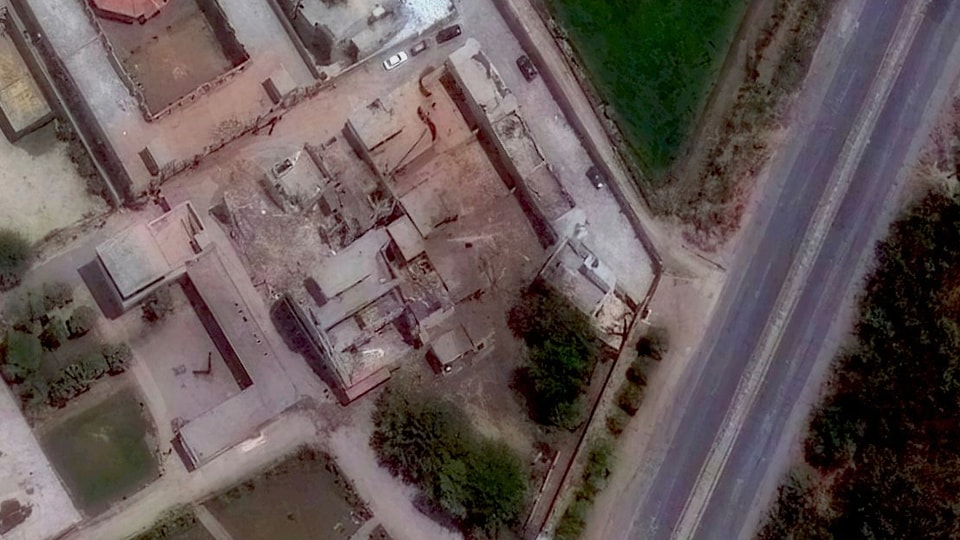
Anti-India-terror outfits such as the Lashkar-e-Taiba, the Jaish-e-Mohammed, the Hizbul Mujahideen, among others, have been receiving covert aid from the Pakistan Army and its Inter-Services Intelligence (ISI) agency, in the form of systematically coordinated financial, logistics, doctrinal and military support besides direct combat training, these officials said.
Pakistani military officers regularly visit and supervise sessions at the training camps of these outfits that have been rebranded as The Resistance Front (TRF), People Anti-Fascist Front (PAFF) and Kashmir Tiger (KT), among others, to elude global watchdogs and to depict their terrorism as a home-grown indigenous resistance, they added.
Key support to the groups comes in the form of infrastructure concealed in government facilities. Several training camps and launch pads targeted in Operation Sindoor were being run near army facilities and cantonment areas, and under the cover of Basic Health Units (BHU) and Primary Health Centers.
Religious indoctrination and other support activities for terrorists, such as funding, propaganda and expansion, were carried out with establishment backing in some of these facilities well inside Pakistan, such as Markaz Taiba of the LeT in Muridke, and Markaz Subhanallah of the JeM in Bahawalpur.
The locations not only serve as residences to major commanders of the outfits but also serve as epicentres for radicalisation and various training courses on intelligence and arms handling. Additionally, the commanders of these terrorist groups use these facilities to deliver anti-India speeches, as was the case in December 2024, when JeM chief Masood Azhar spoke in Markaz Subhanallah in Bahawalpur.
Camps such as Syedna Bilal and Shawai Nalla in Muzaffarabad and Raheel Shahid in Kotli were used by the Pakistan army’s Special Services Group (SSG) to train people in jungle and guerilla warfare, the officials said.
Here is a profile of the nine targets India attacked on Wednesday, based on intelligence briefings and comments by senior officials.
1. Markaz Subhan Allah, Bahawalpur
Markaz Subhanallah, operational since 2015, is the main centre of the JeM for training and indoctrination, and serves as the operational headquarter of the terror outfit. It is associated with the JeM’s planning that led to the 2019 Pulwama attack. The Markaz comprises residences of JeM chief Maulana Masood Azhar, de-facto chief Mufti Abdul Rauf Asghar, Maulana Ammar and other family members of Masood Azhar. Masood Azhar has made several addresses from this facility using anti-India rhetoric and appealing to the youth to join jihad. The JeM conducts regular arms, physical and religious training for its cadre at the Markaz.
2. Markaz Taiba, Muridke
Established in 2000, Markaz Taiba is the de-facto alma mater and the most-important training centre of the LeT, located in Nangal Sahdan, Muridke, Punjab, Pakistan. The complex holds arms and physical training facilities, as well as dawah and radicalisation or indoctrination for terror entities – both from within Pakistan and abroad. This Markaz serves as a mushrooming ground for radicalisation of students to motivate them to join armed jihad. This Markaz enrols around 1,000 students in different courses annually, a figure that highlights the role of the Markaz in churning out terror entities for the LeT.
Osama Bin Laden financed ₹1 crore for the construction of the mosque and the guest house within the Markaz Taiba complex. At the behest of Pakistan’s Inter-Services Intelligence, all the perpetrators of the 26/11 Mumbai attack – including Ajmal Kasab – were given Daura-e-Ribbat (intelligence training) at this facility. David Coleman Headley and Tahawwur Hussain Rana, the prime conspirators of the 26/11 Mumbai attacks, visited Muridke along with Abdul Rehman Sayed, also known as Pasha, Haroon and Khurram (all co-conspirators of the 2008 attacks) on the instructions of Zaki-ur-Rehman Lakhvi, say intelligence officials.
3. Sarjal, Tehra Kalan
The Tehra Kalan, Sarjal facility, located in the Shakargarh Tehsil of Narowal District in Punjab, Pakistan, is the main launch facility of the JeM to infiltrate terrorists into the J&K. As part of the concerted strategy of ISI to conceal terror infrastructure in government buildings, Sarjal is operated from the premises of a Primary Health Center (PHC) in Tehra Kalan Village. This JeM facility is only six kilometres from the international border in the Samba Sector of Jammu, J&K and serves as the base for digging of cross-border tunnels for infiltration. It also serves as the launching base for drones by which arms, ammunition, narcotics and warlike stores are dropped into Indian territory. JeM operatives Mohammad Adnan Ali and Kashif Jan regularly visit this facility and Mufti Abdul Rauf Asghar supervises the overall operations of this facility. This facility is actively being used by the JeM to infiltrate terrorists and for smuggling arms & ammunition into India.
4. Mehmoona Joya Facility, Sialkot
Another example of ISI establishing terror facilities in government buildings, the Mehmoona Joya facility of the Hizbul Mujahideen (HM) is located in the premises of Bhutta Kotli government Basic Health Unit in the Sialkot district of Punjab, Pakistan. This facility is used for the infiltration of HM cadres into the Jammu region. HM cadres are also given training for terrorist operations and handling of weapons by senior commanders at this facility. Mohammad Irfan Khan, also known as Irfan Tanda, is the commander of this facility. Tanda is involved in several attacks in the Jammu region, especially in the capital city of Jammu. Around 20 – 25 terrorists are usually present at this facility, overseeing infiltration bids and terrorist operations in India.
5. Markaz Ahle Hadith Barnala, Bhimber
Markaz Ahle Hadith, Barnala, located at the outskirts of Barnala town on Kote Jamel road, is a prominent Markaz of the LeT in Pakistan-Occupied Kashmir, and is used for the infiltration of LeT terrorists and arms or ammunition into the Poonch–Rajouri-Reasi sector in India. This Markaz is also utilized as a staging centre for LeT terrorists, before infiltrating into Indian territory. It can accommodate 100 -150 terrorists. LeT terror operatives Qasim Gujjar, also known as Mahrore, Qasim Khanda and Anas Jarar operate from this Markaz and reside in its vicinity. Operational commanders of the LeT visit this Markaz for organising and supervising terrorist activities of the LeT, Jamaat-ud-Dawa and Jammu & Kashmir United Movement.
6. Markaz Abbas, Kotli
Markaz Saidna Hazrat Abbas Bin Abdul Mutalib (or the Markaz Abbas) is an important terror facility of the JeM located in Kotli. Hafiz Abdul Shakoor or Qari Zarrar, a ‘shura member’ of the JeM council and a close associate of JeM top commander Mufti Abdul Rauf Asghar, is the head of this Markaz. Qari Zarrar is directly involved in the planning and execution of terrorist attacks in J&K and is wanted by the National Investigation Agency (NIA). Markaz Abbas can accommodate around 100 - 125 JeM cadres. JeM’s terror activities – including the infiltration of cadres from the Poonch –Rajouri sectors – are planned and executed from this facility.
7. Markaz Raheel Shahid, Kotli
Markaz Raheel Shahid, located in the Kotli District of Pakistan-Occupied Kashmir, is one of the oldest facilities of the HM. It can accommodate around 150 – 200 terrorists, who visit this facility particularly for taking arms firing training and specialised physical training. In addition to providing conventional arms or physical training, this camp specialises in training cadres for BAT/ sniping actions, fighting in hilly areas and survival training.
8. Shawai Nallah Camp, Muzaffarabad
Shawai Nallah Camp, also known as the Bait-ul-Mujahideen, is located near Chelabandi bridge on the Muzaffarabad-Neelum Road in Muzaffarabad, Pakistan Occupied Kashmir. It is one of the most important camps of the LeT. Perpetrators of the 26/11 Mumbai Attack, including Ajmal Kasab, received terrorist training in this camp. This site is used for recruitment, registration and training of LeT cadres and has been functional since early 2000. It is used as base camp for imparting Daura-e-Aam training, which includes religious indoctrination, physical training, tactical training regarding use of GPS, map reading and arms training for rifles and grenades. Shawai Nallah Camp is also used from time to time to organise specialized weapons training for LeT cadres. ISI also facilitates trainers of the Pakistan Army to provide weapons training to LeT terrorists. It is a large training camp which can accommodate 200-250 LeT cadres at a time. This camp is also utilised as a staging camp for terrorists before infiltrating Indian territory.
9. Markaz Syedna Bilal
Markaz Syedna Bilal is the main centre of the JeM in Pakistan-Occupied Kashmir, located opposite Red Fort in Muzaffarabad. This facility is used as a transit camp for JeM terrorists before their infiltration into J&K. At any point of time, 50-100 cadres reside in this facility. JeM operational commander and JeM head of Pakistan-Occupied Kashmir, Mufti Asghar Khan Kashmiri, is in-charge of the facility. Abdullah Jehadi, also known as Abdullah Kashmiri, and Aashiq Nengroo also operate from this centre.


