
 E-Paper



Will Saudi Arabia now back Pakistan in war against India? Islamabad's big claim
Pakistan defence minister Khawaja Asif was asked whether Saudi Arabia will get involved under this new pact if India and Pakistan go to war.

 Prefer HTon Google


Pakistan has indicated that, if it goes to war with India, Saudi Arabia will get involved under the new defence agreement which states that an attack on either of the countries would be considered as an aggression against both.
Pakistan defence minister Khawaja Asif was asked in a Geo TV interview whether Saudi Arabia will get involved under this new pact if India and Pakistan go to war.
Without mentioning India in his answer, Khawaja Asif responded that, “Yes absolutely. There’s no doubt about it. We have not taken any country's name that this country will be an aggressor for us to attack… neither Saudi took any name nor did we… it is just an umbrella from both sides that aggression from anywhere will be defended and answered to jointly.”
It is not an aggressive pact or a defence arrangement, Khawaja Asif added.
Khawaja also gave conflicting statements on whether the country's nuclear capability "will be made available" to Saudi Arabia under the new defence agreement signed between the two nations.
Speaking first in the interview to Geo TV, Khawaja Asif had said its nuclear capability will be made available to Saudi Arabia. He was asked if the "deterrence that Pakistan gets from nuclear weapons" will be made available to Saudi Arabia.
"Let me make one-point clear about Pakistan's nuclear capability: that capability as established long ago when we conducted tests. Since then, we have forces trained for the battle… What we have, and the capabilities we possess, will be made available to (Saudi Arabia) according to this agreement, " Asif had said in the Geo TV interview.
However, in a separate interview to Reuters, Khawaja Asif gave a conflicting statement that nuclear weapons were "not on the radar" of the pact. He said the agreement could be extended to cover other Gulf nations.
"We have no intention of using this pact for any aggression," Reuters quoted Khawaja Asif as saying, adding that: "But if the parties are threatened, then obviously this arrangement will become operative."
Riyadh may see the nuclear issue differently, the report added.
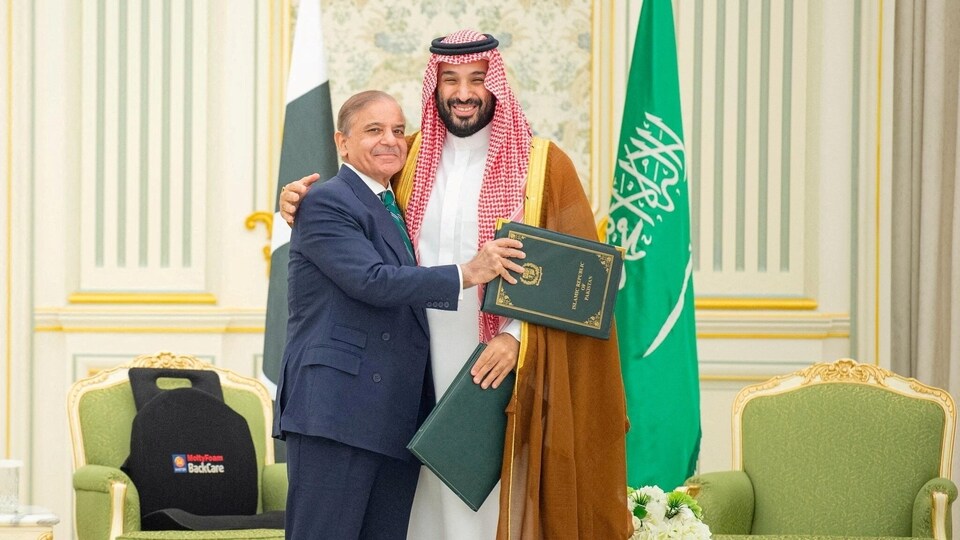
The pact – called the “Strategic Mutual Defence Agreement” – was signed by Pakistan Prime Minister Shehbaz Sharif and Saudi Crown Prince Mohammed bin Salman during Sharif's visit to Saudi Arabia on the invitation of the latter earlier this week.
A joint statement issued by the two sides said the treaty states that “any aggression against either country shall be considered an aggression against both”.
India also reacted to the signing of a mutual defence pact by Pakistan and Saudi Arabia by saying on Thursday that the government will take all steps to protect the country’s national interests and ensure comprehensive national security in all domains, reflecting the concerns over the development.
Pakistan Army chief Field Marshal Asim Munir, foreign minister Ishaq Dar, and defence minister Khawaja Asif were part of the delegation that accompanied Sharif to Saudi Arabia.
The agreement marks what is perhaps Pakistan’s most consequential formal defence pact in several decades and is expected to leave an effect over the growing ties between India and Saudi Arabia. The pact also institutionalises Pakistan’s role in the security architecture of West Asia.


