
 E-Paper



Will South India lose Lok Sabha seats after delimitation? The math explained
Southern states are proposed to rise from 129 to 195 while the remaining 621 seats go to other states, mainly in the North.

 Prefer HTon Google


The Centre's proposed delimitation exercise will not reduce representation of the southern states in Lok Sabha, the home ministry has claimed. Instead, it says all states will gain seats proportionately under an expansion model linked to a 50% increase in parliamentary strength.
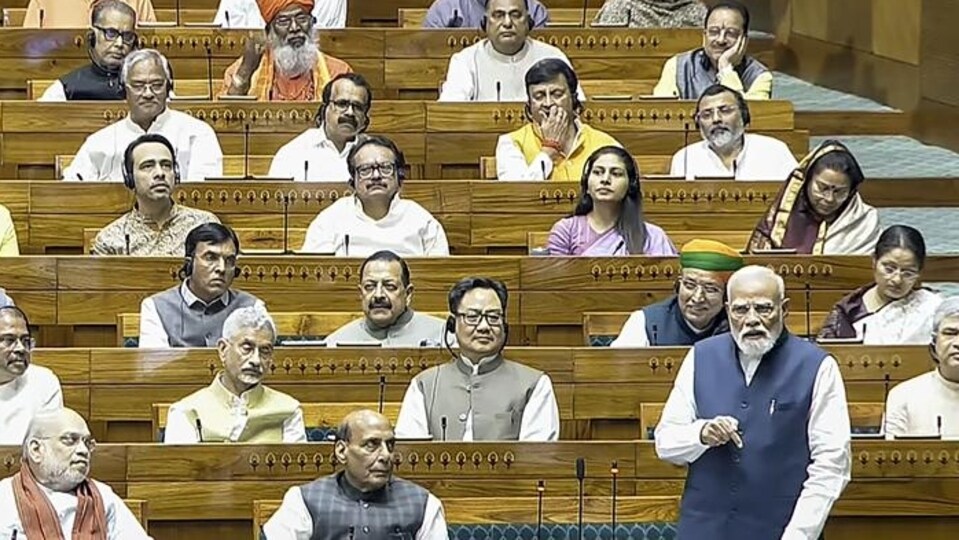
Union home minister Amit Shah, intervening in the Lok Sabha debate on the Delimitation Bill, 2026, the Constitution (131st Amendment) Bill, 2026, and related amendments, said there is a “misconception” that southern states will lose representation.
The government plans to increase the total number of Lok Sabha seats by about 50%. This means the House will grow from 543 seats to 816 seats. The lower House of the Parliament has a total of 545 seats, with two reserved for the Anglo-Indian community.
According to him, the exercise will ensure that no state suffers a decline in its share of seats, even as total seats increase.
What is being proposed
- Delimitation based on the 2011 census.
- Expansion of Lok Sabha strength from 543 to 816 seats (50% increase model).
- Implementation of 33% reservation for women.
- Application only after 2029 elections; no change in current elections.
The Centre has also said that it has not altered the Delimitation Commission Act, and that the existing legal framework has been reproduced without changes.
What the government claims
While the total number of MPs will increase, each state’s percentage share of seats remains nearly unchanged, as per a press release by the ministry of home affairs.
Southern states currently hold 129 of 543 seats (23.76%). After the proposed expansion it will go up to 195 of 816 seats (23.87%).
The remaining 621 seats (about 76% of the House) would go to other states, mainly in the North.
The government says this shows that the South’s overall share remains stable, at roughly 24%, even after delimitation.
South Indian seat share in Lok Sabha
Karnataka
- Current: 28 seats (5.15%)
- Proposed: 42 seats (5.14%)
Andhra Pradesh
- Current: 25 seats (4.60%)
- Proposed: 38 seats (4.65%)
Telangana
- Current: 17 seats (3.13%)
- Proposed: 26 seats (3.18%)
Tamil Nadu
- Current: 39 seats (7.18%)
- Proposed: 59 seats (7.23%)
Kerala (Keralam)
- Current: 20 seats (3.68%)
- Proposed: 30 seats (3.67%)
Across all five states, the combined total increases from 129 to 195 seats, while the proportional share remains almost unchanged.
| State | Current Seats | Current % of House | New Seats | New % of House |
| Tamil Nadu | 39 | 7.18% | 59 | 7.23% |
| Karnataka | 28 | 5.15% | 42 | 5.14% |
| Andhra Pradesh | 25 | 4.60% | 38 | 4.65% |
| Telangana | 17 | 3.13% | 26 | 3.18% |
| Keralam | 20 | 3.68% | 30 | 3.67% |
| Total South | 129 | 23.76% | 195 | 23.87% |
Government’s plan
According to Amit Shah’s statement:
- No state, especially in South India, will face reduced representation.
- Seat increases will follow a uniform proportional model.
- The exercise will be based on existing law, without changes to its text.
- Implementation will occur only after 2029.
- Current elections, including in Tamil Nadu and West Bengal, will not be affected.
The government has also said that the delimitation process is constitutionally required and will only take effect after parliamentary and presidential approval.
India has conducted delimitation only three times since Independence, 1951, 1961, and 1971. The process was frozen for decades to balance population control efforts with political representation.
Caste census
Amit Shah said the Union Cabinet has approved a caste census. He explained that caste data will be collected in the second phase of the census during individual counting. The first phase, which is currently underway, only counts households and does not collect any caste information.
Why the debate continues
Even though the government says the changes will be fair and proportional, concerns remain. Northern states are expected to gain more seats in absolute numbers because of higher population growth.
Southern states worry that even if their percentage share of seats stays the same, their real political influence could reduce over time. Opposition parties also argue that this could slowly shift more national power towards northern states.
MK Stalin has been among the most vocal critics. The Tamil Nadu chief minister called the proposal a potential “historic injustice” and warned that it could weaken the voice of southern states in national decision-making. He also burnt a copy of the bill.
The three bills tabled in Parliament
The three bills introduced in Parliament on Thursday are:
- The Constitution (131st Amendment) Bill, 2026
- The Delimitation Bill, 2026
- The Union Territories Laws (Amendment) Bill, 2026
The Lok Sabha is set to take a final vote today at 4 pm.


