E-Paper



With video of footbridge, Arunachal’s BJP MP flags China’s role; army clarifies
The army responded to the MP with a statement asserting that there had been “no such incursion”.

 Prefer HTon Google


A BJP lawmaker and chief of the party unit in Arunachal Pradesh on Wednesday claimed that Chinese troops entered over 75 km inside Indian territory in the state this monsoon. Tapir Gao, the Lok Sabha member from Arunachal East seat, also circulated a video of a wooden footbridge built over a stream as proof to highlight the incident.
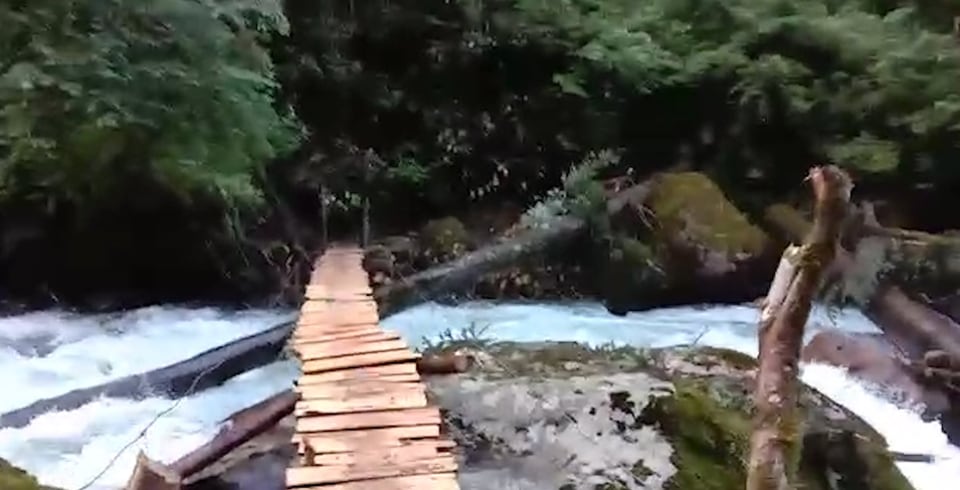
The army responded to the MP with a statement asserting that there had been “no such incursion”. The army also spoke about differing perception of the alignment of the Line of Actual Control and underscored that “there is no permanent presence of either Chinese soldiers or civilians in the area”.
The MP said the video of the footbridge, built either in July or August, was shot by a resident of Anjaw district recently. “It (footbridge) is still there,” Tapir Gao said.
“It is clear that Chinese troops came inside Indian boundary and constructed the bridge. I posted the video to bring it to everyone’s notice. I have not taken it up with Centre or the state government,” Gao said.
The crude wooden bridge is located over a stream called Diomru Nullah, around 25 km from Chaglagam (one of the last administrative posts on the Indian side, called ‘Fish Tail’ by military) and approximately 75 km inside Indian territory from the border.
Watch: BJP MP claims Chinese Army built wooden bridge in Anjaw, Arunachal Pradesh
“Incursions by Chinese troops are common in the area where there is no human habitation. In July last year also they entered Indian side briefly and employed Indian porters to carry their stuff,” the BJP MP said.
Arunachal Pradesh shares a 1126-km long border with China.
Ninong Ering, a former Congress Lok Sabha MP, appeared to suggest that such incursions take place at random.”I don’t know for what reason. It is a wild thickly-forested area and nobody lives there. Last year also, they (Chinese soldiers) came, but there is no aggression on their part,” said Ering said.
In its statement, the Indian Army said the location highlighted by the MP was “thickly vegetated and all movements are undertaken on foot along Nalas and streams. During monsoons whenever the Nalas are in spates, temporary bridges are constructed by the patrols for their movement”.
Troops routinely from either side patrol the area. Besides, civilian hunters and herb collectors also frequent the area during summer months, the statement said.
India and China, the army added, have well established diplomatic and military mechanisms to address all issues in our border areas.
“The two sides agree that maintenance of peace and tranquility in all areas of India-China border areas as a prerequisite to smooth development of overall bilateral relations. Both countries have also agreed to work towards a fair reasonable and mutually acceptable settlement of the boundary question on the basis of 2005 Agreement on Political Parameters and Guiding Principles,” the army statement added.