E-Paper



Won’t protest during Modi visit, promise Kedarnath priests after Dhami’s pledge
Uttarakhand chief minister Pushkar Singh Dhami, who met priests over the char dham board controversy, said his government will resolve the issue by November 30

 Prefer HTon Google


DEHRADUN: Uttarakhand chief minister Pushkar Singh Dhami on Wednesday promised priests at the Kedarnath shrine that he will resolve issues related to the prickly issue shrine board by this month-end, an assurance aimed at persuading the priests not to go ahead with their protest during Prime Minister Narendra Modi’s Kedarnath visit on Thursday.
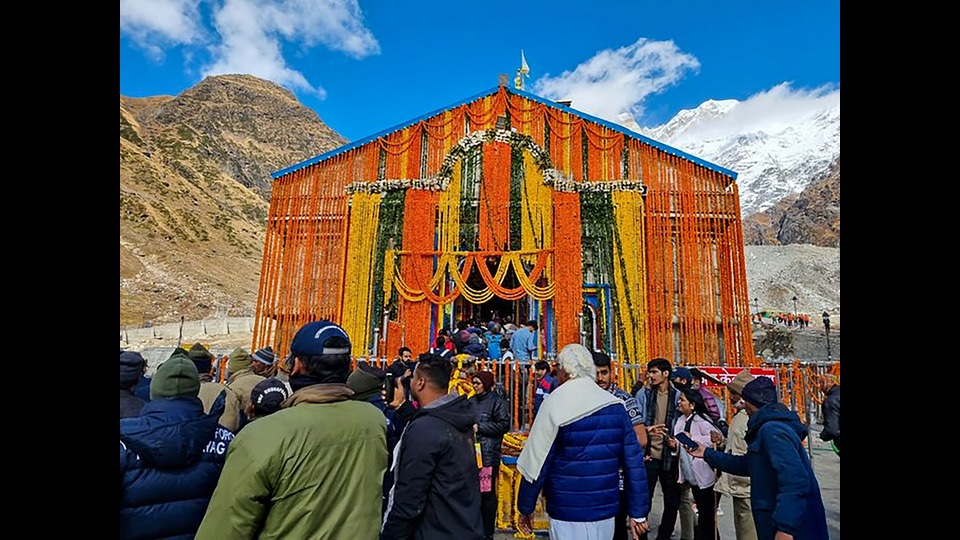
The priests had earlier threatened to intensify their protest against the Uttarakhand Char Dham Devasthanam Management Board, the umbrella body formed to regulate shrines and temples under its purview, during PM Modi’s November 5 visit and had gone to the extent of saying that this might even include preventing the prime minister’s entry to the shrine.
On Monday, the priests demonstrated how far they were willing to go when they prevented former chief minister Trivendra Singh Rawat from stepping into the Kedarnath shrine. The board that they oppose is a legacy of the TS Rawat government.
Dhami and his two cabinet colleagues, Subodh Uniyal and Harak Singh Rawat, spoke to representatives of the priest community on Wednesday and assured them that the state government will never hurt their respect and sentiments. The priests were also assured a November-end deadline to resolve the dispute.
“We had gone to Kedarnath to check the arrangements ahead of the PM’s visit. Almost all the arrangements have been completed. Never have so many works been undertaken in Kedarnath area like this. We thank Modi ji for this and welcome him here,” the chief minister said after his damage-control mission succeeded.
“Following the assurance, they (priests) said they will not hold protests on Modi’s arrival and accord him a warm welcome,” Subodh Uniyal, cabinet minister and spokesperson of the state government, later told reporters.
Dhami also met Manohar Kant Dhyani, who is chairman of the high-powered committee formed by the state government on the future of the board, on Tuesday evening. They discussed the concerns raised by the priests.
The board was formed under the Char Dham Devasthanam Management Act, 2019, when Trivendra Singh Rawat was the chief minister. Priests have been protesting its existence but the state government has not accepted their demand to abolish it yet.
KK Kotiyal, president of the Char Dham Tirath Purohit Haq Haqooki Mahapanchayat, the body of priests that opposes the board, said chief minister Dhami spoke to him and other priests and sought time till November 30 to resolve the matter.
“I told him that priests have been betrayed first by Trivendra Singh Rawat, then by Tirath Singh Rawat and now by you (Pushkar Singh Dhami). We were promised that Char Dham Board will be scrapped by October 30. Now because of Modi, you have come here,” Kotiyal said.
He, however, added that because they are priests and their main work is to offer prayers and blessings for pilgrims, they will wait till November end.
Kotiyal said Kedarnath and Badrinath shrines receive ₹25 to 30 crore donations annually. “There is a wrong perception that priests are looting the donations. All donations used to go to Kedarnath Badrinath temple committee which was been formed in the British era. Priests and pandas only get some money when pilgrims conduct some special prayers or rituals on their own.”
The priests already have the support of the opposition Congress and Aam Aadmi Party (AAP) which have promised to scrap the board when they come to power in the state.
Harish Rawat, former chief minister and senior Congress leader, said Modi should scrap the Char Dham Board before he comes.
“If they are not doing it, Congress will do it. Scrapping the Board will be our first decision after we come to power here. The priests are angry over the delay in resolving the matter as had been promised to them,” the senior Congress leader said.
Ganesh Godiyal, Uttarakhand unit president, alleged the government wants to manage the money received as donations by these shrines. “They don’t trust the priests. Before Char Dham Board, Kedarnath Badrinath temple committee managed all the Char Dham affairs and the money. The priests were given money by the committee. But many priests also get offerings from devotees. The government wants to control all money inflow in the shrines.”
Sanjay Bhatt, AAP state unit spokesperson, said AAP workers staged protests on Wednesday in various parts of the state, demanding immediate scrapping of the Char Dham Board.
Badrinath and Kedarnath received offerings of 45 kg gold, over 38 quintal silver and 8100 silver coins since the formation of Uttarakhand in 2000, according to a reply given by the government to an RTI query filed by activist Hemant Gauniya in 2019.