
 E-Paper



World bodies raise concerns; UN panel terms the law biased
The government has said the CAA, approved by parliament on Wednesday, was aimed at protecting minorities from Bangladesh, Pakistan and Afghanistan, though the UN High Commissioner for Human Rights noted that the law “does not extend the same protection to Muslims, including minority sects”.

 Prefer HTon Google


The United Nations human rights office on Friday described the Citizenship (Amendment) Act as “fundamentally discriminatory in nature” and called for it to be reviewed even as a US panel that monitors religious freedom again expressed concern about the law.
The government has said the CAA, approved by parliament on Wednesday, was aimed at protecting minorities from Bangladesh, Pakistan and Afghanistan, though the UN High Commissioner for Human Rights noted that the law “does not extend the same protection to Muslims, including minority sects”.
The US Commission on International Religious Freedom (USCIRF), which had on Tuesday asked the Trump administration to consider sanctions against India’s top leadership if the law was approved, made a renewed call for action.
“USCIRF alarmed by passage of #CAB in India’s Rajya Sabha and urged effective action by USG,” the panel tweeted on Thursday.
There was no immediate reaction to the statements from Indian officials but the external affairs ministry said earlier the USCIRF is prejudiced and had no locus standi in the matter. External affairs ministry spokeperson Raveesh Kumar has said India has reached out to the Congress and other stakeholders in the US to explain its position on the law and hoped these views will be taken into consideration.
UN human rights spokesman Jeremy Laurence said in a statement: “We are concerned that India’s new Citizenship (Amendment) Act 2019 is fundamentally discriminatory in nature.”
The law doesn’t extend the same protection to Muslim migrants as it does to Hindus, Sikhs, Buddhists, Jains, Parsis and Christians fleeing persecution, thereby undermining India’s commitment to equality before the law enshrined in the Constitution and obligations under the International Covenant on Civil and Political Rights and the Convention for the Elimination of Racial Discrimination, he said.
“Although India’s broader naturalisation laws remain in place, these amendments will have a discriminatory effect on people’s access to nationality,” Laurence said.
“We understand the new law will be reviewed by the Supreme Court of India and hope it will consider carefully the compatibility of the law with India’s international human rights obligations,” he added.
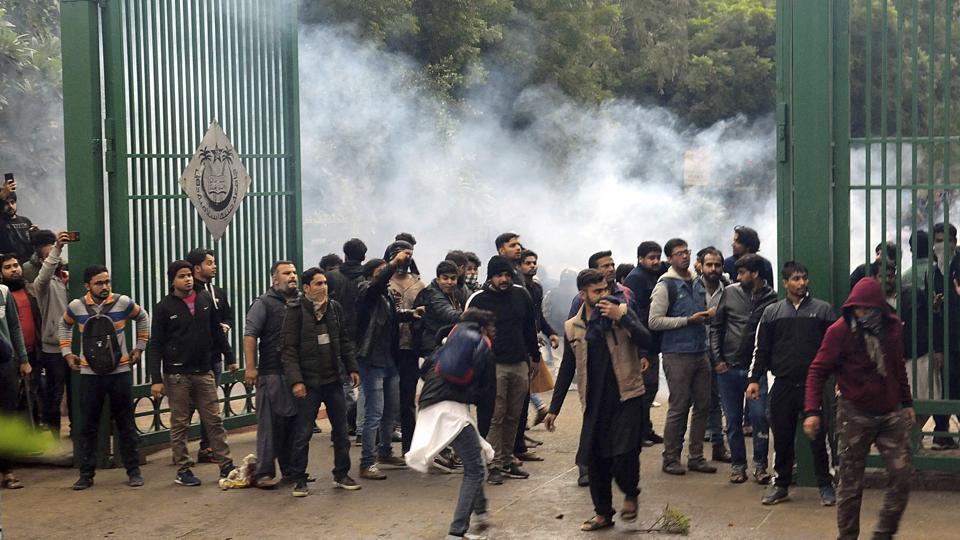
The UN human rights office also expressed concern at reports of two people having died and many others being injured in Assam and Tripura during protests against the CAA. “We call on the authorities to respect the right to peaceful assembly, and to abide by international norms and standards on the use of force when responding to protests,” Laurence said.
A spokesperson for UN chief Antonio Guterres also said the world body is “closely analysing the possible consequences of the law” and that some human rights bodies had already expressed concerns “about the nature of this law”.


