
 E-Paper



Wrong to think Delhi govt can control pollution entirely, says minister as Capital chokes
As Delhi pollution worsens, environment minister Gopal Rai said the government will take a decision on odd-even if the situation turns very serious.

 Prefer HTon Google


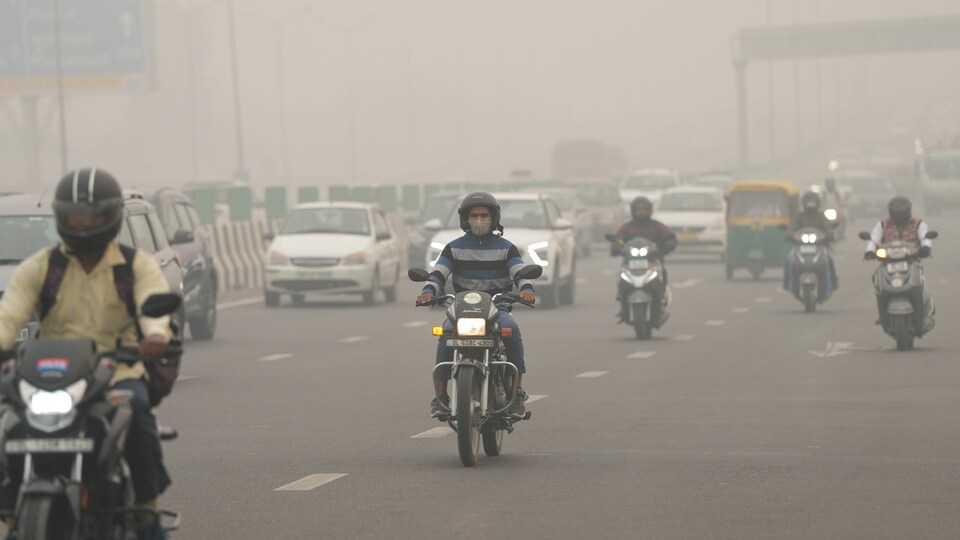
Delhi environment minister Gopal Rai on Friday said it is wrong to think that the Delhi government can control pollution completely, as the air quality worsened dipping to the severe plus category with AQI at 471 at 9am on Friday. Several emergency measures like a ban on non-essential construction works, BS-3 petrol and BS-4 diesel cars have been put in place but questions arise as to why every year Delhi goes into this emergency in the first week of November. "Delhi's pollution does not come from Delhi. Pollution sources outside Delhi are contributing double to Delhi's pollution than sources inside. The Delhi government has been working on a war footing," Gopal Rai said.
"In 2015, out of 365 days, only 109 days in Delhi experienced good air quality. Last year, the number was 163 and this year the number is over 200. But yes, it is a task to manage the air quality in the first week of November. But the weather condition is also liable for this," the minister said.
All primary schools in Delhi have been shut for two days -- Friday and Saturday -- as the air quality suddenly deteriorated from Thursday evening.
We are not delaying odd-even: Gopal Rai
The minister said the government is not delaying the implementation of odd-even. "The Supreme Court has given the Commission for Air Quality Management (CAQM) the mandate to take the decision. According to their direction, we are moving our steps. If the situation turns very serious, then we will take further decisions after discussing it with everyone," the minister said.
Unfavourable meteorological conditions, stubble burning: Why Delhi is choking again
Thick smog blanketed Delhi-NCR with the temperature rising during the day and people gasping for fresh air. While this has become an annual occurrence, what contributed to this year's smog was the absence of rainfall in October. Only 5.4mm of precipitation was recorded in October 2023, in contrast to October 2022 (129 mm) and October 2021 (123 mm).
Due to temperature inversion at the onset of the winter, the pollutants get trapped near the ground creating smog. Thermal inversion when the air around the ground is heavy prevents the air pollutants from travelling high up in the sky.


