
 E-Paper



Yogi Adityanath cabinet 2.0: BJP looks to strike regional and caste balance
Adityanath’s 52-member team is expectedly heavy on OBCs and Dalits – the two key vote banks that have been the mainstays of the party’s domination in Uttar Pradesh since 2014 Lok Sabha polls.

 Prefer HTon Google


The ministers may have taken the oath on Friday, but the selection of the new Yogi Adityanath-led Uttar Pradesh cabinet is an exercise keeping the future, the 2024 Lok Sabha elections in particular, in mind. Despite being the incumbent government, the BJP won a massive 255 of 403 seats in results declared on March 10, improving its vote share to 41.29% on the back of support from a cross section of society, and this is reflected in the members of the new cabinet, both in terms of caste, and a strategic geographical spread.
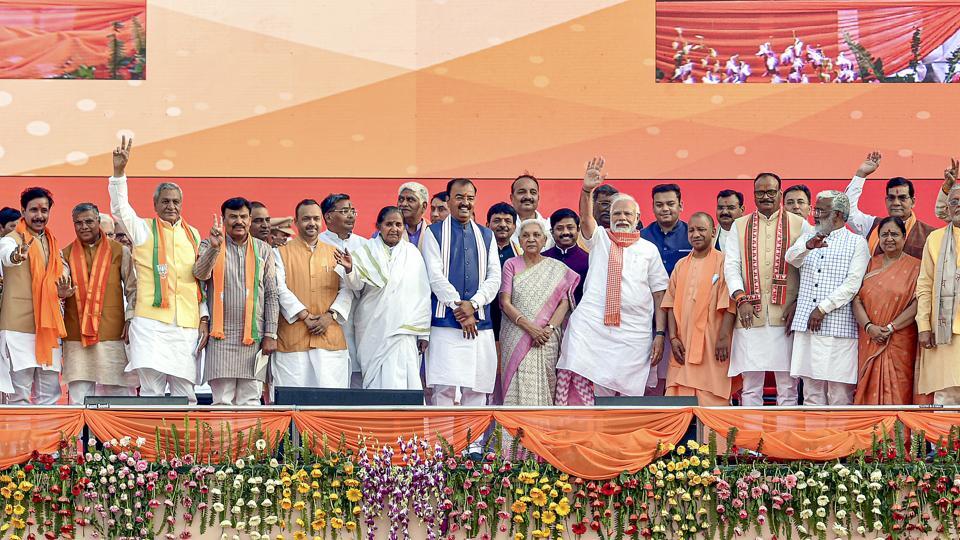
Adityanath’s 52-member team is expectedly heavy on OBCs and Dalits – the two key vote banks that have been the mainstays of the party’s domination in Uttar Pradesh since 2014 Lok Sabha polls. While 20 ministers are OBCs, 9 are Dalits. Upper castes, another unfailing support base, also see 21 representatives.
All the key OBC subcastes – Maurya, Nishad, Chauhan, Gadaria and Rajbhar -- find place. The two big OBC leaders are Keshav Prasad Maurya, who hails from the Maurya subcaste, and UP BJP chief Swatantra Dev Singh who is a Kurmi. Sanjay Nishad, the president of the Nishad Party and Ashish Patel of Apna Dal (Sonelal), primarily a Kurmi leader, have also been given cabinet positions.
Of the 9 Dalit ministers, two – Baby Rani Maurya and Asim Arun – are Jatavs, a Dalit subcaste which has long been loyal to BSP supremo Mayawati. But with the influence of the former chief minister dwindling, down to just one seat, this support may be up for grabs. “The party has been consistently winning non-Jatav Dalits over since 2014 but this time with Dalits voting for the BJP in a big way, as was apparent from party’s clean sweep in Agra, which has an influential Jatav Dalit electorate, two Jatav ministers show the BJP’s intent to aggressively go after the vote bank,” said Irshad Ilmi, a political observer.
The cabinet’s minority representation is one Sikh and one Muslim minister while there is also one Jat minister (WHO), and one from the Kayastha community (WHO).
There are 23 ministers from western Uttar Pradesh, up from 12 ministers from the region who had found place in Adityanath’s first government. “There seems to be a good reason for the party increasing its west UP representation. This was the region where Jat voters were said to be angry with the BJP. Though that factor didn’t play out as badly as some had predicted, yet, the fact that the sugarcane minister lost the elections from the region indicated that despite recalling farm laws, the party needed to focus more in that area ahead of 2024 Lok Sabha polls,” said AP Tiwari, a political analyst.
Fourteen ministers from east UP and 12 from central UP have found a place this time, down from the 17 and 11 that were in the first cabinet respectively. “There are still 8 vacancies in the Yogi Adityanath government which can accommodate up to 60 ministers. So nearer to 2024 Lok Sabha polls, we could see a rejig or a mini expansion. In east UP, the benefits of Yogi himself contesting the elections from Gorakhpur, were there for all to see as the party won all the assembly segments in the crucial east UP districts for the first time. Not just that, from the adjoining 28 assembly segments, the party won 27. With CM himself from one part of east UP and the PM’s Lok Sabha in another part, east UP will remain a part of the focus,” a senior BJP leader said.
A new minister, requesting anonymity said that the induction of former bureaucrats with a clean image and with administrative experience is also a conscious call. “There are ex-bureaucrats, ministers with engineering and management degrees, many of them postgraduates. Under the Prime Minister’s leadership, the party has been consistently focusing on promoting educated leaders and these inclusions, like AK Sharma or Asim Arun are an extension of that.”


