
 E-Paper



BJP, Congress opposed ecology protection plan in Uttarakhand
The Union environment and forests ministry's plan to declare regions eco-sensitive zone was opposed by both BJP and Congress in Uttarakhand who said it would hamper progress. Chetan Chauhan reports.


Uttarakhand is fragile. And it is not just the recent calamity that brought this fact to fore. More than three years ago, the Union environment and forests ministry had first pitched a plan to declare swathes of the hill state ecologically sensitive, a move that would have put a stop to major construction activity.
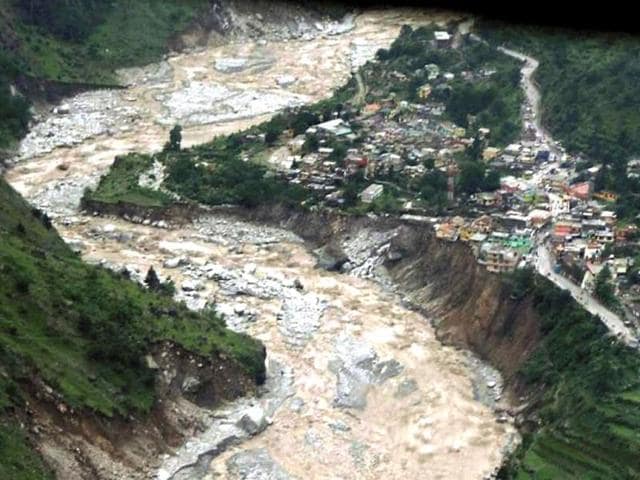
Three years later, in a 2012 notification, the ministry declared a 100km stretch around river Bhagirathi (Ganga in the upper reaches) from Gaumukh to Uttarkashi as eco-sensitive zone.
This did not go well with the strong hydel lobby - a group that has both public and private sector players, activists say.
And that the state assembly unanimously opposed the notification lends credence to the notion that politicians played an active role in weakening the ecology, at the behest of power sector majors. Consequently, the ban is not in effect.
The notification prohibited any change in land use. It outlawed the use of horticultural or agricultural land and tea gardens for any other project (exceptions being roads, tourism and man-made heritage projects). It clearly prohibited river valley mining, poultry farming, use of plastic bags and setting up sewage treatment plants.
The ban, if it came into force, would have covered only a fringe of the upper reaches of Uttarakhand and excludes present epicentre of devastation --- Alakananda and Mandakini rivers.
"The state has a different view on the notification and the chief minister feels it will come in the way of development," environment and forest minister Jayanthi Natarajan said.
"In a democracy, we have to discuss things. However, I believe this is not the time to bring those issues to the fore. I think all of us have to join hands to ensure relief and rescue and to make sure all people are safe," she said.
The notification was the fall-out of a decision by a Group of Ministers headed by then finance minister Pranab Mukherjee, which scrapped two Central hydel projects on the Bhagirathi river.
They were Loharinag Pala and Pala Maneri hydel projects and also decided to declare the Bhagirathi river stretch from Gaumukh to Uttarkashi as an ecologically sensitive area.
The then BJP government opposed the decision to declare eco-sensitive zones and the incumbent Congress government maintained the same stance.
"The powerful hydel lobby does not want any obstruction in its mission to devastate the hills," said Mallika Bhanot, who is associated with Save Ganga campaign.
But environmentalists appear isolated in this regard. The locals, too, oppose the notification.
"Once the rescue work is over, we will stage protest at Jantar Mantar as decided earlier. We will not allow the notification to hamper development of our people," Vijay Pal Singh Sajwan, an MLA from Gangotri, said.


