
 E-Paper



Centre plans Sufi conferences to foster inter-religious peace
The Modi government is planning to invoke Sufism to battle hate crimes against Muslims, especially over meat consumption, as the country reels under a tough cultural climate and sectarian intolerance.


The Modi government is planning to invoke Sufism to battle hate crimes against Muslims, especially over meat consumption, as the country reels under a tough cultural climate and sectarian intolerance.
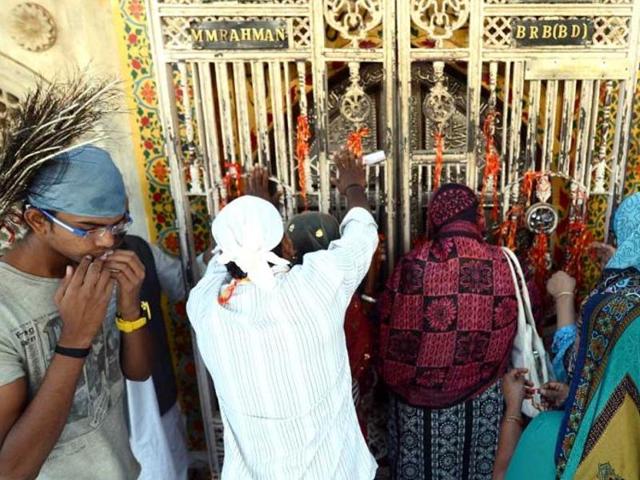
Minority affairs minister Najma Heptullah told HT her ministry was drawing up plans to hold a national-level Sufi conference, followed by smaller ones, to “promote peace”. She said help from institutions like the Indian Council for Cultural Relations would be sought.
“Whatever programmes, means and tools are needed I will explore them to create an understanding between people,” Heptullah said. “Our party’s manifesto promises to promote peace and tranquility. Such conferences are tools for this. Everywhere you can’t use police and judiciary to change people’s mind. How do you use force (all the time)?” she said.
Critics, however, say this is only a feeble response to what is a growing tide of cultural coercion by Hindu hardliners and that in a secular state, religion could not inform the ‘state’ in this way.
“If ‘secular’ means a non-religious state, then, the government should keep out of religious functions and conferences. At this moment, when we face threats to secularism, freedom and minority rights, it’s important for the ministry of minority affairs to redouble its efforts for the protection of these fundamental values rather than leave it to Sufi conferences to achieve this,” said noted political scientist Zoya Hasan.
Sufism, a mystical current in Islam, is often viewed as an antidote to fanaticism because of its emphasis on harmony and coexistence.
Prime Minister Narendra Modi has met several Sufi leaders in recent months.
Several public intellectuals and writers have protested the country’s febrile environment marked by threats to free speech and killing of writers viewed as anti-Hindu. Writers like Nayantara Sehgal, Ashok Vajpeyi, Uday Prakash, among others, have returned their Akademi awards.
The idea of Sufi conferences nonetheless sends a message of tolerance, said Delhi University’s Prof. Riazuddin Aquil, the author of Sufism, Culture and Politics. “Many Hindu radicals see Sufism as sweet poison. Such a conference will show that no matter what Hindu fundamentals say, the government recognises other voices.”


