
Sign in

India ‘3rd most dangerous’ nation for journalists after Iraq and Syria

The murders of journalists Rajdeo Ranjan in Bihar and Akhilesh Pratap Singh in Jharkhand within 24 hours of each other confirmed a 2015 international report that named India among the three most dangerous countries for media personnel.

Updated on: Nov 4, 2019, 14:19:38 IST
Hindustan Times | By , New Delhi
Share
Share via
  • facebook
  • twitter
  • linkedin
  • whatsapp
Copy link
  • copy link

The murders of journalists Rajdeo Ranjan in Bihar and Akhilesh Pratap Singh in Jharkhand within 24 hours of each other confirmed a 2015 international report that named India among the three most dangerous countries for media personnel.
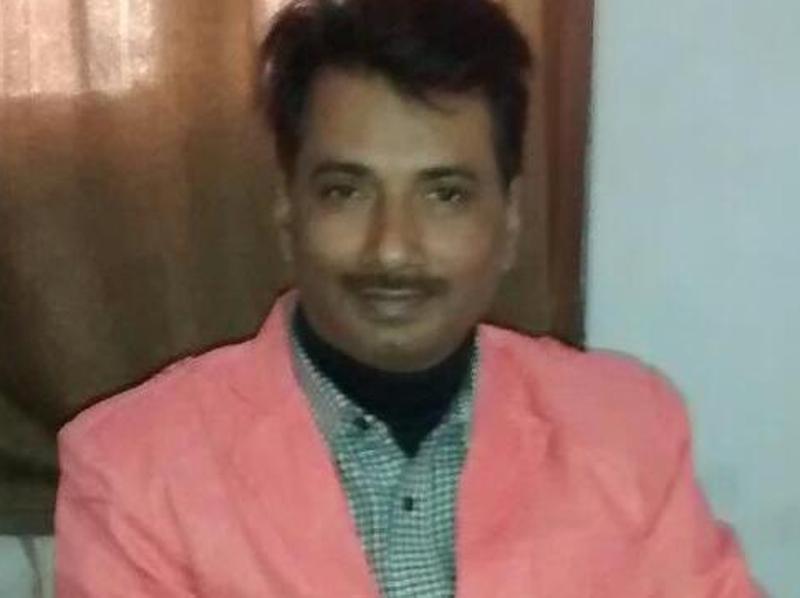
Hindustan journalist Rajdeo Ranjan was shot dead near the Siwan railway station (HT Photo)

Since 1992, 64 journalists have been killed in India with reporters exposing corruption the most hunted, says a compilation by the Committee to Protect Journalists.

Most of them died in smaller towns where graft is rampant and exposing it means earns the wrath of powerful politicians and industrialists. Earlier this year, a group backed by the Chhattisgarh government forced journalists Malini Subramaniam and some lawyers out of the Maoist-affected Bastar region. Activists also said the state administration was muzzling free speech after three journalists were arrested on allegedly flimsy charges.

The high death rate of journalists in the country is only lower than war-torn Iraq and Syria. India is the deadliest nation for reporters in Asia, more than Pakistan or Afghanistan.

Read | Murdered Bihar journalist wrote on jailed RJD leader Shahabuddin

The poor record is primarily because of an absence of any mechanism to protect journalists. The Press Council of India (PCI) is virtually toothless with its recommendations not binding on any authority. “It’s a matter of grave concern that three journalists were killed in India in the last four months and another died in a tragic accident while on the line of duty,” said PCI chief justice (retd) Chandramouli Kumar Prasad.

The third killing this year was the daylight murder of 32-year-old Karun Mishra, the bureau chief of local newspaper Jansandesh Times in Sultanpur, Uttar Pradesh. He had reported on dangerous business --- illegal mining -- and his murder case is still unsolved.

Last year, freelance journalist Jagendra Singh was allegedly burnt alive by police and goons reportedly sent by Uttar Pradesh minister Ram Murti Verma in Shahjahanpur. The reason: Singh’s prominent coverage to the alleged rape of an anganwadi worker by Verma. Only after the chilling murder were the minister and others booked.

A PCI report shows 96 % cases of journalists killing reported in the last two decades have not reached their logical conclusion. The cases have either dragged on in the courts or the investigation has hit a dead end.

“I urge the government of India to enact a special law for protection of journalists and speedy trial of cases of attacks and assaults,” the PCI chief said in a statement.

Read | Photojournalist electrocuted while taking pictures of water train in UP

  • Chetan Chauhan
    ABOUT THE AUTHOR
    Chetan Chauhan

    Chetan Chauhan is the National Affairs Editor looking into all aspects of news and features from across India. A Chevening scholar with over three decades of experience in reporting and news management, Chetan has extensively covered all important aspects of the social sector, political economy, environment and climate change nationally and internationally. He did a journalism course at the Reuters Institute of Journalism in Oxford and Digital Media training at Nanyang Technological University in Singapore. He started as a reporter with The Statesman in 1996 and joined the Hindustan Times in 2000 in the metro bureau covering environment, crime and Delhi politics. He covered hot local news, from the Jessica Lal murder case to the rebellion of Delhi Congress MLAs against then Chief Minister Sheila Dikshit, to the replacement of toxic vehicle fuel with cleaner compressed natural gas (CNG) in the national capital. Some of his stories on air pollution became part of the Supreme Court’s landmark MC Mehta versus Government of India case in the National Capital Region (NCR), forcing the government to take corrective measures. As part of the national political bureau since 2004, he covered important central sectors such as environment, education, social justice, labour, rural development, water resources, renewable energy, agriculture, broadcasting and the Planning Commission for more than a decade producing several exclusive and investigative breaking stories. His specialisation is the environment, having covered at least a dozen United Nations global conferences on climate change, biodiversity and wildlife including climate summits in Paris, Copenhagen and Bali. He also covered India’s two five-year plans ---11th and 12th and reported on drafting and execution of right based laws such as Right to Education, Right to Information and rural job guarantee law, MG-NREGA, now being introduced in new format as VG-RAM-G Act. He has in-depth knowledge of social sector issues. He was one of the first to report on tigers vanishing from Sariska and Panna wildlife reserves in 2004 and 2008, respectively, leading to the setting up of the National Tiger Conservation Authority (NTCA) and the introduction of stringent penal provisions for poaching. He has written extensively on the rising human-animal conflict in India and the degradation of India’s biodiversity hotspots because of mining and other activities. Since 2004, Chetan has covered Parliament comprehensively and participated in training on the nuanced coverage of Parliament proceedings. He has travelled extensively across India to cover national and provincial elections since 1998, especially in the Hindi heartland states, considered India’s road to power. He writes a regular column for Hindustan Times, Ecostani, on important national politics, economy, Himalayan ecology and environmental issues. His other responsibilities include providing inputs for edits and edit page articles for the publication, apart from managing news flow from across India.Read More